
Property Manager Pest Control Responsibilities Under NSW Law
In our work with property managers across Sydney’s eastern suburbs, lower north shore and Sydney CBD we see the same question come up every month: who pays when a tenant reports cockroaches, or when a routine inspection finds termite damage? The answer is rarely simple. Under NSW residential tenancy law, landlords and their representatives must ensure rental properties remain in a reasonable state of repair and fit for habitation throughout the tenancy period, but pest control sits in a grey zone between routine maintenance and tenant behaviour.
The Residential Tenancies Act 2010 (NSW) establishes the foundation for these responsibilities. Yet the Act doesn’t say “landlord pays for all pest control” or “tenant handles their own infestations.” Instead, property managers must judge each case based on lease terms, property condition, and the specific pest involved. That means balancing your duty of care to tenants with practical considerations around cost, liability, and long-term property maintenance. Get it wrong and you’ll face NCAT disputes, negative reviews, or worse: ongoing structural damage you could have prevented.
What Pest Control Responsibilities Do Property Managers Have?
Property managers carry several key responsibilities regarding pest control in NSW rental properties. The primary obligation centres on ensuring the property remains habitable and doesn’t pose health risks to tenants through pest infestations.
Pre-Existing Infestations
When a property has existing pest problems before a tenant moves in, property managers are generally responsible for addressing these issues. This includes:
• Structural pest problems like termite damage
• Established rodent infestations in wall cavities or roof spaces
• Cockroach infestations in kitchen areas and bathrooms
• Wasp nests in eaves or garden areas
• Any pest issue that affects the property’s habitability
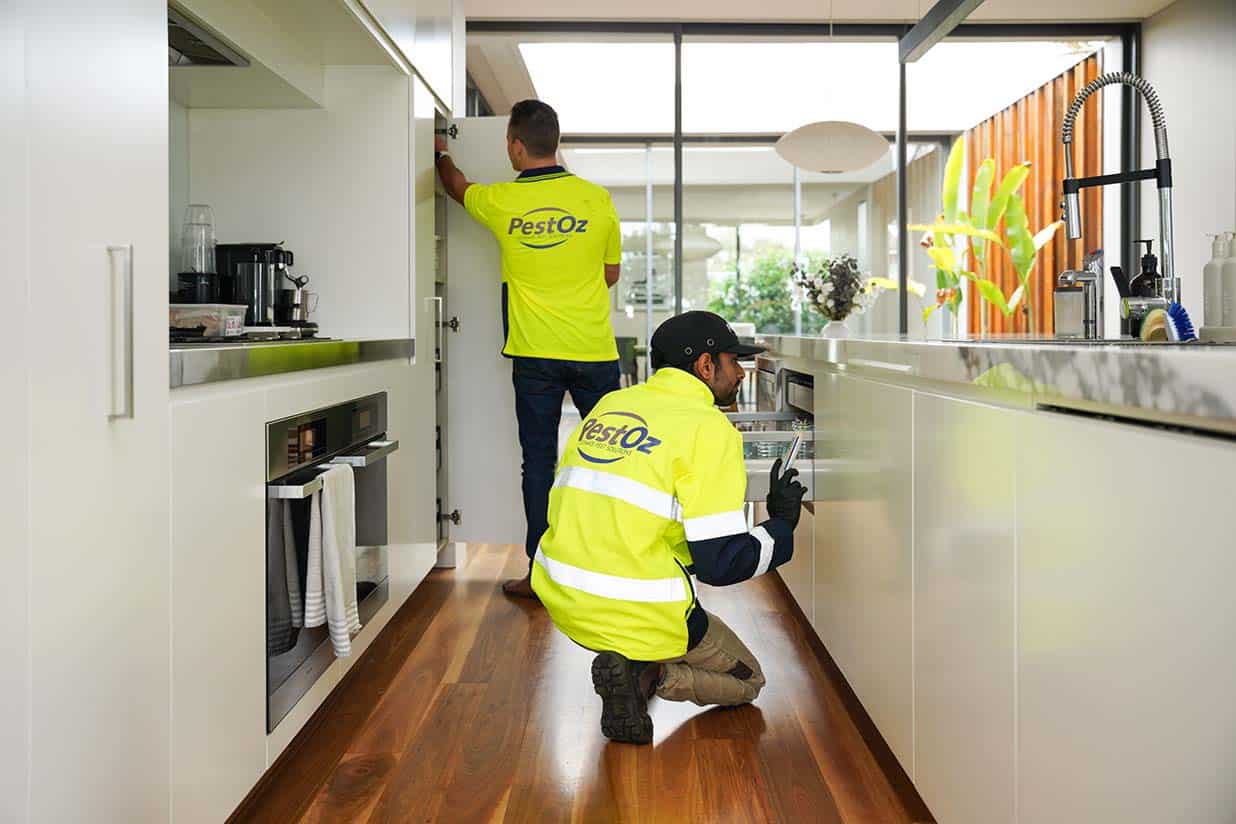
Property managers should arrange professional pest inspections before new tenancies begin to identify and address these concerns proactively. We recommend a full inspection report with photographs at every lease handover. That documentation protects everyone when questions arise six months later.
Ongoing Structural Issues
Property managers remain responsible for pest problems that arise from structural defects or maintenance failures. Picture a unit in Bondi with faulty subfloor ventilation: moisture builds up, booklice thrive, and within weeks you have a full infestation. That’s a landlord problem, not a tenant problem. Other structural issues include:
• Poor drainage creating mosquito breeding sites
• Damaged roof tiles allowing bird or possum entry
• Cracked foundations permitting rodent access
• Faulty plumbing creating moisture that attracts pests
• Overgrown landscaping against building exteriors
Emergency Pest Situations
Certain pest situations require immediate property manager intervention. Dangerous spider infestations, aggressive wasp colonies near entry doors, or any pest problem that makes areas of the property uninhabitable demand a same-day or next-day response. In those cases, arrange professional treatment first and sort out the invoice later.
When Are Tenants Responsible for Pest Control?
Tenants bear responsibility for pest control in specific circumstances, particularly when their actions or negligence contribute to infestations. Understanding these situations helps property managers determine appropriate responses and cost allocation.
Tenant-Caused Infestations
Tenants typically become responsible when pest problems result from:
• Poor housekeeping and food storage practices
• Leaving doors and windows open without screens
• Introducing pests through second-hand furniture or belongings
• Failing to maintain reasonable cleanliness standards
• Creating conducive conditions through negligent behaviour
We’ve seen cases where a tenant stored pet food in open bags on the kitchen floor for weeks. Rodents moved in. That’s a tenant-caused infestation, and the tenant can be asked to cover the treatment cost. Document the conditions with photos and inspection notes before arranging service.
Minor Maintenance Issues
Tenants often handle routine pest prevention as part of general property care. This includes basic measures like regular cleaning to prevent attracting pests, prompt reporting of potential pest entry points, maintaining outdoor areas within reason, and using appropriate storage for food items. A cockroach spotted in a spotless kitchen after heavy rain is different from a cockroach infestation in a filthy one.
Key NSW Legislation Affecting Property Managers
Several pieces of NSW legislation impact how property managers handle pest control responsibilities. Understanding these legal frameworks helps ensure compliance and protects both property owners and tenants.
Residential Tenancies Act 2010
This primary legislation establishes the landlord’s obligation to maintain properties in good repair and ensure they remain suitable for habitation. While it doesn’t specifically mention pest control, the habitability requirement often encompasses pest management responsibilities. Section 52 requires landlords to maintain the premises in a reasonable state of repair, and NCAT (NSW Civil and Administrative Tribunal) has found in multiple cases that severe pest infestations breach this duty.
Public Health Act 2010
The Public Health Act empowers local councils to issue orders regarding pest control when infestations pose public health risks. Waverley Council, for example, has issued pest control orders to landlords whose rodent problems affected neighbouring units. Property managers may face enforcement action if they fail to address serious pest problems that affect neighbouring properties or community health.
Work Health and Safety Act 2011
When arranging pest control services, property managers must ensure appropriate safety measures protect tenants and service providers. This includes proper notification procedures (typically 24 hours’ written notice for non-emergency treatments) and ensuring pest control methods comply with safety standards, particularly if tenants have young children, pets, or health sensitivities.
Best Practice Strategies for Property Managers
Implementing systematic approaches to pest management protects properties, maintains tenant satisfaction, and reduces long-term costs. Here’s a four-part framework we recommend to every property manager we work with.
1. Preventive Maintenance Programs
Regular property inspections help identify conditions that might attract pests before infestations develop. Key areas to monitor include roof and gutter systems for water damage, foundation areas for cracks or gaps, window and door seals for proper closure, landscaping proximity to building exteriors, and drainage systems and moisture control.
Scheduling annual pest inspections with qualified professionals provides early detection and prevents minor issues from becoming major problems. In Sydney’s eastern suburbs, where coastal humidity and older building stock combine, annual inspections are essential. We inspect for termites, check for rodent entry points, and assess general pest pressure.
Pest Control Services for Eastern Suburbs Property Managers
PestOz works with property managers across Sydney’s eastern suburbs — including Bondi, Randwick, Waverley, Paddington, and Double Bay — providing inspection reports, treatment certificates, and ongoing maintenance programmes designed to meet NSW tenancy requirements.
- Pre-tenancy inspections: Full written report with photographs, suitable for lease handover documentation.
- Annual maintenance programmes: Scheduled visits timed to seasonal pest pressure, with priority response for emergency callouts.
- Dispute-ready documentation: Detailed service records that support NCAT submissions and landlord-tenant cost allocation.
To arrange a complimentary quote for your rental portfolio, contact PestOz or visit our real estate pest control page for more information.
How Often Should Property Managers Schedule Pest Control in Sydney?
For rental properties in Sydney’s eastern suburbs, PestOz recommends a minimum of one comprehensive pest inspection per year, ideally timed before the summer season when cockroach, ant, and spider activity peaks. High-risk properties — those with subfloor spaces, established gardens, or a history of termite activity — benefit from a six-monthly inspection cycle.
- Annual inspection: Suitable for newer buildings with no pest history
- Six-monthly inspection: Recommended for older properties, those near bushland or coastal areas, or buildings with a prior infestation record
- Post-tenancy inspection: Always recommended at each lease handover to establish a clear baseline before a new tenancy begins
Consistent scheduling makes it easier to demonstrate due diligence if a dispute reaches NCAT, and helps property managers budget predictably rather than reacting to emergency call-outs.
2. Clear Lease Agreement Terms
Well-drafted lease agreements should clearly outline pest control responsibilities for both parties. Effective clauses typically address responsibility allocation based on infestation causes, tenant reporting obligations for pest sightings (with a clear process and contact details), property manager response timeframes, cost-sharing arrangements for different scenarios, and prevention measures both parties must undertake. Vague clauses create disputes. Specific clauses prevent them.
3. Tenant Education and Communication
Educating tenants about pest prevention helps reduce infestations and clarifies responsibility boundaries. Property managers should provide information about proper food storage and waste management, reporting procedures for pest sightings, basic prevention measures tenants can implement, and seasonal pest activity patterns in the local area. A one-page handout at lease signing saves hours of phone calls later.
4. Documented Response Protocols
Create a written protocol for handling pest reports. When a tenant calls about pests, your team should know exactly what to ask, how to log the report, what timeframe to promise, and who to contact for service. Consistency reduces confusion and demonstrates professionalism.
How to Handle Pest Control Disputes
Disputes between property managers and tenants regarding pest control responsibilities require careful handling to maintain positive relationships and avoid NCAT hearings.
Documentation Requirements
Thorough documentation supports decision-making and provides evidence if disputes escalate. Property managers should maintain records of:
• Initial property condition reports with pest inspection notes
• Tenant reports of pest sightings or concerns (date, time, description)
• Professional pest control service reports and recommendations
• Photographs of infestations and damage
• Communication between all parties regarding pest issues
In one recent case we saw, a property manager successfully defended a NCAT claim because they had photographs from the initial inspection showing zero pest activity, plus dated emails where the tenant refused multiple inspection requests. Documentation won the case.
Investigation Procedures
When pest problems arise, property managers should conduct prompt investigations to determine responsibility. This process typically involves inspecting the affected areas to assess the infestation extent, consulting with professional pest control experts for cause determination, reviewing tenant behaviour and property maintenance history, and identifying any structural or maintenance factors contributing to the problem. Speed matters. A two-week delay signals negligence.
Resolution Strategies
Start by dealing with the pest problem, then agree who will do what next. A pest technician can assess the likely cause and provide an independent report.
- Agree on a treatment plan.
- Choose steps to help stop the pests returning.
- Record each party’s ongoing duties.
Sometimes an agreed cost split is more useful than a lengthy dispute over a small bill.
Choosing Professional Pest Control Services
Property managers need reliable pest control partners who understand the unique requirements of rental property management. The right service provider offers comprehensive solutions while maintaining tenant relationships.
Essential Service Features
Effective pest control services for property managers should provide:
• Detailed inspection reports with photographic evidence
• Clear identification of infestation causes and contributing factors
• Treatment recommendations with cost estimates
• Ongoing monitoring and prevention programs
• Flexible scheduling to accommodate tenant needs
PestOz helps property managers across Sydney’s eastern suburbs, lower north shore and CBD. Our technicians provide clear reports for owners and tenants, with photos, treatment logs and notes on the likely cause. We also arrange access directly with tenants to save property managers time.
Service Integration
The best pest control providers integrate with property management workflows. This includes direct communication with tenants for service scheduling, comprehensive reporting to property managers and owners, emergency response capabilities for urgent situations, and preventive maintenance programs aligned with property inspection schedules. Look for a provider who treats your tenants respectfully and returns calls promptly. Your reputation depends on theirs.
Seasonal Pest Management Considerations
NSW’s climate creates distinct seasonal pest activity patterns that property managers should anticipate and prepare for throughout the year.
Summer Challenges
Warmer months typically increase activity from cockroaches seeking water sources in kitchens and bathrooms, ants establishing new colonies in garden areas, wasps building nests in roof spaces and outdoor structures, mosquitoes breeding in standing water around properties, and spiders moving indoors to escape heat. October to February is peak season for cockroach complaints in our experience. Warn tenants in advance and consider preventive treatments in high-risk units.
Winter Considerations
Cooler weather drives different pest behaviours: rodents seeking warm shelter in roof cavities and wall spaces, termites remaining active in heated indoor environments (they don’t hibernate), possums and birds attempting to access roof spaces, and reduced insect activity but concentrated infestations in heated areas. We see the most rodent call-outs in June and July when temperatures drop.
Cost Management and Budgeting
Property managers must balance effective pest control with cost management, particularly when handling multiple properties with varying pest pressure levels.
Preventive vs Reactive Costs
Investing in preventive pest management typically costs significantly less than addressing established infestations. A $300 annual inspection can prevent a $5,000 termite repair. Regular maintenance and early intervention programs help property managers avoid expensive structural repairs from termite damage, prevent tenant complaints and potential rental disruptions, maintain property values through consistent upkeep, and reduce emergency call-out fees for urgent pest situations.
Service Package Benefits
A pest management package can combine regular checks, prevention and a priority response when an urgent problem arises. For a portfolio of 20 units, a quarterly contract with one provider may be useful.
These plans can help you budget, keep maintenance records and respond quickly to pest reports. PestOz offers tailored packages for property managers with multiple listings.
Future-Proofing Your Pest Management Approach
As environmental awareness increases and pest control technology advances, property managers must adapt their approaches to meet evolving expectations and regulations.
Sustainable Pest Management
Tenants often want pest treatment that limits chemical use. A good plan starts with finding the cause, reducing pest access and using targeted treatment where needed.
Ask the technician which methods suit the property and what tenants need to do before and after treatment. This is especially useful where children, pets or other sensitive occupants are present.
Technology Integration
Emerging technologies offer new opportunities for pest monitoring and management: remote monitoring systems for early pest detection, digital reporting platforms for improved documentation, predictive analytics for seasonal pest management planning, and mobile applications for streamlined tenant communication. We use digital reporting tools that send PDF reports directly to property managers and owners within hours of service. That speed improves transparency and builds trust.
Property managers who embrace these developments often achieve better outcomes while reducing long-term costs and improving tenant satisfaction.
For professional pest management services tailored to property managers’ needs across Sydney’s eastern suburbs, contact PestOz at https://pestoz.com.au/. Our experienced team understands the unique challenges of rental property pest control and provides comprehensive solutions that protect both properties and tenant relationships.
—
Frequently asked questions
Landlord Pest Control Obligations in NSW: Common Questions Answered
What NSW landlords and property managers need to know about who pays, how fast to act, and staying on the right side of the Residential Tenancies Act 2010.
Get a free quoteWho pays for pest control if the lease doesn’t specify?
If the lease is silent on pest control, responsibility defaults to the general principles in the Residential Tenancies Act 2010 (NSW). Pre-existing infestations and structural issues are typically the landlord’s responsibility. Infestations caused by tenant behaviour (poor hygiene, leaving food out) are usually the tenant’s responsibility.
Document the cause and consult Fair Trading NSW or a solicitor if the situation is unclear.
Can I charge a tenant for pest control if they caused the infestation?
Yes, but only with proper evidence. You’ll need documentation showing the tenant’s behaviour directly caused the problem, such as photographs of unsanitary conditions, professional pest reports identifying the cause, and records of previous warnings or communication.
If the tenant disputes the charge, you may need to apply to NCAT (NSW Civil and Administrative Tribunal) for a ruling. Clear evidence is essential.
How quickly must I respond to a tenant’s pest report?
The Residential Tenancies Act requires landlords to address urgent repairs within a reasonable timeframe. For dangerous pests (redback spiders, large wasp nests, severe rodent infestations), arrange service within 24 to 48 hours.
For non-urgent issues (a single cockroach, minor ant activity), a response within five to seven business days is generally reasonable. Always acknowledge the report immediately and provide a clear timeframe.
Do I need to give notice before arranging pest control?
Yes. For non-emergency pest treatments, you must provide at least 24 hours’ written notice to tenants before accessing the property. Emergency situations (such as a dangerous wasp nest blocking an entry) may allow immediate access under the urgent repair provisions.
After treatment, provide clear instructions about re-entry times and safety precautions, especially if chemicals were used.
Are termite inspections the property manager’s responsibility?
Termite inspections are strongly recommended but not legally required in NSW for residential properties (unlike building sales, where inspections are standard). However, if an infestation develops and you haven’t conducted regular inspections, you may face claims of negligence.
Annual termite inspections are considered best practice, particularly for older properties or homes with timber frames. The cost is the landlord’s responsibility as part of routine maintenance.
What if a tenant refuses entry for pest treatment?
If you’ve provided proper notice and the tenant refuses access without reasonable cause, document the refusal in writing. If the pest issue persists or worsens due to the tenant’s refusal, they may become responsible for resulting damage or costs.
For urgent health and safety issues, you may apply to NCAT for an access order. Always keep written records of all communication.
Can I include a clause requiring tenants to pay for all pest control?
No. A lease clause that makes tenants responsible for all pest control, regardless of cause, would likely be unenforceable under NSW law because it conflicts with the landlord’s obligation to maintain the property in a habitable state.
You can include clauses requiring tenants to maintain reasonable cleanliness and report pest sightings promptly, but you can’t contract out of your legal obligations as a landlord.
How do I prove a pest infestation was pre-existing?
Conduct a thorough pest inspection before each new tenancy and include the results in the condition report. Photographs, dated inspection reports from licensed pest controllers, and detailed written descriptions all provide evidence.
If you skip this step, proving a pre-existing infestation becomes much harder. Entry and exit condition reports are your strongest protection.
General information only, not legal advice. Pest control responsibilities can turn on the specific wording of your lease and the facts of each case. For a binding view, check with Fair Trading NSW or a solicitor.