
Bed Bugs in Sydney: How to Identify Them
Waking up with itchy bites in a line, or found little rusty spots on the mattress? Here is how to know if it is bed bugs, tell their bites from fleas and mosquitoes, and what to do (and what not to do) next.
The quick answer
What do bed bugs look like?
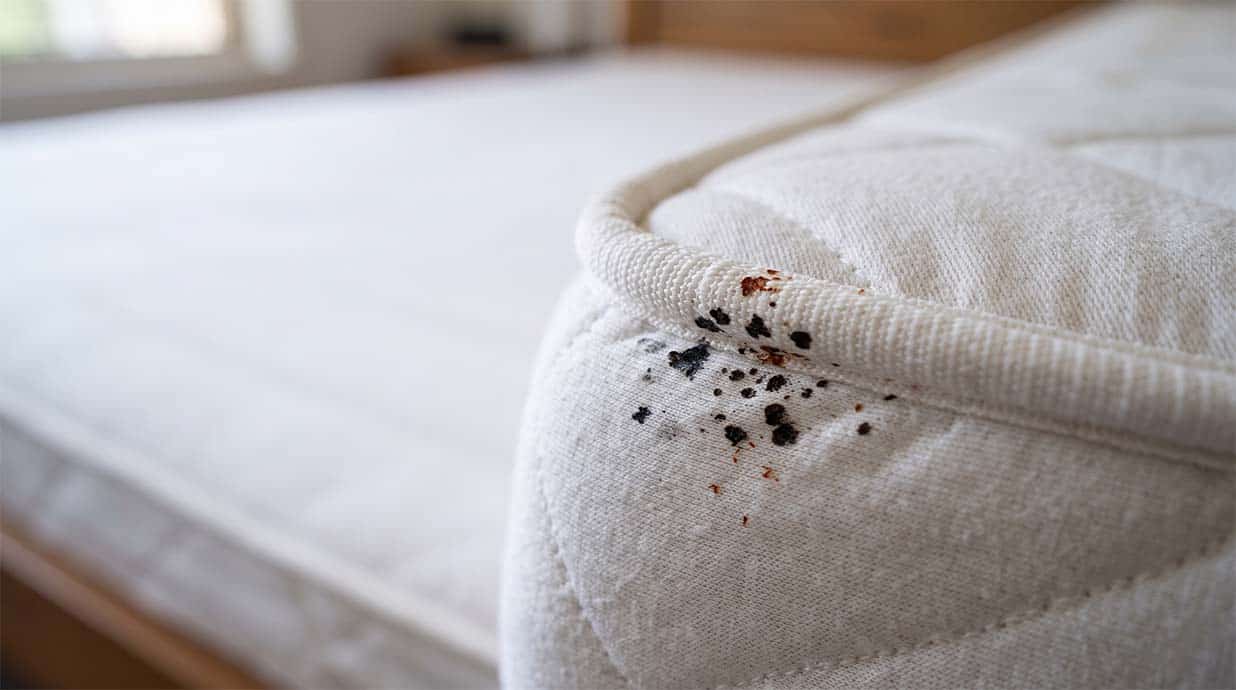
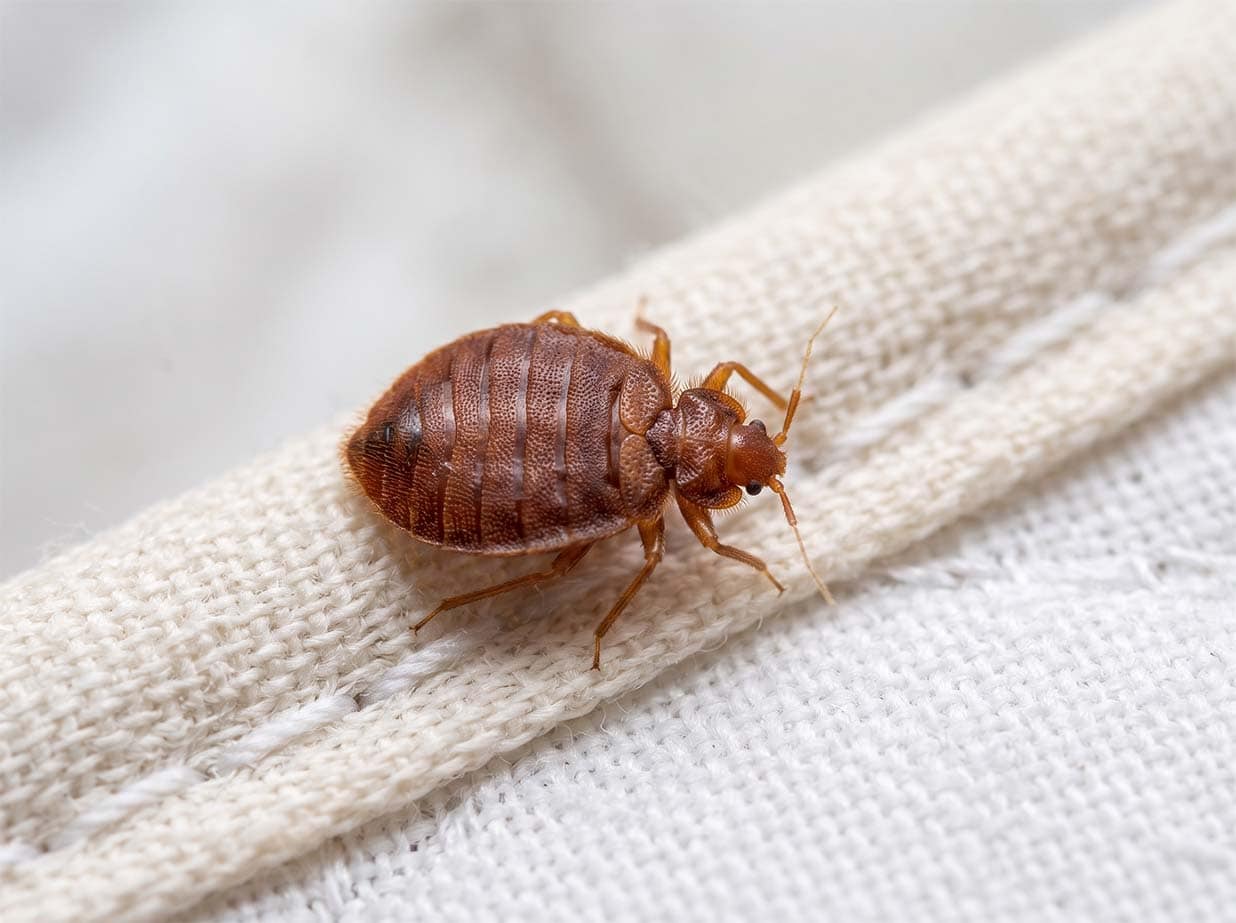
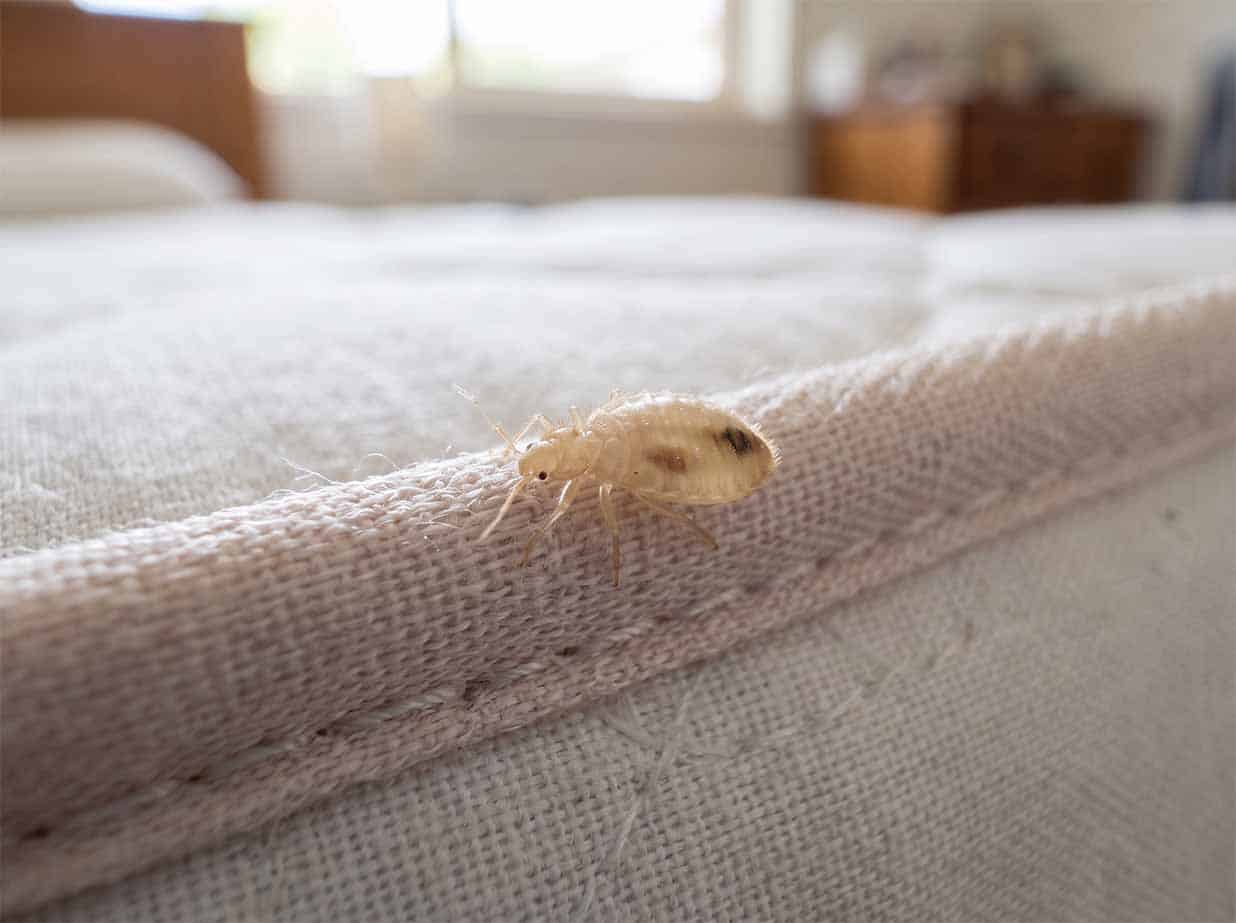
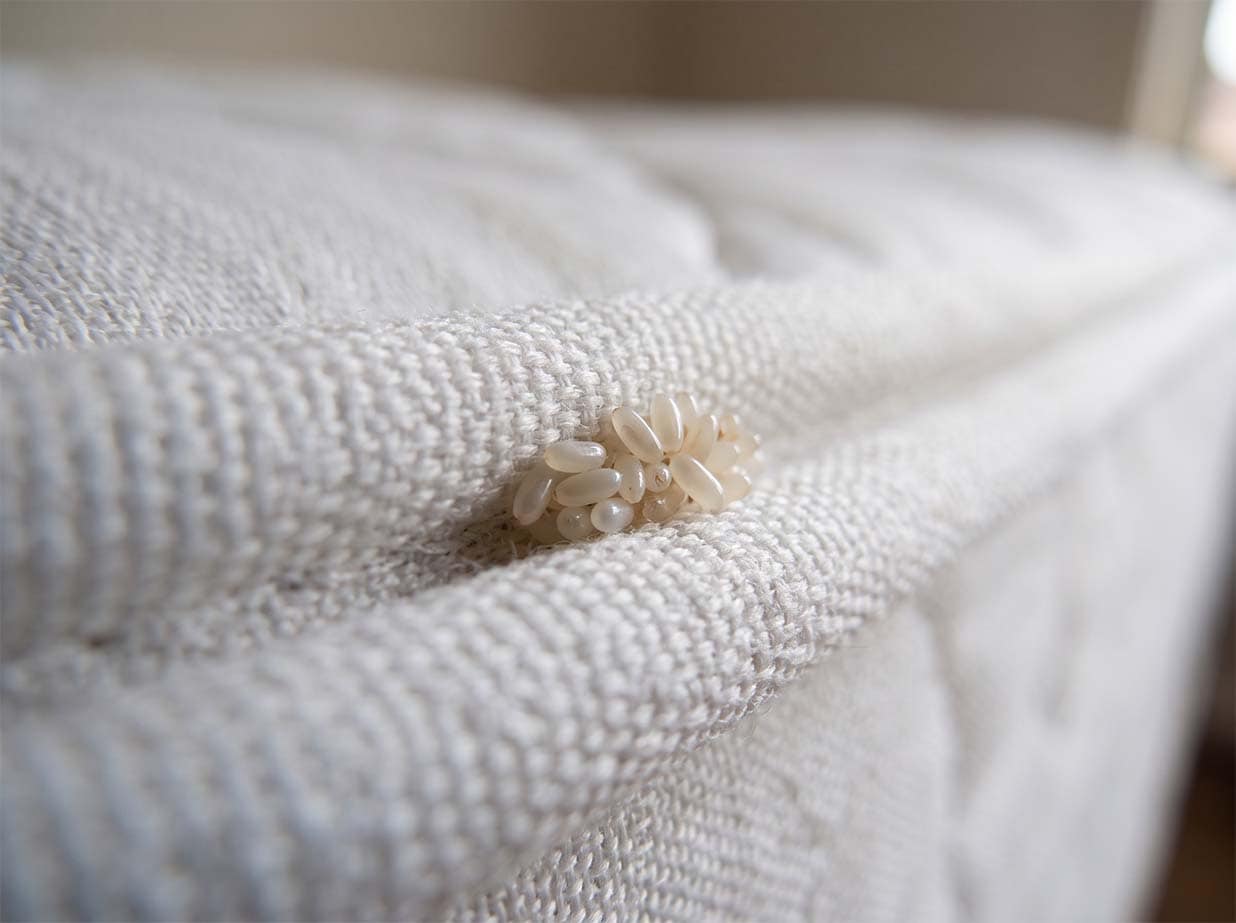
Adult bed bugs are small, flat, oval insects about 4 to 6 mm long and reddish-brown, roughly the size and shape of an apple seed, with no wings. After feeding they swell and darken. Young bed bugs (nymphs) are smaller and pale cream, and the eggs are about 1 mm and pearly white. The clearest early sign is often not the bug itself but what it leaves behind: rusty, ink-like spots along the seams of the mattress. In Sydney, bed bugs are a year-round, travel-driven pest, not a seasonal one.
Adult, nymph and egg
Bed bugs go through three stages you might spot, and knowing them helps you catch an infestation early.
| Feature | Adult | Nymph (young) | Egg |
|---|---|---|---|
| Size | About 4 to 6 mm, like an apple seed | About 1 to 4 mm | About 1 mm |
| Colour | Reddish-brown, deeper red after feeding | Pale cream to tan, red to black after a blood meal | Pearly white |
| Shape | Flat and oval, rounder after feeding | Like a smaller, paler adult | Tiny elongated grain |
| Wings | None, cannot fly or jump | None | Not applicable |
| Where you would find it | Mattress seams, bed frame, headboard, bedside furniture | The same hiding spots, close to where you sleep | Glued in tight clusters in cracks, seams and crevices |
Bed bugs have no wings, so they cannot fly or jump, they crawl. If it jumped, it is more likely a flea. Reference: healthdirect Australia.
Adult, nymph and egg up close
Plain-English descriptions, so you can match what you found to the right stage.
You will usually spot the traces before the bug
Bed bugs are small, flat and hide by day, so the evidence on the bed shows up before you see one. Look for these.
Rusty or ink-like spots
Small dark spots, like dots from a felt-tip pen, along the mattress seams, on the sheets and around the bed frame. This is bed bug droppings and it is the most reliable early sign.
Small blood smears
Little rust-red smears on the sheets or pillowcase, left when a bug that has just fed is rolled on and squashed in the night.
Shed skins & shells
Pale, translucent cast skins in the seams and crevices, left behind as nymphs grow. Finding these means a breeding population, not a one-off hitchhiker.
Live bugs in the seams
Run a torch along the mattress piping, the bed frame joints, the headboard and bedside furniture. Bed bugs cluster in these tight, dark seams close to where you sleep.
Itchy bites in a line or cluster
Bites that appear overnight on exposed skin, often the arms, shoulders, neck or legs, and frequently in a line or small group. Bites alone are not proof, though (see below).
A musty smell & a travel trigger
A heavy infestation can give off a sweet, musty odour. And if the bites started after a hotel stay, a trip or bringing home second-hand furniture, treat that as a strong clue.
Bed bug, flea or mosquito?
Most people start with the bites. Here is how bed bug bites differ from the two things they get confused with, then the insect lookalikes.
Bed bug bites vs flea bites vs mosquito bites
| Feature | Bed bug | Flea | Mosquito |
|---|---|---|---|
| Where on the body | Exposed skin while you sleep: arms, shoulders, neck, face | Ankles and lower legs | Anywhere skin is exposed |
| Pattern | A line or small cluster | Small random clusters, often groups of three | Single and scattered, rarely in lines |
| How it looks | A small red bump with a darker centre, itchy | A small red bump with a single puncture, often a pale halo | A raised round welt |
| Timing | Appear overnight, sometimes a day or two later | Any time, worse where pets are | Comes up within minutes, worse near dusk and still water |
| Other clue | Spots and live bugs on the bed | A cat or dog in the home | You hear the whine at night |
Reactions vary a lot, and some people show no mark at all, so bites cannot confirm bed bugs on their own. Always check the bed for the physical signs above. Reference: healthdirect Australia.
Is it a bed bug, or a lookalike?
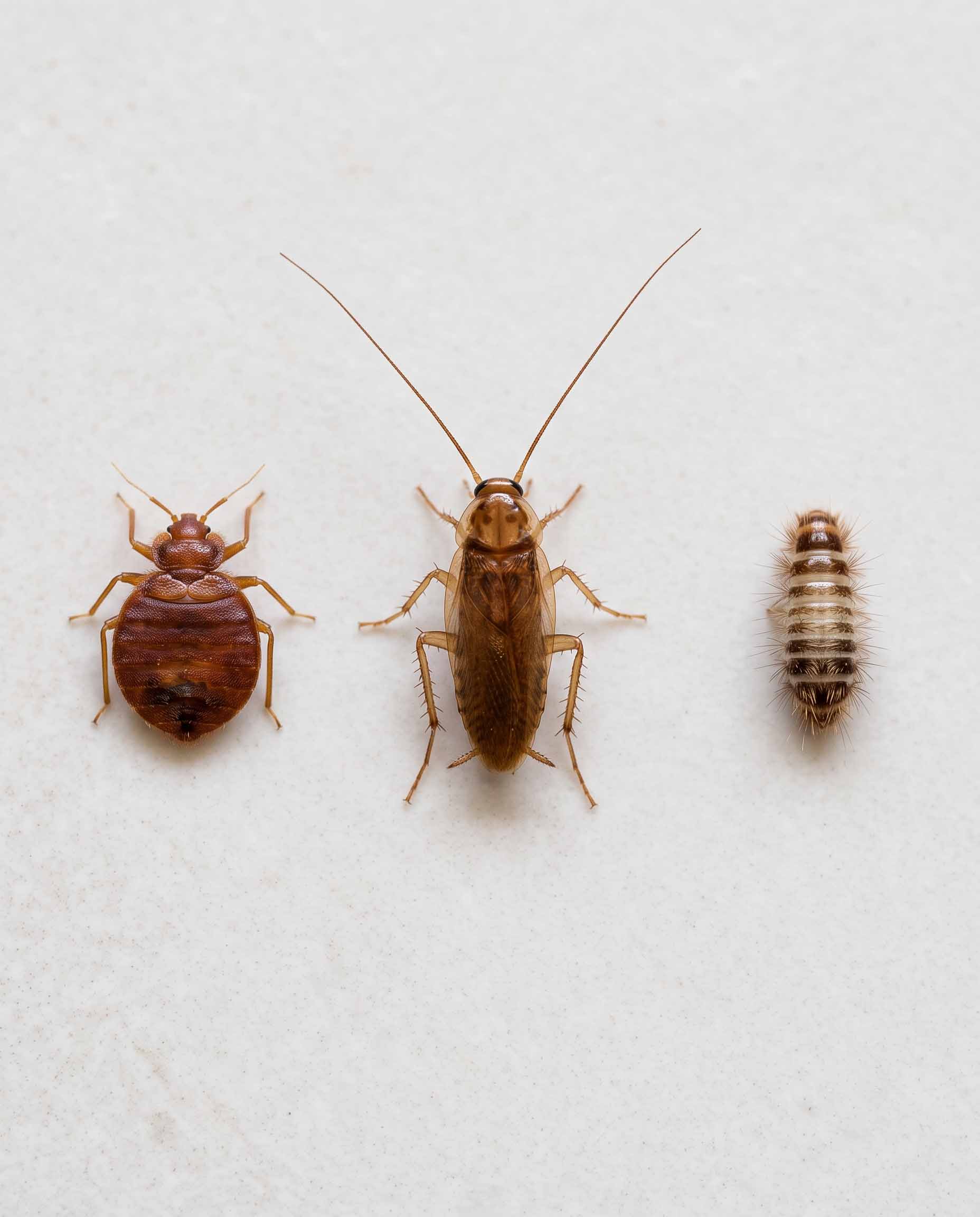
A few small insects get mistaken for bed bugs. Young cockroaches are longer, faster and have long antennae. Carpet beetle larvae are fuzzy and striped, not flat, and do not bite. Fleas are dark, narrow side-to-side, and jump. Booklice and spider beetles turn up in stored food and paper. Bed bugs are the flat, oval, wingless, apple-seed-sized ones that move slowly and stay close to the bed.
| Feature | Bed bug | Young cockroach | Carpet beetle larva |
|---|---|---|---|
| Size | 4 to 6 mm | 3 to 15 mm and up | 4 to 5 mm |
| Shape | Flat oval, apple-seed | Long and flat, oval | Fuzzy, carrot-shaped, striped |
| Antennae | Short | Long and thread-like | Tiny |
| Moves | Crawls slowly | Runs fast, darts for cover | Crawls slowly |
| Bites people | Yes, feeds on blood | No | No, but can irritate skin |
| Where | Beds and bedrooms | Kitchens, drains, warmth | Carpets, wardrobes, stored fabric |
Reference: Australian Museum.
Bed bugs are a real nuisance, not a disease risk
The good news first: bed bugs are not known to spread disease. The bad news is what they do to your skin, your sleep and how fast they spread.
They do not spread disease
According to healthdirect Australia, there is no evidence that bed bugs transmit infectious diseases. What they do cause is itchy bites and skin reactions, and in people with severe allergies a bite can, rarely, trigger a serious reaction.
Itching, infection & lost sleep
The bites are intensely itchy, and scratching can break the skin and lead to a secondary infection. Just as real is the toll on sleep, as knowing something is biting you at night causes stress, insomnia and anxiety.
They spread fast and hitchhike
A few bed bugs become an infestation quickly, and they travel on luggage, clothing and second-hand furniture from room to room and house to house. This is about movement, not cleanliness, which is why acting early matters.
Bed bugs have no season
Most pests ease off when it cools, but bed bugs live indoors in warm, climate-controlled bedrooms, so they are active every month of the year. What drives them is not the weather, it is travel and the movement of furniture. They hitchhike home from hotels, holidays and second-hand buys, so enquiries track school holidays and trips rather than temperature.
That makes bed bugs one of the few pests that keep us busy right through a Sydney winter. If anything, more time spent indoors in the cooler months means the bites and spots tend to get noticed sooner. Because bed bugs spread quietly and shrug off supermarket sprays, the sooner you act on the first signs, the smaller the job.
Bed bug identification, answered
What do bed bugs look like?
Adult bed bugs are small, flat, oval insects about 4 to 6 mm long and reddish-brown, roughly the size and shape of an apple seed, with no wings. After they feed on blood they swell up and turn a deeper red. Young bed bugs, called nymphs, are smaller and pale cream to tan, and become red to black once they have fed. The eggs are tiny, about 1 mm, and pearly white. Because they have no wings, bed bugs cannot fly or jump, they only crawl.
What do bed bug bites look like, and how are they different from flea or mosquito bites?
Bed bug bites are usually small, itchy red bumps on skin that was exposed while you slept, such as the arms, shoulders, neck or face, and they often appear in a line or a small cluster overnight. Flea bites are more often around the ankles and lower legs in small random groups, frequently with a pale halo. Mosquito bites are single, scattered raised welts that come up within minutes and can be anywhere. Reactions vary a lot and some people do not react at all, so bites cannot confirm bed bugs on their own. Always check the bed for spots, shed skins and live bugs.
What are the first signs of bed bugs?
Usually the traces show up before you see a bug. The most reliable early sign is small, dark, ink-like spots along the mattress seams, on the sheets and around the bed frame, which is bed bug droppings. Other signs are small rust-red blood smears on the sheets, pale shed skins in the seams, live bugs clustered in the mattress piping and headboard, and itchy bites in a line or cluster. A sweet musty smell can appear in a heavy infestation. Bites that started after a hotel stay or a second-hand buy are a strong clue.
Are bed bugs dangerous, and do they spread disease?
Bed bugs are not known to spread disease. According to healthdirect Australia, there is no evidence that they transmit infectious diseases to people. What they do cause is itchy bites and skin reactions, and in people with a severe allergy a bite can rarely trigger a more serious reaction. The bigger toll is often the itching, the risk of a secondary skin infection from scratching, and the lost sleep and stress of being bitten at night. They are a genuine nuisance pest rather than a health hazard.
Does having bed bugs mean my house is dirty?
No. Bed bugs are not a sign of a dirty home. They feed on blood, not crumbs or mess, so they turn up in spotless homes, hotels and new furniture just as easily as anywhere else. What they need is a host to feed on and somewhere to hide, and they spread by hitchhiking on luggage, clothing and second-hand furniture. Anyone can get them, which is why the sensible response is to inspect and treat early, not to feel embarrassed about it.
I think I have bed bugs, what should I do?
Contain them first. Do not drag the mattress through the house or set off a fogger, as both spread bed bugs into other rooms. Strip the bed and wash and hot-dry the linen on the hottest safe setting. Bed bugs hide deep in seams and cracks and survive many supermarket sprays, so a lasting result usually needs professional treatment. Acting at the first sign keeps the job small.
Bitten in the night? Let us take a look
A proper inspection tells you if it is bed bugs and stops them before they spread through the house. Free quotes, and a Sydney family business that has done this for over 20 years.
Sources & references
Appearance, signs, bites and health effects: healthdirect Australia. Bed bug biology and lookalike species: Australian Museum. Measurements are typical ranges and vary with the stage and feeding. This guide is for identification and general information; for an active infestation, arrange a professional inspection and treatment.