
Spiders in Sydney: How to Identify Them
Sydney has plenty of spiders, but only two you really need to worry about. Here is how to spot a funnel-web and a redback, tell the dangerous ones from the harmless huntsman, and exactly what to do if someone is bitten.
The quick answer
Which spiders in Sydney are dangerous?
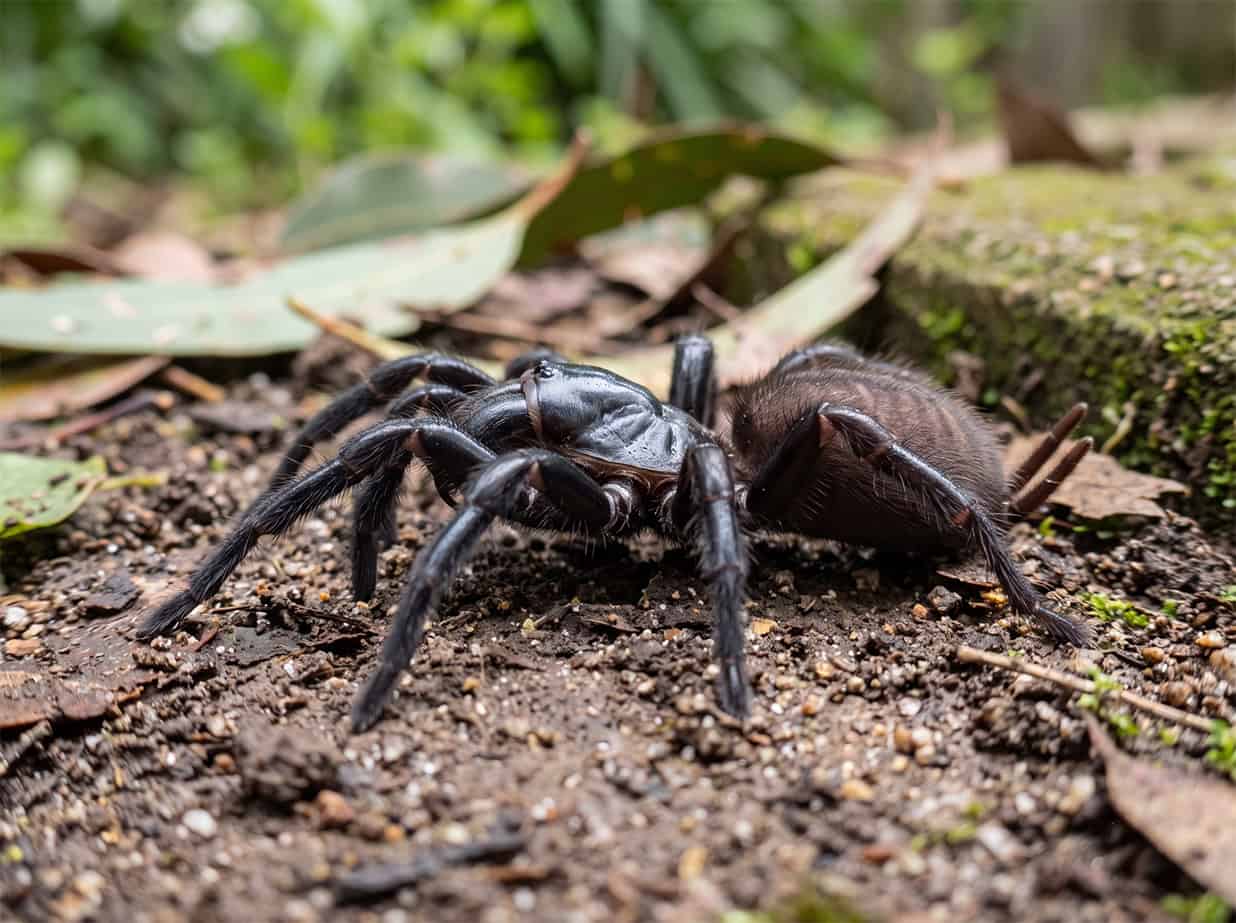
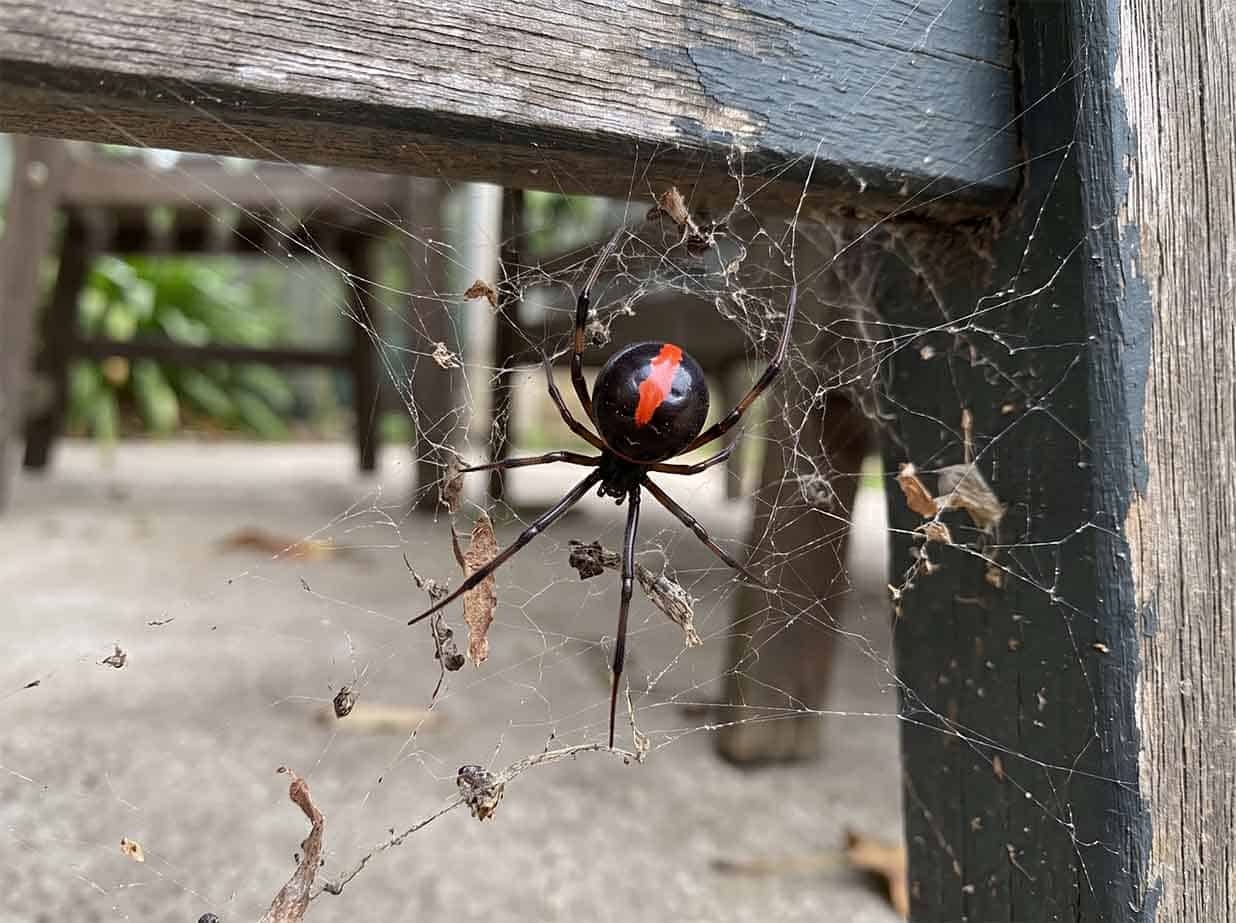
Only two Sydney spiders are considered dangerous to people: the Sydney funnel-web (Atrax robustus), a glossy black, ground-dwelling spider with large downward-pointing fangs whose males wander in warm, humid weather, and the redback (Latrodectus hasselti), a black spider with a red stripe on its round abdomen. Most others you will see, including the huntsman, garden orb weavers and black house spiders, look alarming but are essentially harmless. A funnel-web bite is a medical emergency: apply a pressure bandage and call 000.
Funnel-web vs redback vs huntsman
The three spiders Sydney locals ask about most: the two that matter, and the big scary one that does not.
| Feature | Sydney funnel-web | Redback | Huntsman |
|---|---|---|---|
| Size | Body 1.5 to 3.5 cm, robust | Female body about 1 cm, male tiny | Leg-span up to 15 cm, body smaller |
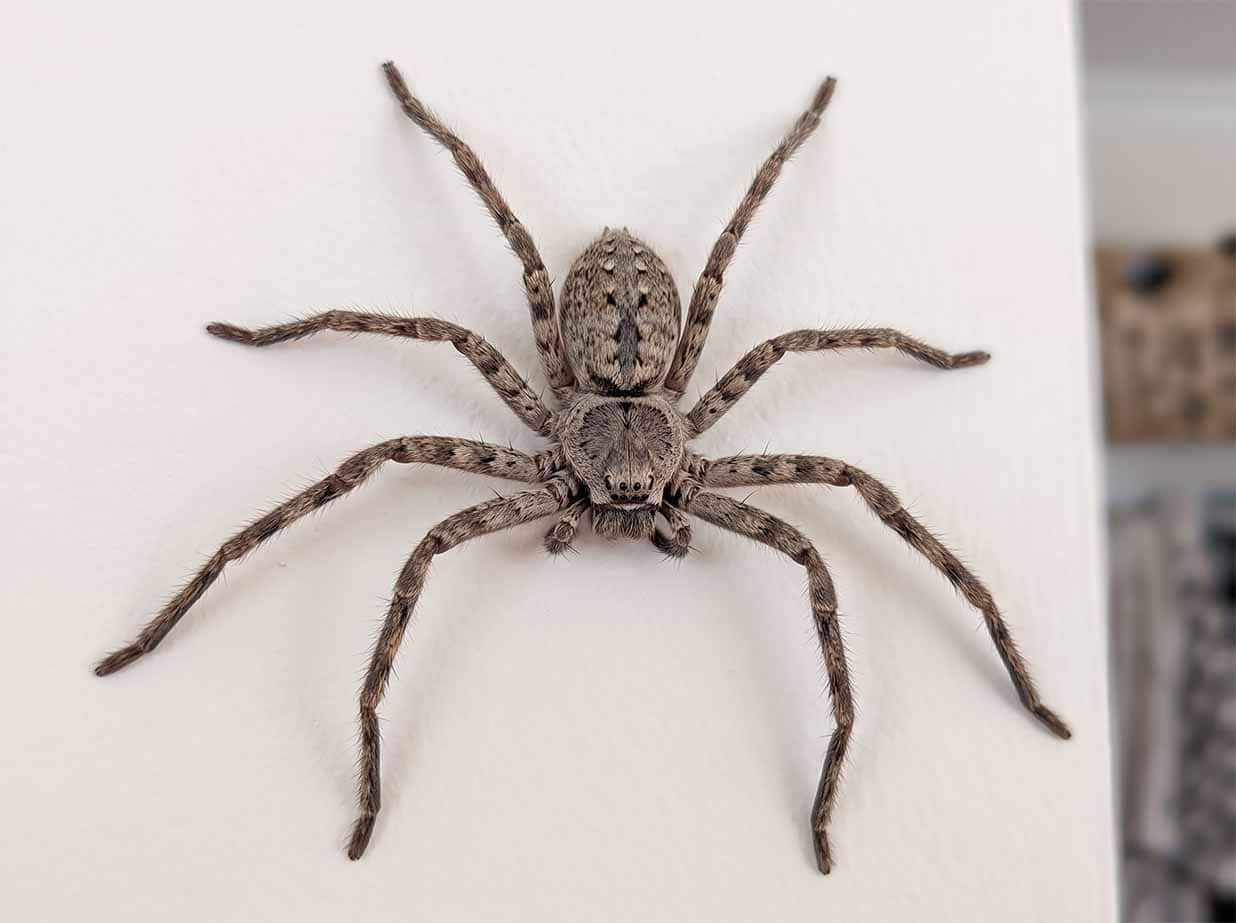
| The tell | Glossy black, smooth shiny front, large downward fangs | Black with a red or orange stripe on top of the abdomen | Large, flat, hairy, grey-brown, long crab-like legs |
| Where you find it | Ground level: burrows, gardens, under logs, in pools, shoes and garages | Messy web in dry sheltered spots: under furniture, letterboxes, sheds, pot rims | Flat against walls, under bark, in cars, often comes indoors |
| Danger | High, a medical emergency | Painful, occasionally serious, treatable | Harmless, reluctant to bite |
| If bitten | Pressure immobilisation bandage, keep still, call 000 | Cold pack, do NOT bandage, ring 13 11 26 | Wash and use a cold pack if needed |
First aid differs by spider and getting it right matters. See the "If you are bitten" section below. References: Australian Museum and the Australian Resuscitation Council.
The three to know on sight
Two to treat with real caution, and one that is all show. Learn these first.
The web tells you as much as the spider
Often you notice the web or the spot before you get a good look. Here is what each usually means.
A funnel or burrow at ground level
A silk-lined hole or funnel-shaped web in the ground, a rockery or a garden bed, sometimes with trip-lines fanning out. Think funnel-web or trapdoor. Do not put your hand near it.
A messy web with a red-marked spider
A tangled, untidy web in a dry, sheltered spot such as under outdoor furniture, in a letterbox, a shed or the rim of a pot. A black spider with a red stripe means redback.
A large flat spider on the wall or in the car
A big, fast, flat spider pressed against a wall, ceiling or car visor. Almost always a huntsman, which is harmless and helps by eating other insects.
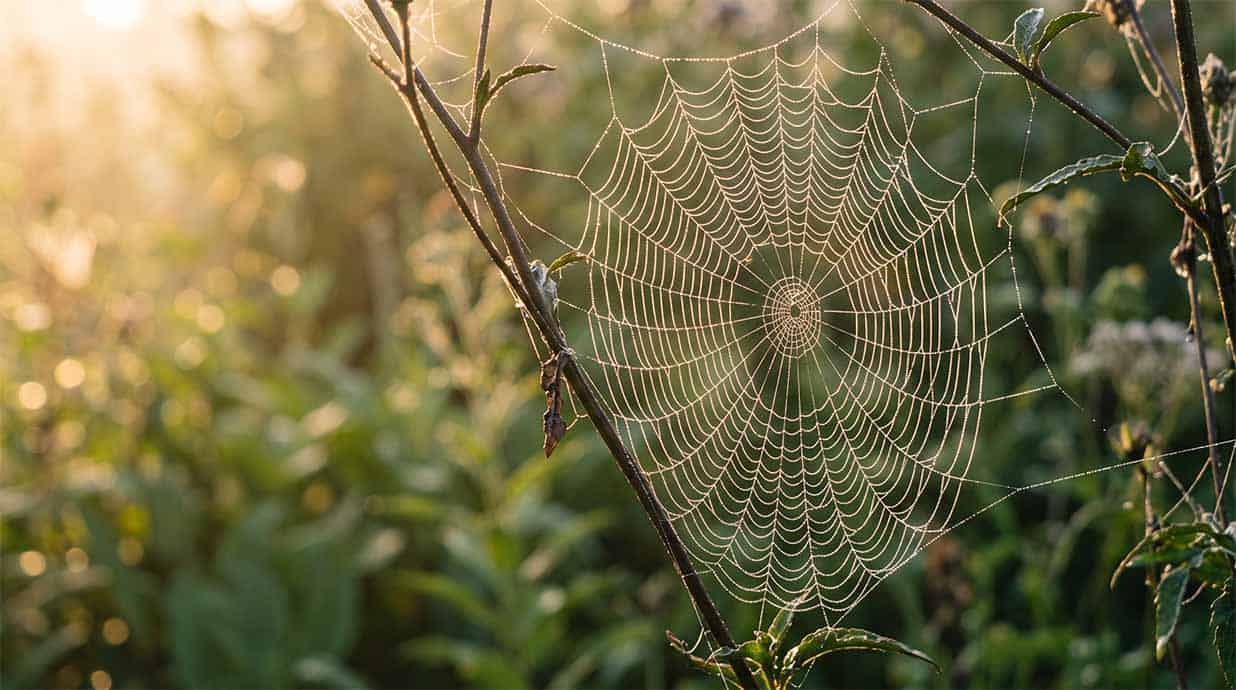
A big round web across the path at night
A large, neat, wheel-shaped web strung between plants or across a walkway, spun after dark. That is a garden orb weaver, a harmless night spider that packs up by morning.
Lacy webbing on window frames and brick
Untidy, lacy patches of web around window frames, weep holes and brickwork, often with a funnel retreat. Usually a black house spider, common and not dangerous.
A dark spider wandering, or in the pool
A glossy black spider out in the open on a warm, humid night, in a garage, in a shoe left outside, or floating in the pool. Treat a wandering funnel-web with real caution, and always tip out shoes before putting them on.
The dark-spider question, and the myths
Several dark spiders get mistaken for a funnel-web. Here is how they differ, and the harmless ones people needlessly fear.
Funnel-web vs its lookalikes
| Spider | Look | Where | Danger |
|---|---|---|---|
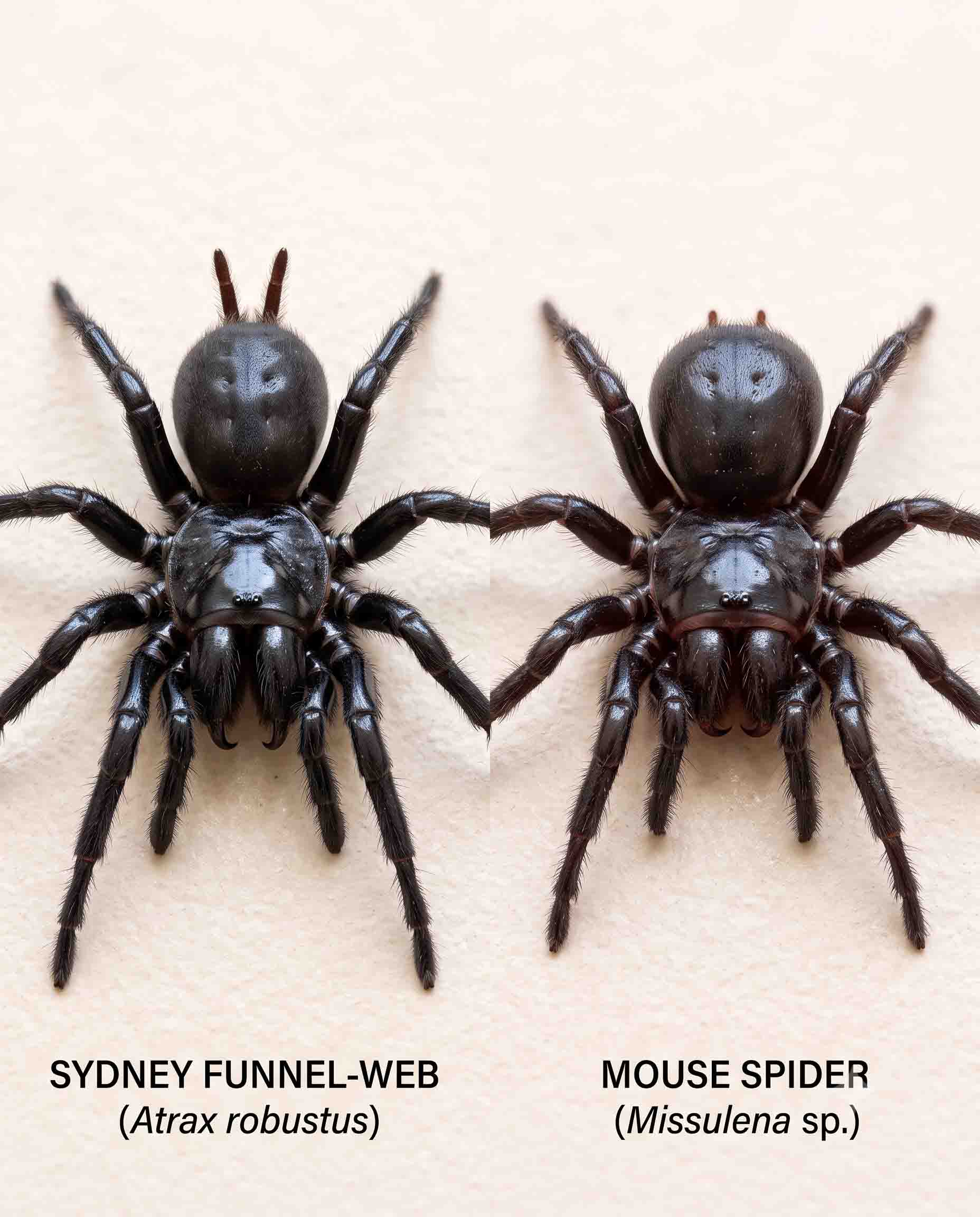
| Sydney funnel-web | Glossy black, smooth shiny front, large downward fangs, finger-like spinnerets at the rear | Ground: burrows, gardens, pools, shoes | High, treat as an emergency |
| Mouse spider | Also dark and glossy, but a broader, higher head, shorter spinnerets, some have a red or orange head or jaws | Ground: burrows, often near water | Bites are uncommon; treat like a funnel-web to be safe |
| Black house spider | Dark and velvety, not glossy, smaller, a web-builder | Lacy webs on walls, windows, brick | Low, a painful bite at worst |
| Trapdoor spider | Browner and duller, not glossy, stockier | Ground burrow with a hinged lid | Low, not dangerous |
The safe rule: if it is a glossy, dark, robust spider found at ground level and you are not sure, treat it as a funnel-web and use funnel-web first aid. Do not try to catch it. Reference: Australian Museum.
The harmless ones people fear
Huntsman spiders are large and fast but harmless, and would rather flee than bite. Daddy long-legs are harmless too, and the old line that they are the most venomous spider but cannot pierce skin is a myth. White-tailed spiders have an undeserved reputation: Australian research on 130 confirmed bites found no cases of the flesh-eating necrosis they are blamed for, just short-lived local pain. All three are far less of a worry than their reputation suggests.
| Spider | Look | The reality |
|---|---|---|
| Huntsman | Large, flat, hairy, long crab-like legs | Harmless, reluctant to bite, eats other pests |
| Garden orb weaver | Bulky body, spins a big round web at night | Harmless, a bite is no worse than a bee sting |
| Daddy long-legs | Tiny body, very long thin legs, messy web in corners | Harmless, the "most venomous" claim is a myth |
| White-tailed spider | Dark, cigar-shaped, a small white spot on the tail | Local pain only; the necrosis story is debunked |
On the white-tail myth: Australian Geographic, reporting the Australian Venom Research Unit.
The first aid is different for each, and it matters
The single most important thing on this page: a funnel-web bite needs a pressure bandage, a redback bite must not have one. Here is what to do.
Funnel-web: bandage and call 000
Treat it as an emergency. Apply a pressure immobilisation bandage, firm like a sprained ankle, over the bite and up the whole limb, add a splint to keep it still, keep the person calm and call 000 straight away. Antivenom has meant no deaths since it arrived in 1981 when people get treated. The same first aid covers a suspected mouse spider.
Redback: cold pack, no bandage
Do not use a pressure bandage, the venom is slow-acting and a bandage only adds pain. Apply a cold pack or ice wrapped in cloth for the pain, take paracetamol if needed, and ring the Poisons Information Centre on 13 11 26 for advice. Call 000 if the pain is severe or the person is a young child.
Everything else: usually nothing
A bite from a huntsman, orb weaver, black house or white-tailed spider is usually just local pain and redness. Wash it, apply a cold pack and watch it. See a doctor if the pain is severe, spreads, or the person feels unwell. If you can safely photograph the spider, it helps with identification.
Spider season is the warm, humid months
Spiders are most obvious from spring through to autumn. The one that matters most, the funnel-web, is at its riskiest in warm, humid weather from summer into autumn, when the males leave their burrows at night to look for a mate and turn up in gardens, garages, shoes and swimming pools, especially after heavy rain.
Redbacks are more active and more visible in the warmer months too, and orb weavers spin their big webs across paths through summer. Huntsman spiders often move indoors as it cools in autumn, looking for shelter, which is when people find them on the wall at night. The practical step is to spider-proof and treat before the summer peak.
Sydney spiders, answered
Which spiders in Sydney are dangerous?
Only two Sydney spiders are considered dangerous to people. The Sydney funnel-web is a glossy black, ground-dwelling spider with large downward-pointing fangs, and its bite is a medical emergency. The redback is a black spider with a red or orange stripe on its round abdomen, and its bite is very painful and occasionally serious, but treatable. Most other spiders you will meet, including the huntsman, garden orb weavers, black house spiders and daddy long-legs, look alarming but are essentially harmless.
How can I tell if it is a funnel-web spider?
A Sydney funnel-web is a robust, glossy black spider with a smooth, shiny front where the legs join, large fangs that point straight down, and finger-like spinnerets at the rear of the abdomen. It lives at ground level in burrows, gardens, under logs, and often turns up in shoes, garages and swimming pools. It can be confused with the mouse spider, which is also dark and glossy but has a broader, higher head and shorter spinnerets. If you find a glossy dark spider at ground level and you are not sure, treat it as a funnel-web, keep well clear, and do not try to catch it.
What does a redback spider look like?
A redback is a round-bodied black spider, and the female, which is the dangerous one, has a body about a centimetre across with the tell-tale red or orange stripe on top of the abdomen, and often an hourglass mark underneath. The male is tiny, brownish and rarely bites. Redbacks build untidy webs in dry, sheltered spots such as under outdoor furniture, in letterboxes and sheds, and around the rims of pots. Check these spots with care, especially through the warmer months.
Are huntsman spiders dangerous?
No. Huntsman spiders look frightening because they are large, flat, hairy and fast, but they are not considered dangerous and are reluctant to bite, usually running for cover rather than standing their ground. On the rare occasion one does bite, it causes only minor local pain. Indoors they actually do a useful job by eating cockroaches and other insects. If you would rather it was not on the wall, it can be gently coaxed into a container and released outside.
What should I do if I am bitten by a spider?
It depends on the spider, and the difference matters. For a suspected funnel-web or mouse spider, treat it as an emergency: apply a pressure immobilisation bandage, firm like a sprained ankle, over the bite and up the whole limb, keep the person still, and call 000. For a redback, do the opposite, do not bandage it, apply a cold pack for the pain and ring the Poisons Information Centre on 13 11 26, or 000 if the pain is severe or it is a young child. For any other spider, wash the bite, use a cold pack, and see a doctor if the pain is severe or the person feels unwell. If you can safely photograph the spider, it helps identify it.
How do I keep spiders out of my house?
Reduce the shelter and food they rely on. Clear webs from the eaves, windows and fences regularly, keep the garden tidy and mulch back from the walls, seal gaps around doors and windows, and cut down the insects spiders feed on by managing lighting at night. Always tip out shoes and gloves left outside, and wear gloves when gardening or moving pots and timber. For an ongoing problem, especially funnel-webs in the garden or redbacks around the yard, a professional barrier treatment through the warm months keeps numbers down far better than spot-spraying.
Spiders taking over? Let us handle it
A barrier treatment keeps funnel-webs, redbacks and webs down through the warm months. Free quotes, no call-out charge, and a Sydney family business that has done this for 15 years.
Sources & references
Spider identification, biology and Sydney species: Australian Museum. Spider bite first aid: the Australian Resuscitation Council (ANZCOR Guideline 9.4.2). The white-tailed spider necrosis myth: Australian Geographic, reporting the Australian Venom Research Unit. In an emergency call 000; for bite and poisoning advice call the Poisons Information Centre on 13 11 26. This guide is for identification and general information and is not a substitute for medical advice.