
Silverfish in Sydney: How to Identify Them
Found a silvery, wriggling insect stranded in the bath, or grazed patches on your books and papers? Here is how to be sure it is a silverfish, why the one in Australian homes is not the one most guides describe, and what actually gets rid of it.
The quick answer
What does a silverfish look like?
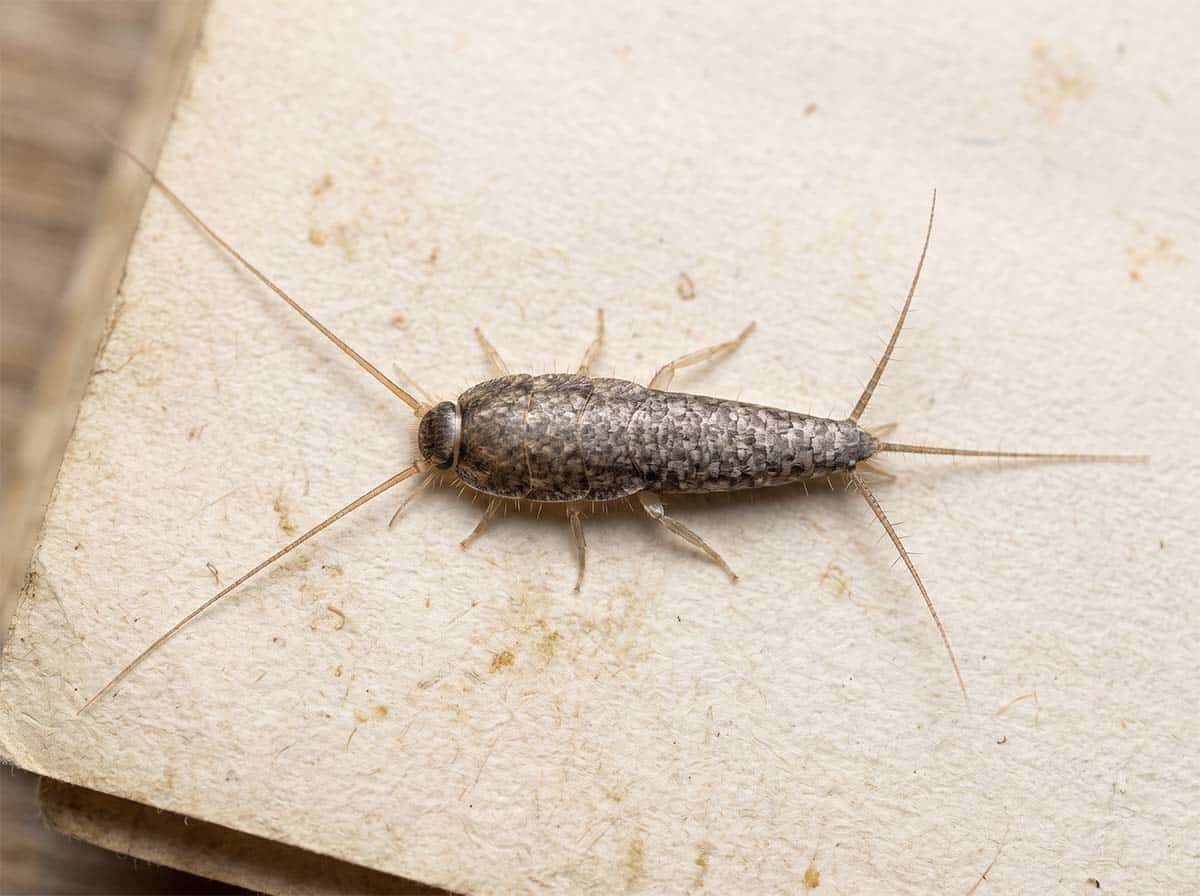
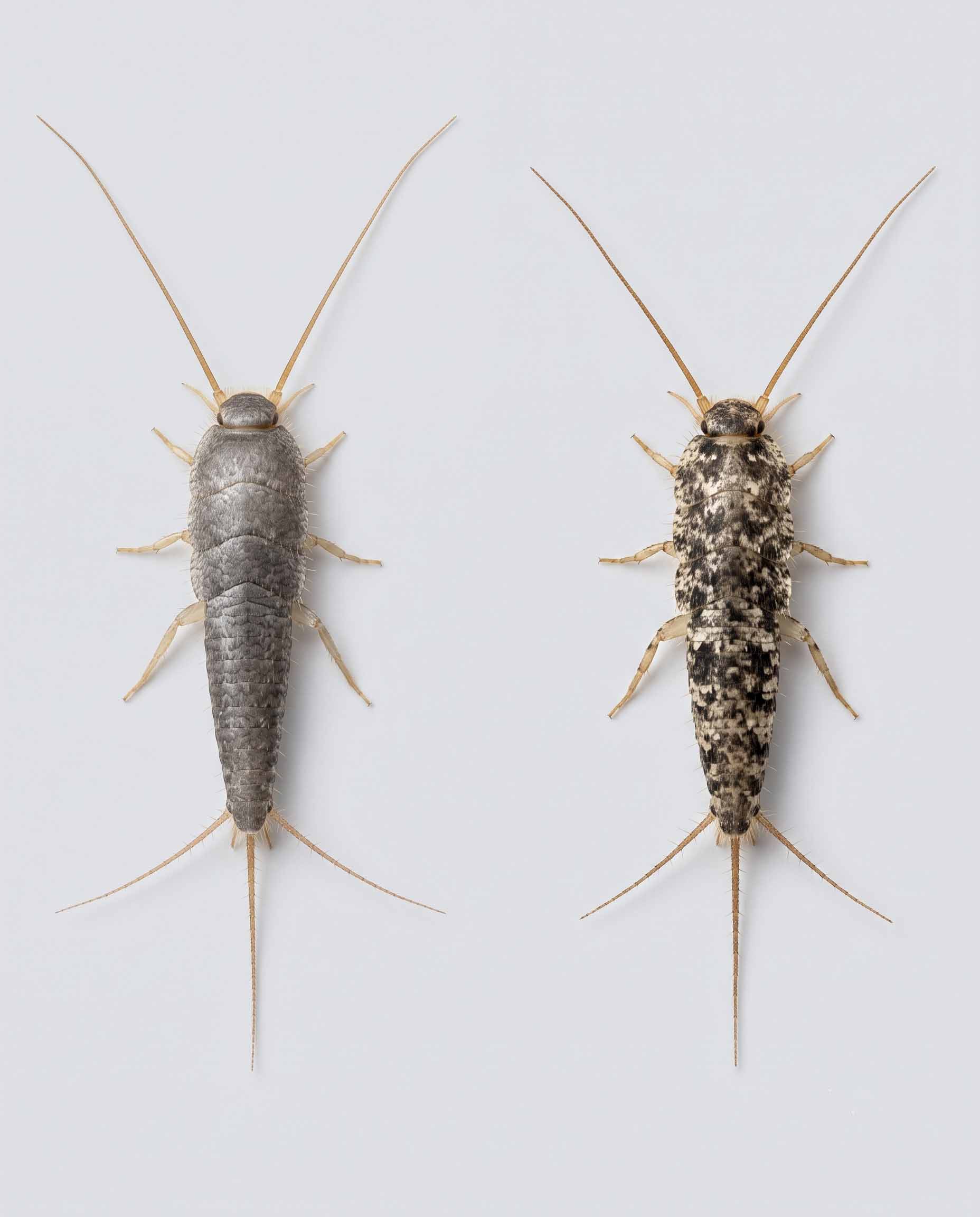
A silverfish is a wingless insect about 12 to 18 mm long with a flattened, carrot-shaped body covered in fine grey or silver scales, long antennae at the front, and three long bristle-like tails at the rear. It moves in a quick, wriggling, fish-like dart and runs from light. The three tails are the feature that settles it: nothing else in an Australian home has them. They eat starch and cellulose, so they graze paper, books, wallpaper paste, cardboard, cotton and linen. They do not eat wool, they do not bite, and they are not known to spread disease.
The one in your house is probably not the one in the textbooks
Most guides describe the common silverfish. In Australia that species is genuinely rare, and the one that does live in our homes behaves differently in a way that matters.
| Feature | Grey (long-tailed) silverfish | Common silverfish |
|---|---|---|
| In Australian homes | The common one. Well established across the country | Genuinely rare here, mostly in cooler areas |
| Size | About 12 to 18 mm in the body | About 10 to 15 mm in the body |
| Look | Duller and greyer, mottled grey and brown scales | Evenly silvery with a metallic shine |
| Tails and antennae | Middle tail about as long as the body, antennae longer than the body | Middle tail less than half the body length, shorter antennae |
| Humidity it needs | About 55% and up. Copes with normal dry rooms | Above about 75%. Needs genuinely damp rooms |
| Where you find it | Any room in the house, not just the wet ones | Bathrooms, laundries and other damp spots |
| Damage | Does noticeably more damage to paper and fabric | Less damaging |
Australia has around 70 described silverfish species, but almost all are native bush insects living under bark and in leaf litter. Only one, the grey silverfish, is a common household pest. Reference: G.B. Smith, The Australian silverfish fauna, Entomological Society of NSW, and the Norwegian Institute of Public Health review.
Three tails, no wings, and a wriggle
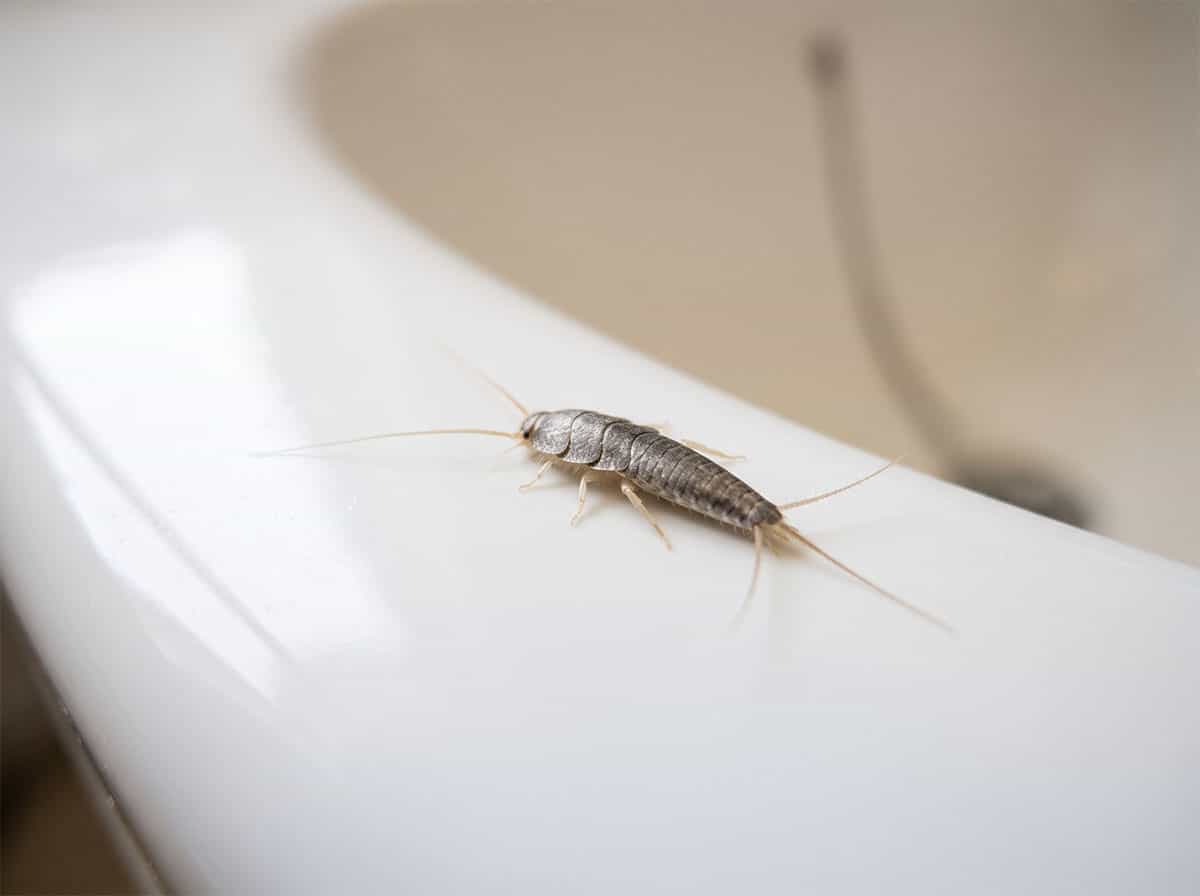
Once you have seen one properly it is hard to mistake. Count the tails at the back, and check there are no wings.
You find the damage before you find the insect
Silverfish are nocturnal and hide in cracks all day, so most people meet the evidence first. Watch for these six.
One stranded in the bath or basin
The single most common way Australians discover them. They cannot climb smooth vertical surfaces, so once in they are stuck. Finding one here does not mean the bathroom is the source.
Grazed patches and holes in paper
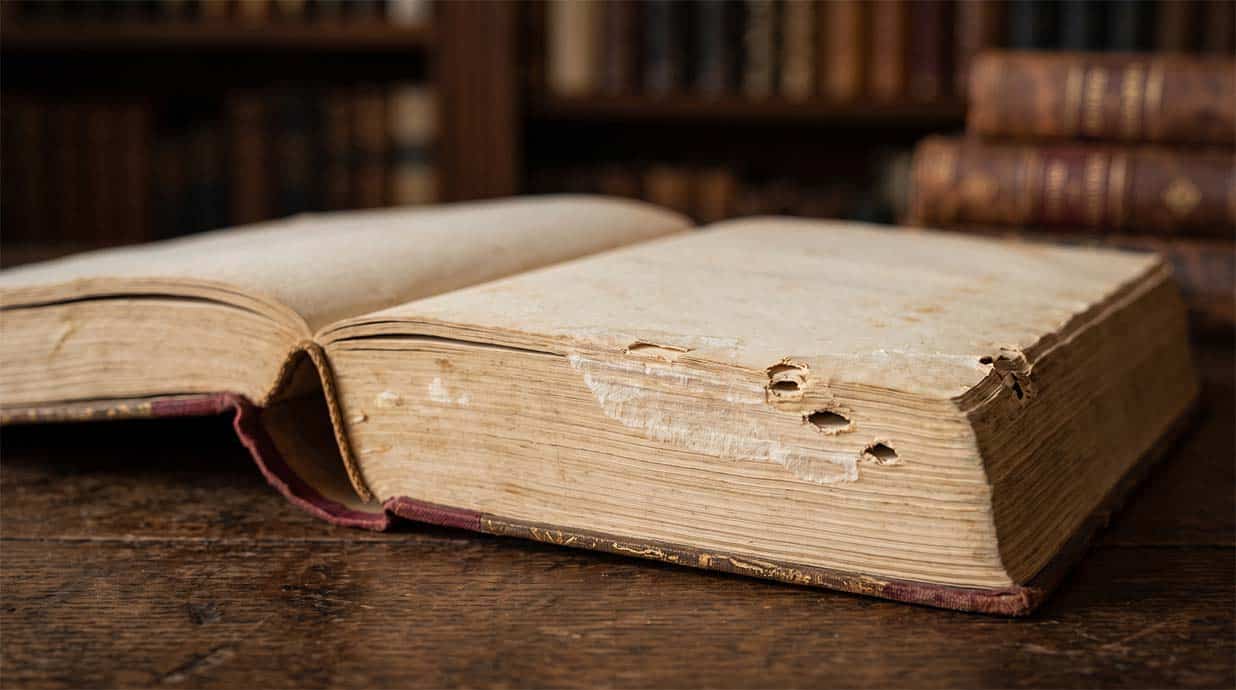
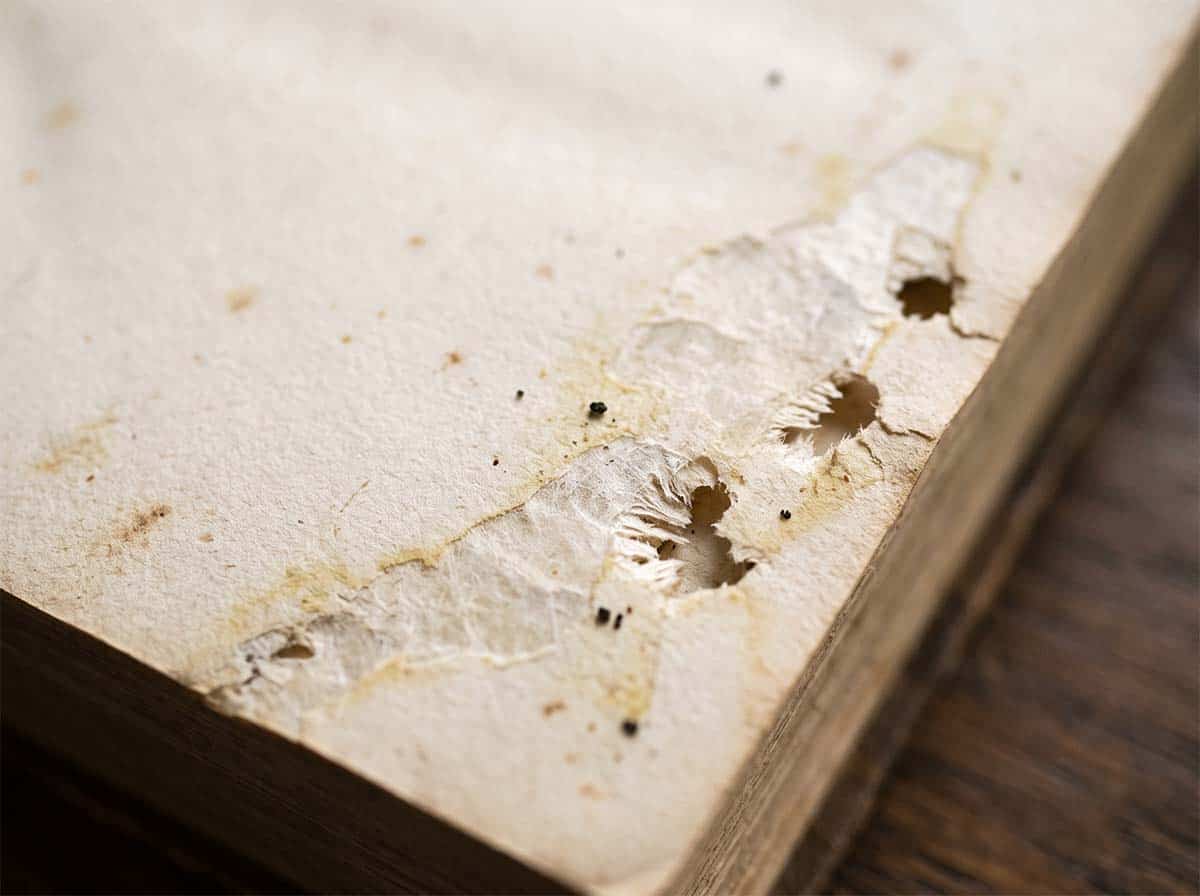
Surface scraping that leaves bare or translucent patches, then irregular holes with thinned, notched edges. Book spines, old documents, photographs, prints and labels are all fair game.
Wallpaper lifting at the edges
They eat the starchy paste behind wallpaper, so seams and corners start to flake and lift. The same appetite takes them to the glue in book bindings and cardboard boxes.
Tiny dark droppings and yellow stains
Small dark pellets, a bit like coarse pepper, in drawers and along shelf edges. Yellowish staining on paper and fabric often comes with it, partly from the fungi that follow their feeding.
Shed skins and a fine silvery dust
They keep moulting their whole lives, so cast skins and loose scales build up in drawers, on shelves and in cupboard corners. It looks like a delicate, dust-like glitter.
They scatter when you switch a light on
They run from light, so flicking on the bathroom or kitchen light at night and catching a fast, wriggling dart into a crack is a classic sighting.
The things people mistake for silverfish
Two questions settle nearly every case: how many tails does it have, and what has been eaten?
Silverfish vs the usual confusions
| What you saw | Size | The give-away |
|---|---|---|
| Silverfish | 12 to 18 mm | Three long thread-like tails, scaly tapered body, wingless, wriggles |
| Firebrat | About 14 mm | Also three tails, but mottled and speckled, and it lives somewhere hot: behind the oven, near the hot water system, in a plant room. Rare in Australia |
| Booklice | 1 to 2 mm | Ten times smaller, pale, soft and no tails. They eat mould, not paper, so they mean damp |
| Earwig | 12 to 20 mm | Two hard curved pincers at the rear, not three soft filaments. Harder body, and mostly an outdoor insect |
| House centipede | Up to 38 mm | Count the legs. A centipede has dozens; a silverfish has six |
| Carpet beetle larva | 4 to 6 mm | Fuzzy and bristly, slow moving, no long tails. Crucially it eats wool, which silverfish cannot digest |
If it is tiny, pale and tail-less, read the booklice guide instead, because that is a damp and mould problem rather than a silverfish one.
Holes in a jumper? That is not a silverfish
This is the most useful distinction on the page, and most people have it the wrong way round. Silverfish cannot digest keratin, the protein in animal fibres, so they do not eat wool, and reports on silk are mixed. What they do eat is starch and cellulose: paper, cardboard, wallpaper paste, glue, and plant-based fabrics such as cotton, linen and rayon, especially where these are starched, sized or soiled. So holes in a woollen jumper, a cashmere scarf or a wool carpet point to clothes moths or carpet beetles, not silverfish. Grazing and holes on books, paper, cardboard and cotton point to silverfish.
Not a health threat, but they ruin things quietly
Silverfish are a damage problem, not a danger problem. The cost is what they eat, and the fact that it is often irreplaceable.
They damage the things you cannot replace
Books, documents, photographs, prints, certificates, wallpaper and stored fabric. In an ordinary home the damage is usually limited, but when it lands on the one box of family photos or a rare book, it is permanent.
They get into stored food
Flour, cereal, pasta and dry pet food are all on the menu, along with household dust and dead insects. It is contamination rather than a health hazard, but infested packets are better thrown out.
They do not bite or spread disease
Silverfish have weak jaws built for scraping surfaces, not piercing skin, so they do not bite people or pets, and they are not known to transmit disease. A silverfish allergen has been identified and can cross-react with dust mite allergens, but a direct link to allergic illness has not been shown, and the risk in a well-kept home is considered low.
The pest with no season
Silverfish are one of the few pests that genuinely do not have a season. They breed steadily all year rather than in seasonal bursts, they live entirely indoors, and a single one takes roughly one and a half to three years to reach breeding age. Numbers creep up slowly and steadily instead of spiking in summer, which is exactly why they go unnoticed for so long.
What drives them is moisture, not the calendar. The species in our homes needs around 55% humidity to survive long term and prefers 20 to 26 degrees, which is ordinary indoor room temperature in Sydney for most of the year. The seasons do shift the conditions though: winter brings closed windows, less ventilation and condensation on cold surfaces, and summer brings high humidity outright. Both create the still, damp, dark pockets they need, which is why we treat for silverfish all year.
Silverfish, answered
What does a silverfish look like?
A silverfish is a wingless insect about 12 to 18 mm long in the body, with a flattened, tapered, carrot-shaped outline covered in fine grey or silver scales. It has long antennae at the front and, most tellingly, three long bristle-like tails at the rear. It moves in a quick wriggling dart that people often describe as fish-like, and it runs for cover the moment a light goes on. Nothing else in an Australian home combines a scaly tapered body with three tails and no wings, so the tails are the feature to check.
Do silverfish bite, and are they dangerous?
No, silverfish do not bite people or pets. Their jaws are weak and built for scraping the surface of paper rather than piercing skin, which is why the damage they leave looks grazed rather than chewed. They are also not known to transmit any disease. A silverfish allergen has been identified and it can cross-react with dust mite and cockroach allergens, but a direct link between silverfish and allergic illness has not been demonstrated, and the risk in a well-maintained home is considered low. They are a damage problem rather than a health one.
Do silverfish eat clothes?
Some fabrics, but not the ones most people assume. Silverfish cannot digest keratin, the protein in animal fibres, so they do not eat wool, and reports on silk are mixed. What they do eat is starch and cellulose, which means cotton, linen and rayon, especially where the fabric is starched, sized or soiled with food or sweat. So irregular holes in a woollen jumper, a cashmere scarf or a wool carpet almost always mean clothes moths or carpet beetles instead. Grazing and holes on cotton, linen, paper and cardboard point to silverfish.
Why do I keep finding silverfish in the bath?
Two reasons, and they work together. Silverfish are drawn to bathrooms because they can take up moisture from humid air, and a bathroom is the most reliably humid room in the house. Then, once they drop into a bath or basin, they cannot get out: their feet have only simple claws and no gripping pads, so they cannot climb a smooth vertical surface. That is why the bath is the single most common place Australians first meet one. It does not necessarily mean the bathroom is the source, since they may have come from a wall cavity, a cupboard or the subfloor.
How long do silverfish live?
Much longer than most household insects. Reported lifespans range from about two to eight years, and several years is normal. They are also unusual in that they keep moulting for their whole adult life, up to around 50 times, whereas most insects stop moulting once they are grown. A useful side effect is that they can regrow a lost leg at the next moult. Because they take roughly one and a half to three years just to reach breeding age, populations build very slowly, which is why an infestation is usually well established by the time anyone notices it.
How do I get rid of silverfish for good?
Take away the food and the harbourage, then treat properly and give it time. Move documents, photos and stored clothing out of cardboard and into sealed plastic tubs, cut back stacked paper and packaging, vacuum cracks, shelf edges and behind skirting, and empty the vacuum outside. Fix leaks, run the exhaust fans, and avoid over-wetting floors when mopping. Be aware that simply running a dehumidifier is not enough on its own, because the species common in Australian homes copes with fairly dry air. Their eggs are hidden deep in cracks and can keep hatching for up to two months, and adults live for years, so expect a thorough crack-and-crevice treatment and a few weeks before you see the result, rather than an overnight fix.
Silverfish in the books or the linen cupboard?
We treat the cracks, cupboards, subfloor and roof void where they actually live, not just where you happened to see one. Free quotes, no call-out charge, and a Sydney family business that has done this for 15 years.
Sources & references
Australian species, and the rarity of the common silverfish here: G.B. Smith, "The Australian silverfish fauna" and "The European silverfish in Australia", General and Applied Entomology, Entomological Society of NSW. Appearance, tails and behaviour: the Australian Museum and the Victorian Department of Health. Humidity and temperature requirements, lifecycle, and why control takes time: the Norwegian Institute of Public Health review of the long-tailed silverfish, and Kulma and others, Insects, 2021. Diet, the inability to digest keratin, and damage patterns: Ebeling, Urban Entomology (UC Riverside) and UC IPM. Measurements are typical ranges and vary between species. This guide is for identification and general information.