
Wasps in Sydney: How to Identify Them
A papery nest under the eaves, or wasps working the BBQ and the bins? Here is how to tell a wasp from a bee, spot the aggressive European wasp, and deal with a nest safely.
The quick answer
How do I tell a wasp from a bee, and which are dangerous?
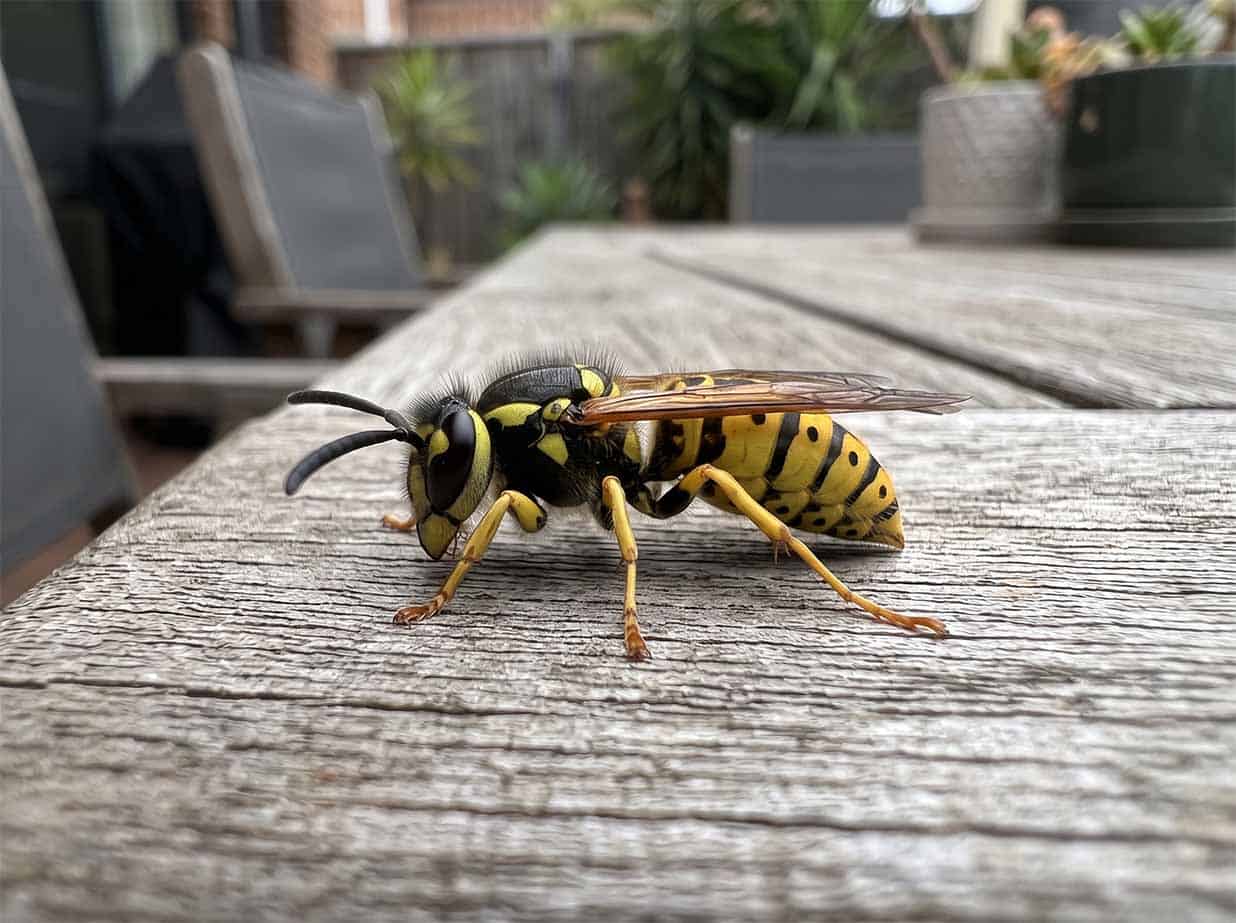
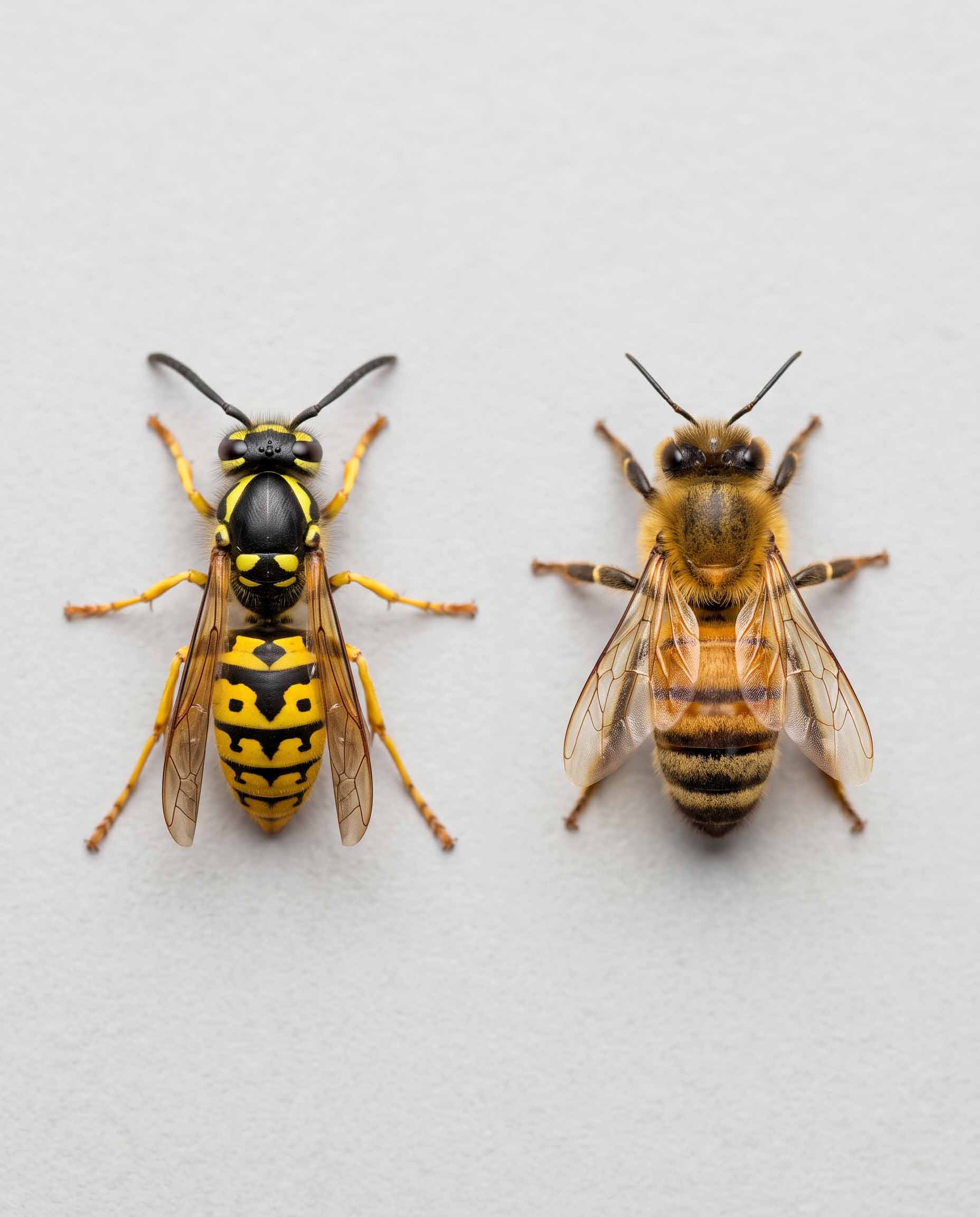
A wasp is smooth and slender with a narrow waist and can sting again and again, while a bee is rounder and hairy and dies after a single sting. In Sydney the two to know are the European wasp, 12 to 17 mm, bright yellow with bold black bands, which is aggressive and quick to sting, and the paper wasp, slimmer with dangling legs and a small papery nest under the eaves. The European wasp is the dangerous one, because it nests out of sight, scavenges around food and drink, and will sting repeatedly if disturbed. Call 000 for any serious allergic reaction or multiple stings.
European wasp vs paper wasp vs bee
The aggressive one, the common eave-nester, and the bee people mix them up with.
| Feature | European wasp | Paper wasp | Honey bee |
|---|---|---|---|
| Size | 12 to 17 mm | 10 to 22 mm, slimmer | 10 to 15 mm |
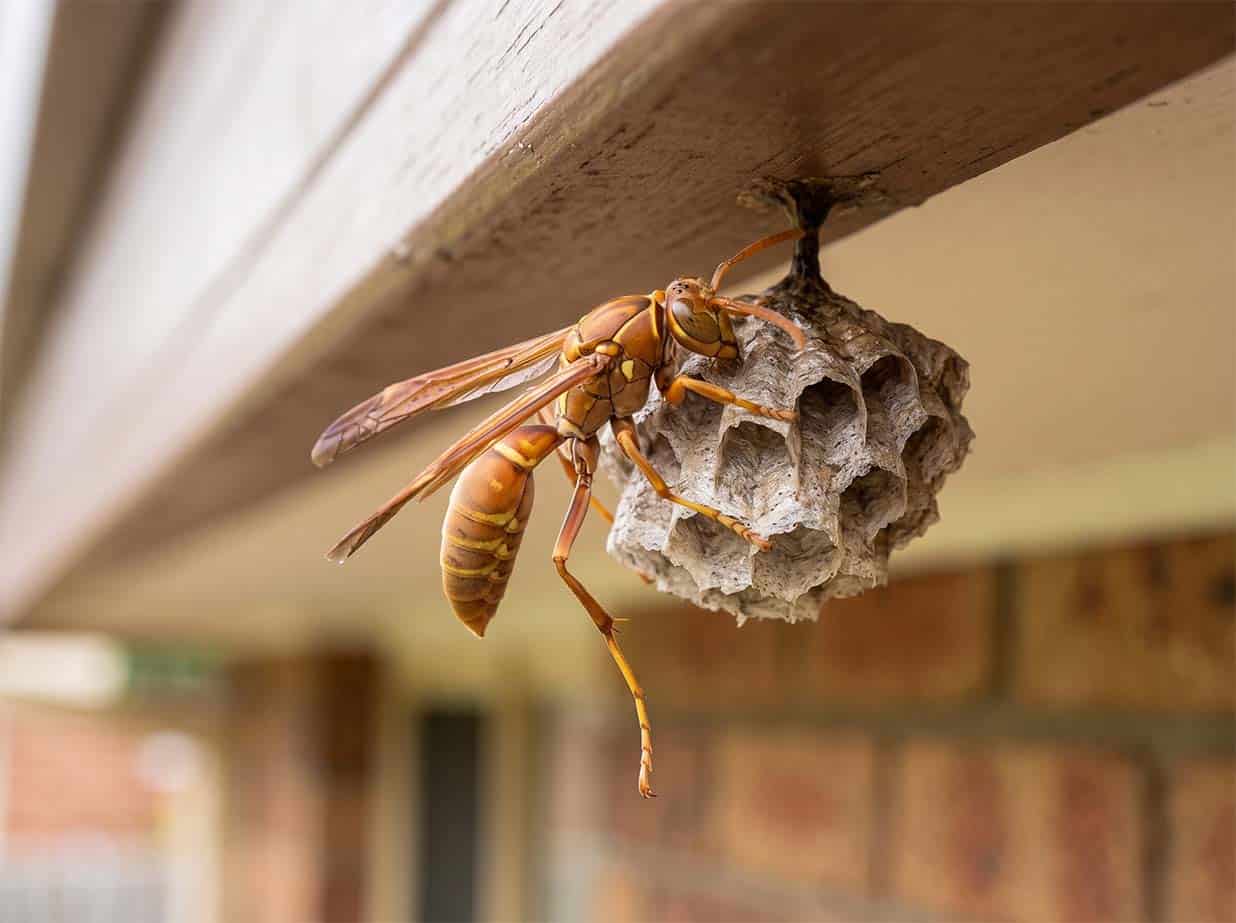
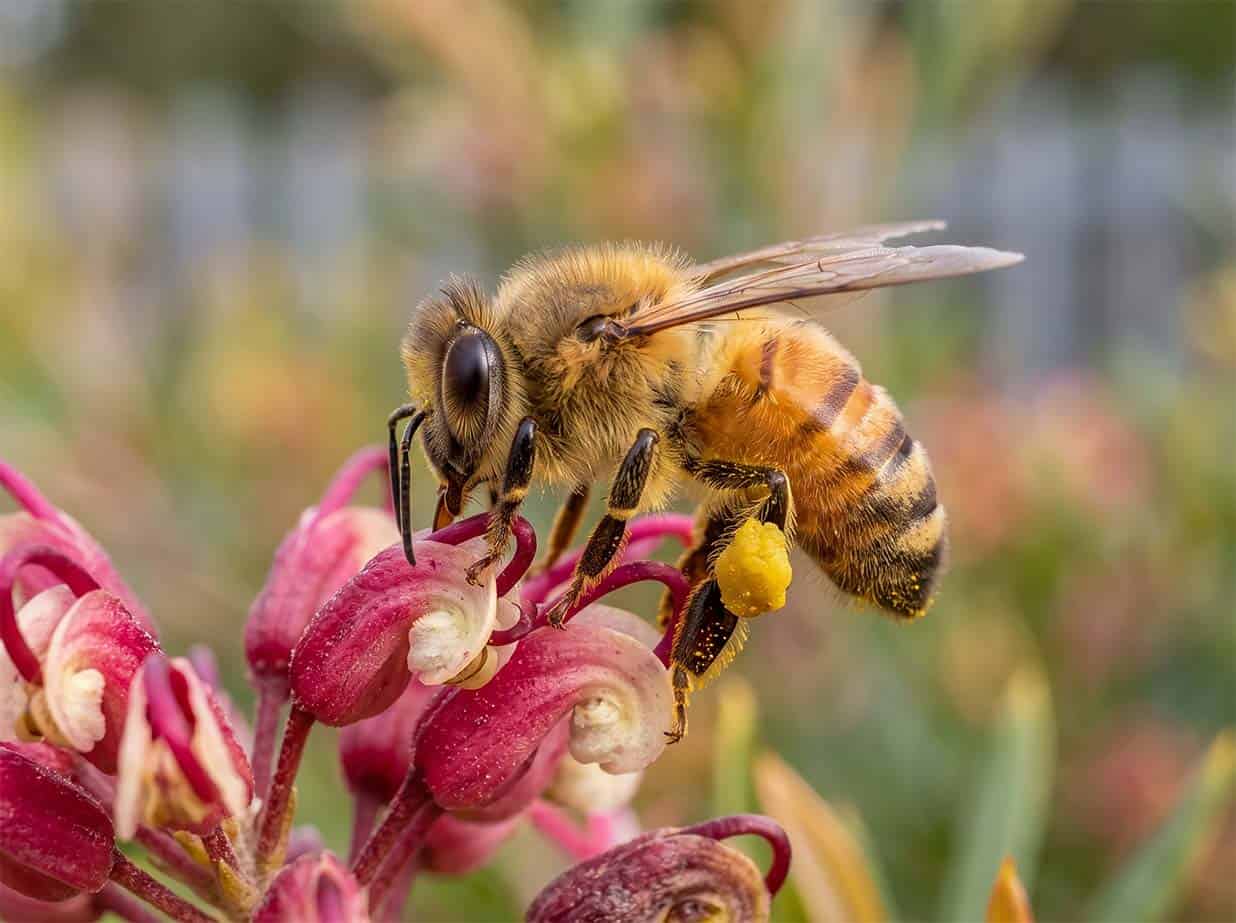
| Look | Bright yellow with bold black bands, smooth, legs tucked in flight | Slender with a long waist, tan to orange-brown, legs dangle in flight | Golden-brown and furry, not glossy |
| Nest | Hidden in wall cavities, roofs or the ground | Small open, upside-down papery comb under eaves | Large wax comb in a hive or cavity |
| Behaviour | Aggressive, scavenges food and drink | Fairly calm, stings only in defence | Not aggressive away from the hive |
| Sting | Stings repeatedly, does not die | Painful but usually a one-off | Stings once and dies, barb stays in |
Mud wasps (mud daubers) build small mud nests on walls and are solitary and rarely sting. Reference: Australian Museum.
The three to tell apart
The aggressive wasp, the everyday eave wasp, and the bee they get confused with.
The nest and the traffic give them away
Wasps are easy to spot, but the nest is what matters. Look for these.
A papery nest under the eaves
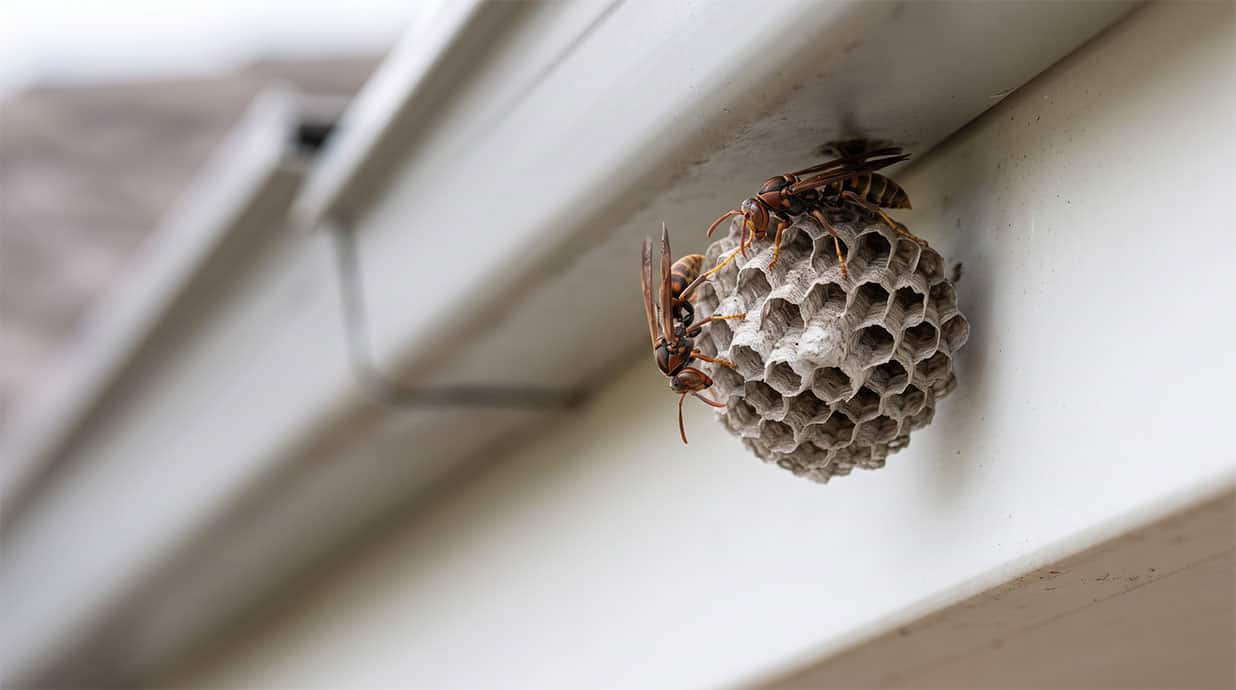
A small, grey, upside-down honeycomb on a short stalk, tucked under eaves, pergolas or in shrubs. That is a paper wasp nest, usually the size of a golf ball to a fist.
Wasps going in and out of a hole
A steady stream of wasps flying in and out of a single hole in a wall cavity, roof or the ground. That is a hidden European wasp nest, and it can be very large. Keep well clear.
Wasps at the BBQ and bins
Wasps scavenging around meat, sweet drinks, pet food and rubbish bins are usually European wasps. Unlike bees, they are drawn to protein and sugar, not just flowers.
A mud nest on a wall
Small tubes or a lump of mud on a sheltered wall or under a ledge is a mud wasp nest. Mud wasps are solitary and rarely sting, so these are usually best left alone.
More wasps as summer goes on
Numbers build through the warm months as the nest grows, so a few wasps in spring can become a serious problem by late summer and autumn, when European wasp nests are at their biggest.
A sudden sting near the house
An unprovoked sting near a wall, roofline or garden bed can mean a nest is close. Wasps defend the nest fiercely, so it is a sign to find and treat it rather than push on.
Wasp, bee, and which wasp
First, is it a wasp or a bee, because it changes what you do. Then, which wasp.
Wasp vs bee
| Feature | Wasp | Bee |
|---|---|---|
| Body | Smooth and shiny, slender with a narrow waist | Rounder and furry, hairy all over |
| Colour | Bright yellow and black, or tan | Golden-brown, more muted |
| Sting | Stings again and again, does not die | Stings once and dies, leaving the barb |
| Feeds on | Insects, meat, sweet drinks, scraps | Nectar and pollen from flowers |
| If it stung you | No barb left in the skin | A barbed sting often left in the skin, scrape it out |
Bees are beneficial pollinators, so a bee swarm is best relocated by a beekeeper, not sprayed. Wasps, especially European wasps, are treated differently.
Which wasp is it?
The European wasp is the aggressive one, bright yellow and black, nesting out of sight and scavenging around food. The paper wasp is slimmer, builds the open papery nest under the eaves, and is fairly calm unless the nest is threatened. The mud wasp builds small mud nests, lives alone and is not aggressive. Knowing which you have decides how urgently the nest needs treating.
| Wasp | Nest | Aggression | Risk |
|---|---|---|---|
| European wasp | Hidden in cavities, roofs or the ground, large | High, defends fiercely and scavenges | High, stings repeatedly |
| Paper wasp | Small open comb under eaves and in shrubs | Low to moderate, defensive near the nest | Moderate, a painful sting |
| Mud wasp | Small mud tubes or lumps on walls | Very low, solitary | Low, rarely stings |
A painful sting, and when it is an emergency
For most people a wasp sting is painful but passes. For some it is serious, and multiple stings raise the risk.
A single sting
Move away from the nest, apply a cold pack to ease the pain and swelling, and take an antihistamine or paracetamol if needed. A wasp leaves no barb, but if you were stung by a bee, scrape the barb out rather than squeezing it.
When to call 000
Call 000 straight away if there is difficulty breathing, swelling of the face, lips, tongue or throat, dizziness, or a widespread rash, as these signal a severe allergic reaction. Also seek urgent help for anyone stung many times, or a young child, since multiple stings can make people very unwell.
Do not disturb the nest
Never knock down or spray a European wasp nest yourself. Disturbing it can bring the whole nest out at once, and people are most often stung badly while trying to deal with a nest. Keep everyone clear and have it treated professionally.
Wasps build all summer and peak in autumn
A wasp nest starts small in spring, when a single queen begins building, and grows through summer as more workers hatch. That is why a nest you barely noticed in October can be large and busy by late summer and autumn, which is when European wasps are most numerous and most aggressive.
Because the nest is smaller and easier to treat early, spring and early summer are the best time to act if you spot one. By autumn a European wasp nest can hold thousands of wasps, so it is very much a job to leave to a professional.
Wasps in Sydney, answered
How do I tell a wasp from a bee?
A wasp is smooth and shiny with a slender body and a narrow waist, often bright yellow and black, and it can sting again and again. A bee is rounder and furry, more golden-brown, and it stings only once before it dies, usually leaving its barb in the skin. Wasps are drawn to meat, sweet drinks and scraps, while bees visit flowers for nectar and pollen. The practical difference is that bees are beneficial and usually relocated, while aggressive wasps like the European wasp are treated.
Which wasps in Sydney are dangerous?
The European wasp is the one to worry about. It is bright yellow and black, nests out of sight in wall cavities, roofs or the ground, scavenges around food and bins, and will sting repeatedly if disturbed. Paper wasps, which build the small papery nests under eaves, are far less aggressive and usually only sting to defend the nest, though the sting is painful. Mud wasps are solitary and rarely sting. Any wasp sting can cause a severe allergic reaction in some people.
There is a papery nest under my eaves, what is it?
A small, grey, upside-down honeycomb on a short stalk under the eaves is a paper wasp nest. They are common and usually only a problem where people pass close by, such as over a doorway or near an outdoor setting, since the wasps will defend the nest if disturbed. A small nest can sometimes be treated with care, but if it is in a high-traffic spot, near children, or you are unsure it is a paper wasp and not a European wasp, it is safer to have it treated professionally.
What should I do if I am stung by a wasp?
Move away from the area, since a sting often means a nest is close and wasps can sting repeatedly. Apply a cold pack to reduce pain and swelling, and take an antihistamine or paracetamol if needed. A wasp does not leave a barb, but a bee sting often does, so scrape it out rather than squeezing. Call 000 immediately if there is any difficulty breathing, swelling of the face or throat, dizziness, or if the person has been stung many times or is a young child, as these can signal a serious reaction.
Are European wasps in Sydney?
Yes. The European wasp is an introduced pest that is well established in south-eastern Australia, including Sydney, and it is more of a problem than the native paper wasps. It is bright yellow with bold black bands, aggressive, and unlike most wasps it survives our mild winters in larger numbers, so nests can become very big. It scavenges around outdoor meals, bins and pet food, which is why it so often turns up at barbecues. A hidden European wasp nest should always be treated professionally.
How do I get rid of a wasp nest?
Do not try to knock down or spray a large nest yourself, as disturbing it can bring the whole colony out and lead to multiple stings. This is especially true for European wasps, whose nests are often mostly hidden in a wall or the ground. The safe approach is to keep everyone clear, note where the wasps are entering, and have the nest treated by a professional with proper protection and the right product. Treating the nest, rather than the wasps you can see, is what actually solves it.
Wasp nest on the house? Let us make it safe
We find and treat the nest safely, so no one gets stung sorting it out. Free quotes, no call-out charge, and a Sydney family business that has done this for 15 years.
Sources & references
Wasp identification and biology: Australian Museum. First aid for stings follows standard Australian guidance: apply a cold pack, and call 000 for difficulty breathing, facial or throat swelling, dizziness, or if someone has been stung many times. For bite and sting advice, call the Poisons Information Centre on 13 11 26. This guide is for identification and general information and is not a substitute for medical advice.