
Rats and Mice in Sydney: How to Identify Them
Spotted droppings, heard scratching in the ceiling, or seen something dart along the skirting? Here is how to tell a rat from a mouse, work out which rodent you have, and know when it is time to call a professional.
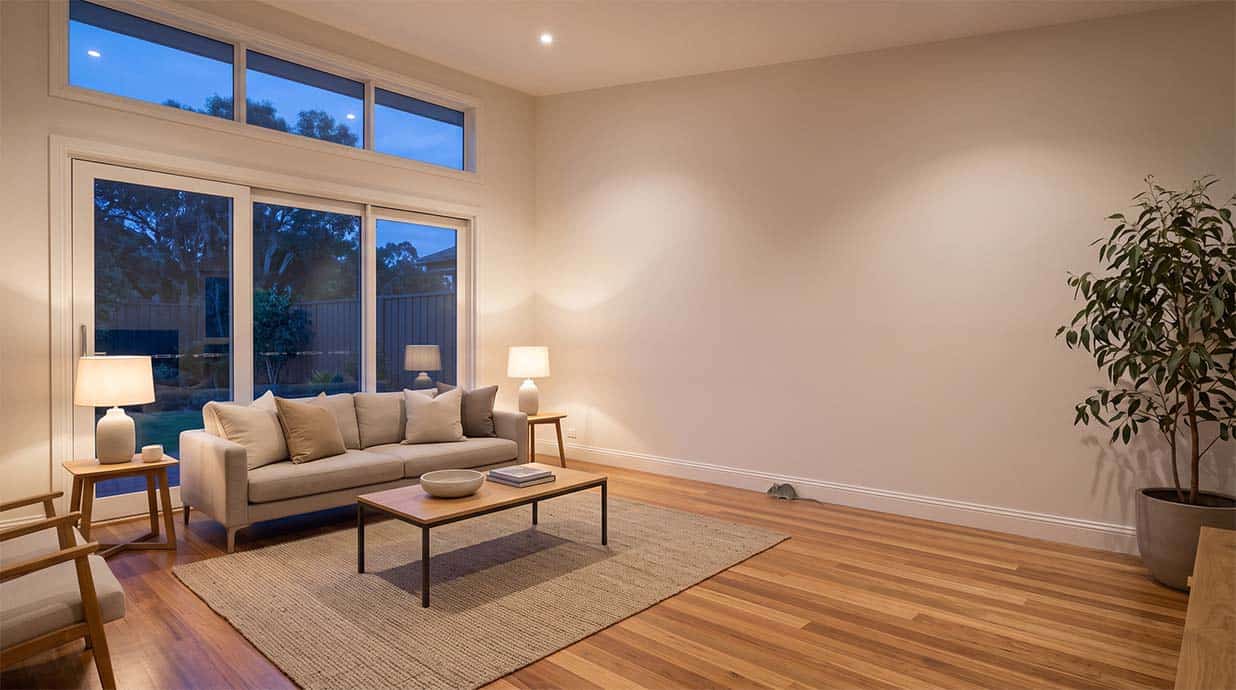
The quick answer
How do you tell a rat from a mouse?
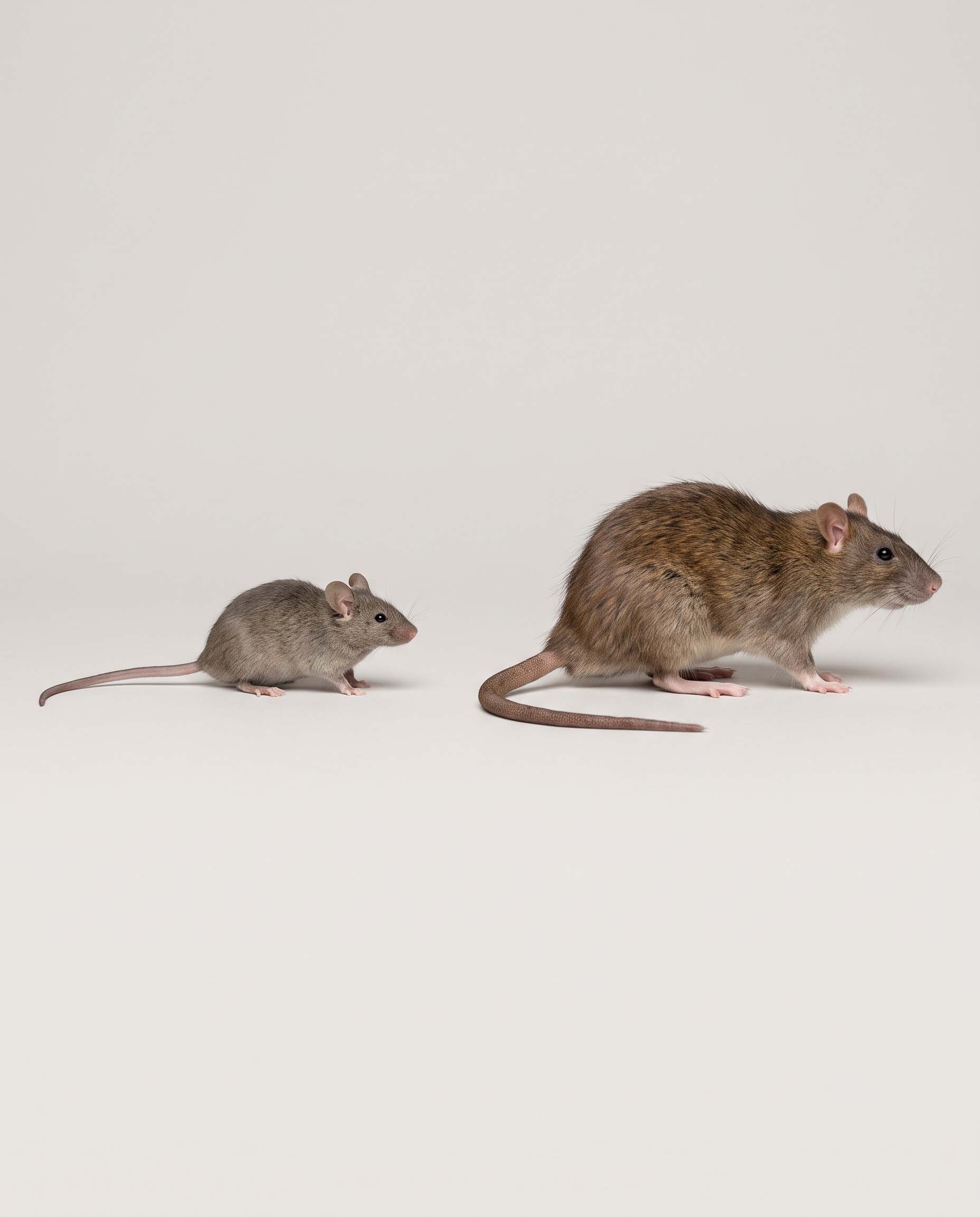
A mouse is small (a 6 to 10 cm body) with a small head, large ears and a thin tail as long as its body, and leaves rice-grain droppings 3 to 6 mm long. A rat is much bigger (a 16 to 25 cm body) with a heavier head and body, and leaves droppings 12 to 20 mm long, about the size of a raisin. In Sydney homes the two most common rats are the black (roof) rat, a sleek climber that lives in ceilings and roof voids, and the brown (Norway) rat, a heavier ground dweller found in subfloors, gardens and drains.
House mouse vs brown rat vs black rat
The three rodents you are most likely to find in a Sydney home, side by side.
| Feature | House mouse | Brown (Norway) rat | Black (roof) rat |
|---|---|---|---|
| Body length | 6 to 10 cm | 16 to 25 cm | 16 to 24 cm |
| Weight (approx) | 12 to 30 g | 200 to 500 g | 120 to 250 g |
| Tail | Thin, as long as the body | Thick, shorter than the body | Thin, longer than the body |
| Ears & nose | Large ears, pointed nose | Small ears, blunt nose | Large ears, pointed nose |
| Colour | Light brown to grey | Grey-brown, paler belly | Dark grey to black, sleek |
| Droppings | 3 to 6 mm, rod shaped, pointed ends | 18 to 20 mm, capsule shaped, blunt ends | 10 to 14 mm, spindle shaped, pointed ends |
| Where in the home | Wall cavities, cupboards, pantries | Subfloors, drains, gardens, ground level | Roof voids, ceilings, upper walls, trees |
| Climber | Yes | Poor, prefers the ground | Excellent, agile climber |
| Squeezes through | Gaps from about 6 mm | Gaps from about 12 mm (young rats) | Gaps from about 12 mm (young rats) |
| When they move in | Year round, indoors from autumn | Year round, indoors from autumn | Year round, indoors from autumn |
Sizes and weights are typical adult ranges and vary with age and condition. Young rats are easily mistaken for mice (see below).
Meet the three rodents
Plain-English descriptions, so you can match what you saw to the right pest.
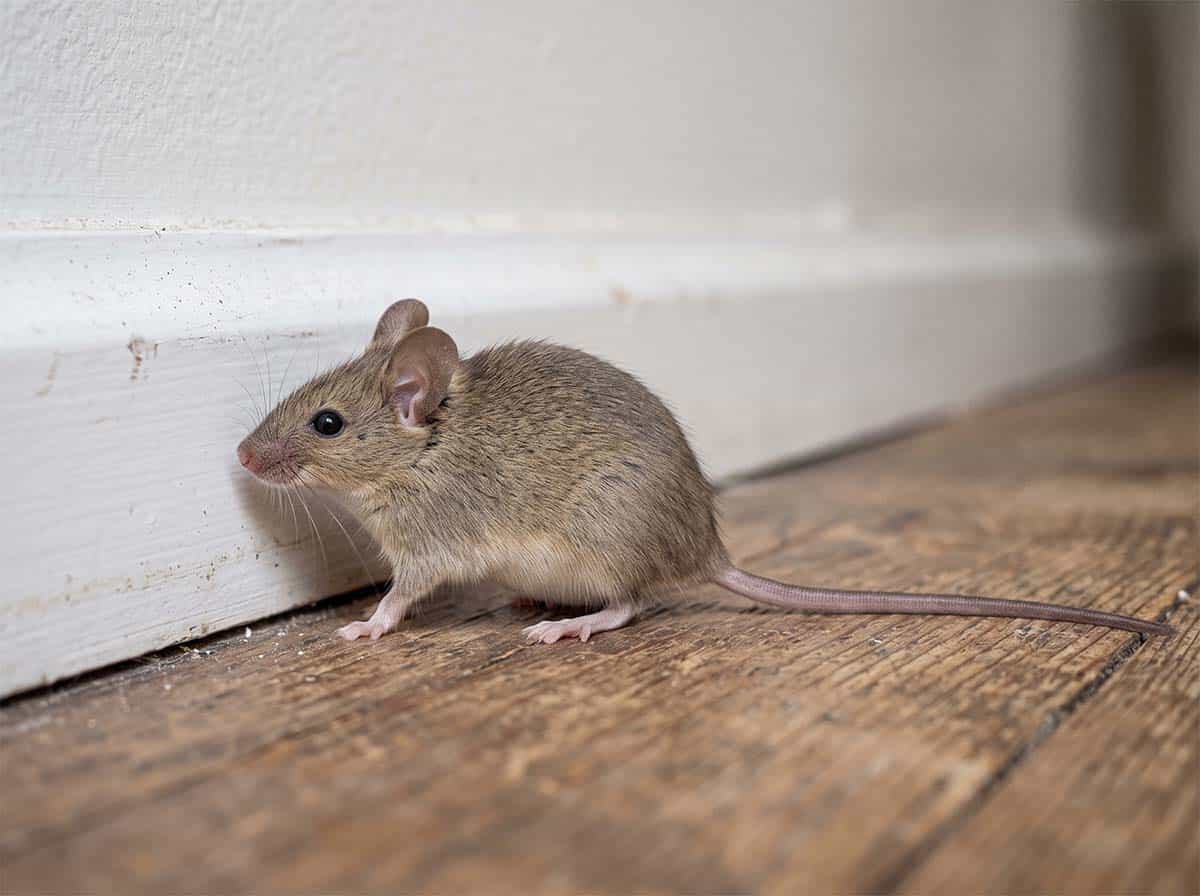
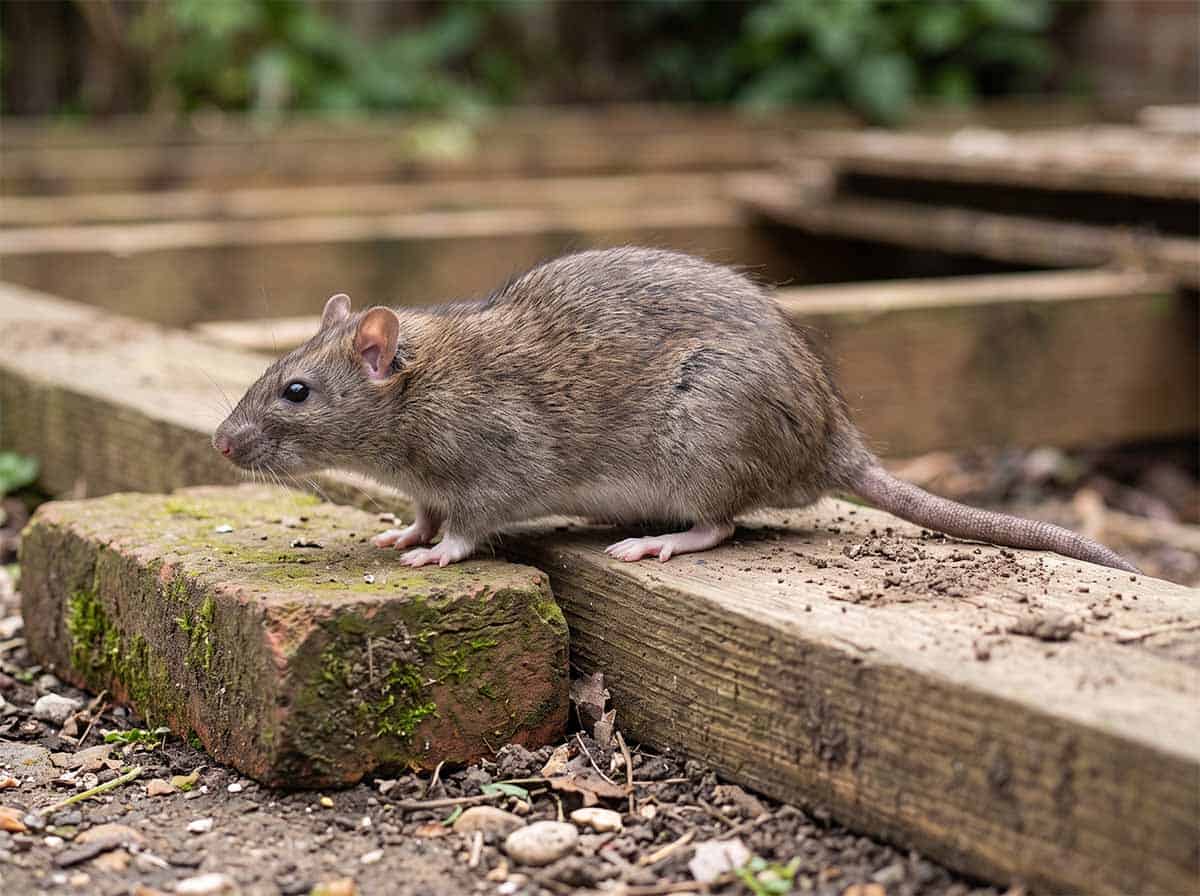
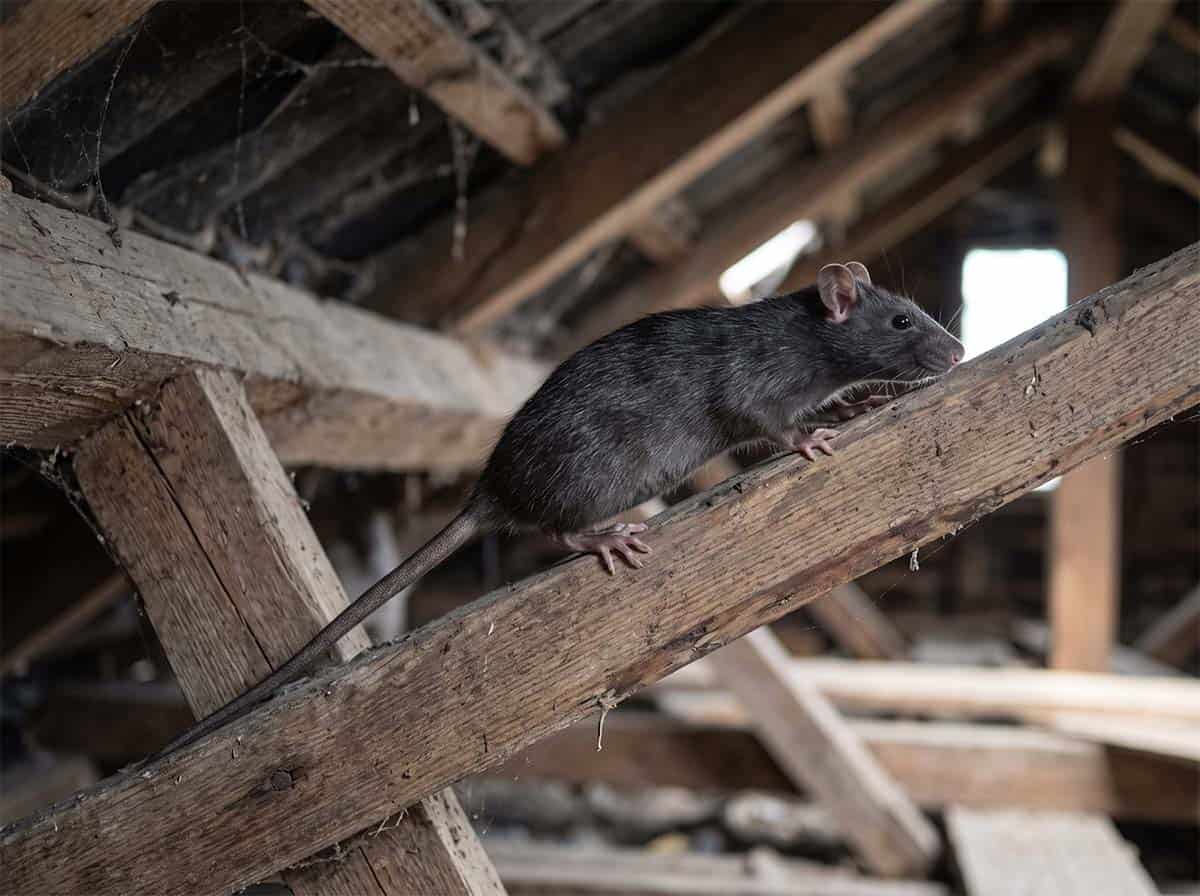
You will usually hear or find them before you see them
Rodents are shy and mostly nocturnal, so the evidence shows up before the animal does. Look for these.
Droppings
Dark, scattered droppings along walls, in cupboards, under the sink or in the pantry. Small rice grains mean mice, larger raisin-sized pellets mean rats.
Scratching & scurrying
Night-time scratching, gnawing or scurrying sounds in the ceiling, walls or under the floor. Roof rats in particular give themselves away overhead after dark.
Gnaw marks & damage
Chewed food packaging, gnawed timber, skirting or cabling, and small holes. A rodent's teeth never stop growing, so they gnaw constantly.
Grease & rub marks
Dark, greasy smudges along skirting boards, pipes and entry points where rodents brush the same runs night after night.
A musky smell
A persistent musky, ammonia-like odour, strongest near nests and in enclosed spaces like cupboards, the pantry or the subfloor.
Nests & a fixated pet
Shredded paper, fabric or insulation tucked into a warm cavity, and a dog or cat that suddenly stares at, or paws at, a wall, appliance or vent.
The lookalikes people get wrong
Three quick comparisons that clear up almost every "is it a rat or a mouse" question.
Mouse vs rat
| Feature | Mouse | Rat |
|---|---|---|
| Body size | 6 to 10 cm, fits in a palm | 16 to 25 cm, needs two hands |
| Head & ears | Small head, large ears for its size | Larger, heavier head; ears smaller relative to the head |
| Droppings | 3 to 6 mm, like dark rice grains | 12 to 20 mm, like raisins or olive pits |
| Behaviour | Curious, nibbles a little in many places | Cautious of new objects, so baiting can take longer |
| Damage | Small gnaw holes, light packaging damage | Larger holes, chewed cabling and thicker timber |
Is it a mouse, or a young rat?
This is the single most common mix-up. A young rat is roughly mouse-sized, so size alone will fool you. The giveaway is proportion: a young rat has an oversized head and large feet for its body, and a thicker tail base. A mouse is neat and in proportion, with a slim tail and a small head. If the "mouse" looks slightly clumsy and top-heavy, it is probably a juvenile rat, and there are likely more nearby.
Black (roof) rat vs brown (Norway) rat
| Feature | Black (roof) rat | Brown (Norway) rat |
|---|---|---|
| Build | Slender and sleek | Heavy and thick-set |
| Tail vs body | Longer than the body | Shorter than the body |
| Ears | Large, would cover the eyes if bent forward | Small, do not reach the eyes |
| Nose | Pointed | Blunt |
| Droppings | 10 to 14 mm, spindle shaped, pointed ends | 18 to 20 mm, capsule shaped, blunt ends |
| Where it lives | Roof voids, ceilings, upper walls, trees | Subfloors, drains, gardens, ground level |
In Sydney's suburbs the black (roof) rat is the rat most often found inside homes, especially in ceilings and roof voids. Reference: Australian Museum.
Why rats and mice are more than a nuisance
Rodents in the home carry real health and property risks, which is why early action matters.
Disease & contamination
Rodents can spread illness through their droppings, urine and the fleas they carry. In Australia they are linked to salmonellosis (food poisoning) and leptospirosis, and they contaminate food and kitchen surfaces as they move about. Guidance from NSW Health is to clean droppings with disinfectant and gloves rather than sweeping or vacuuming them dry.
Fire & electrical risk
A rodent's front teeth grow continuously, so it gnaws constantly to keep them down. That means chewed electrical cabling in wall cavities and roof voids, a recognised cause of electrical faults and house fires. Rats in the ceiling are a genuine safety issue, not just a noise.
Structural & food damage
Beyond wiring, rodents gnaw through packaging, insulation, timber, pipes and stored goods, and they breed fast. A small problem left alone becomes an established colony in weeks, so a few droppings are worth acting on early.
Rodents are a winter pest, not a summer one
Most people think of pests as a summer problem, but rats and mice are the opposite. As Sydney cools through autumn and winter, outdoor food and shelter dry up and rodents move indoors looking for warmth, food and a dry place to nest. That is why callouts climb from around mid-May and stay high through August.
The practical takeaway: the best time to seal up and check for rodents is early autumn, before the cold pushes them in. If you are already hearing them in the ceiling in winter, they have moved in, and it is time to act.
Rat and mouse identification, answered
How can I tell the difference between a rat and a mouse?
Size is the quickest test. A mouse has a small 6 to 10 cm body, a small head, large ears and a thin tail about as long as its body, and it leaves droppings 3 to 6 mm long, like dark rice grains. A rat is much bigger, with a 16 to 25 cm body, a heavier head and body, and droppings 12 to 20 mm long, closer to the size of a raisin. If it fits comfortably in one hand it is likely a mouse; if it needs two, it is a rat.
What do rat droppings look like, and how are they different from mouse droppings?
Mouse droppings are small, about 3 to 6 mm, rod shaped with pointed ends, and look like dark grains of rice. Rat droppings are much larger, from about 10 to 20 mm. Black (roof) rat droppings are around 10 to 14 mm, spindle shaped with pointed ends, while brown (Norway) rat droppings are around 18 to 20 mm and capsule shaped with blunt ends. Fresh droppings are dark and soft; older ones turn grey and crumble. Always clean them with disinfectant and gloves, not by sweeping or vacuuming dry.
Is it a mouse, or a baby rat?
A young rat is roughly the same size as an adult mouse, so size alone will fool you. Look at the proportions. A young rat has an oversized head and large feet for its body, with a thicker tail base, and often moves a little clumsily. A mouse is neat and in proportion, with a small head and a slim tail. If your mouse looks top-heavy or big-footed, it is probably a juvenile rat, which also means there are likely adults and a nest nearby.
What kind of rats are common in Sydney homes?
Two rats turn up in Sydney homes. The black rat, also called the roof or ship rat, is a sleek, agile climber with large ears and a tail longer than its body, and it lives in ceilings, roof voids, upper walls and trees. It is the rat most often found inside suburban homes. The brown rat, also called the Norway or sewer rat, is heavier and thick-set with small ears and a shorter tail, and it stays lower down in subfloors, gardens, drains and around water. The house mouse is the third common rodent.
What are the first signs of rats or mice in the house?
You usually notice the evidence before the animal, because rodents are shy and mostly active at night. The earliest signs are droppings along walls or in cupboards, night-time scratching or scurrying in the ceiling or walls, gnaw marks on food packaging, timber or cabling, dark greasy rub marks along their runs, a musky ammonia-like smell, and a pet that suddenly fixates on a wall or appliance. Any one of these is worth acting on, since rodents breed quickly.
Are rats and mice in the house dangerous to my health?
Yes, they carry real risks. Rodents can spread illness through their droppings, urine and fleas, and in Australia they are linked to salmonellosis and leptospirosis, as well as contaminating food and kitchen surfaces. They also chew electrical cabling, which is a recognised cause of electrical faults and house fires. Because of the health risk, NSW Health advises cleaning droppings with disinfectant and gloves rather than sweeping or vacuuming them dry. Early professional treatment is the safest way to deal with an active infestation.
Think you have rats or mice? Let us take a look
A quick inspection tells you what you are dealing with and how to stop it. Free quotes, and a Sydney family business that has done this for over 20 years.
Sources & references
Species descriptions and Sydney distribution: Australian Museum. Health risks and safe cleaning of rodent droppings: NSW Health. Measurements are typical adult ranges and vary with age and condition. This guide is for identification and general information; for an active infestation, arrange a professional inspection.