
Fleas in Sydney: How to Identify Them
A pet that will not stop scratching, or itchy bites around your ankles? Here is how to know if it is fleas, spot the tell-tale flea dirt, and understand why treating the house matters as much as the pet.
The quick answer
What do fleas look like, and how do I know I have them?
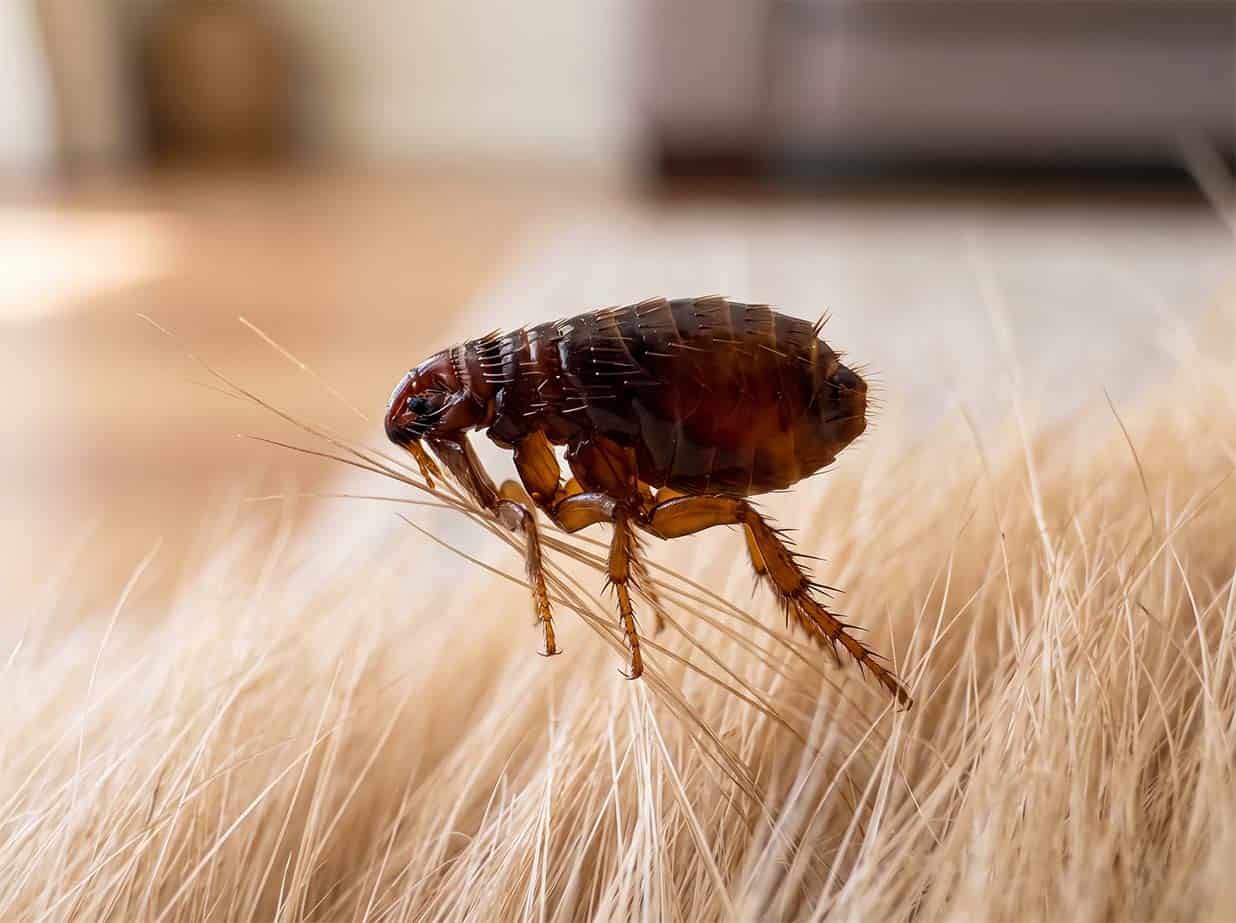
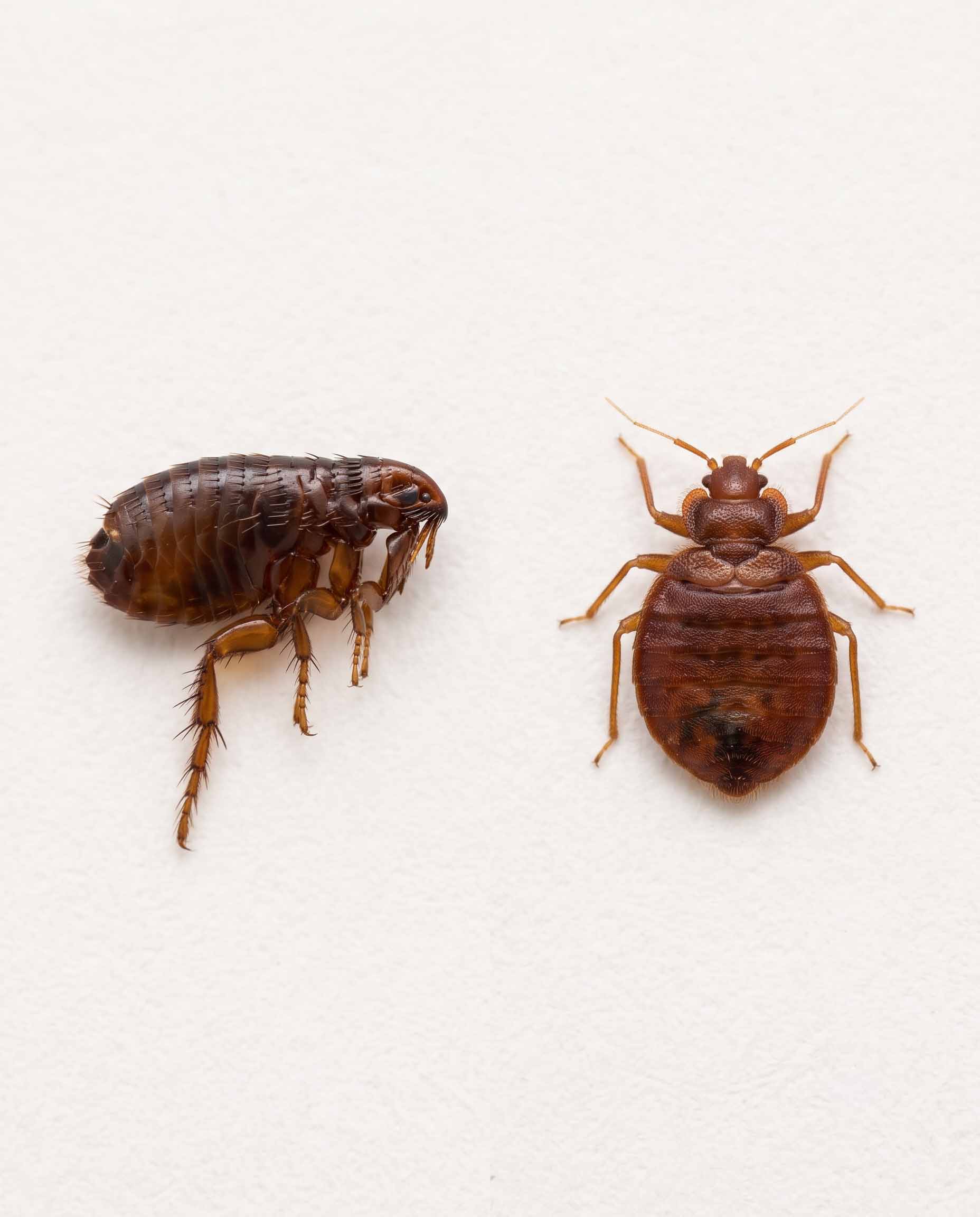
Fleas are tiny (1.5 to 4 mm), dark reddish-brown, wingless insects with a body flattened side to side, and they jump rather than fly. The most common is the cat flea, which bites cats, dogs and people. The clearest sign is not the flea but flea dirt, black pepper-like specks in a pet's coat and bedding that turn rusty red on a damp tissue, along with a scratching pet and itchy bites around your ankles. Most of a flea problem lives in the carpet, bedding and yard as eggs and larvae, not on the pet, which is why treating the home matters as much as treating the animal.
Adult, larva and egg
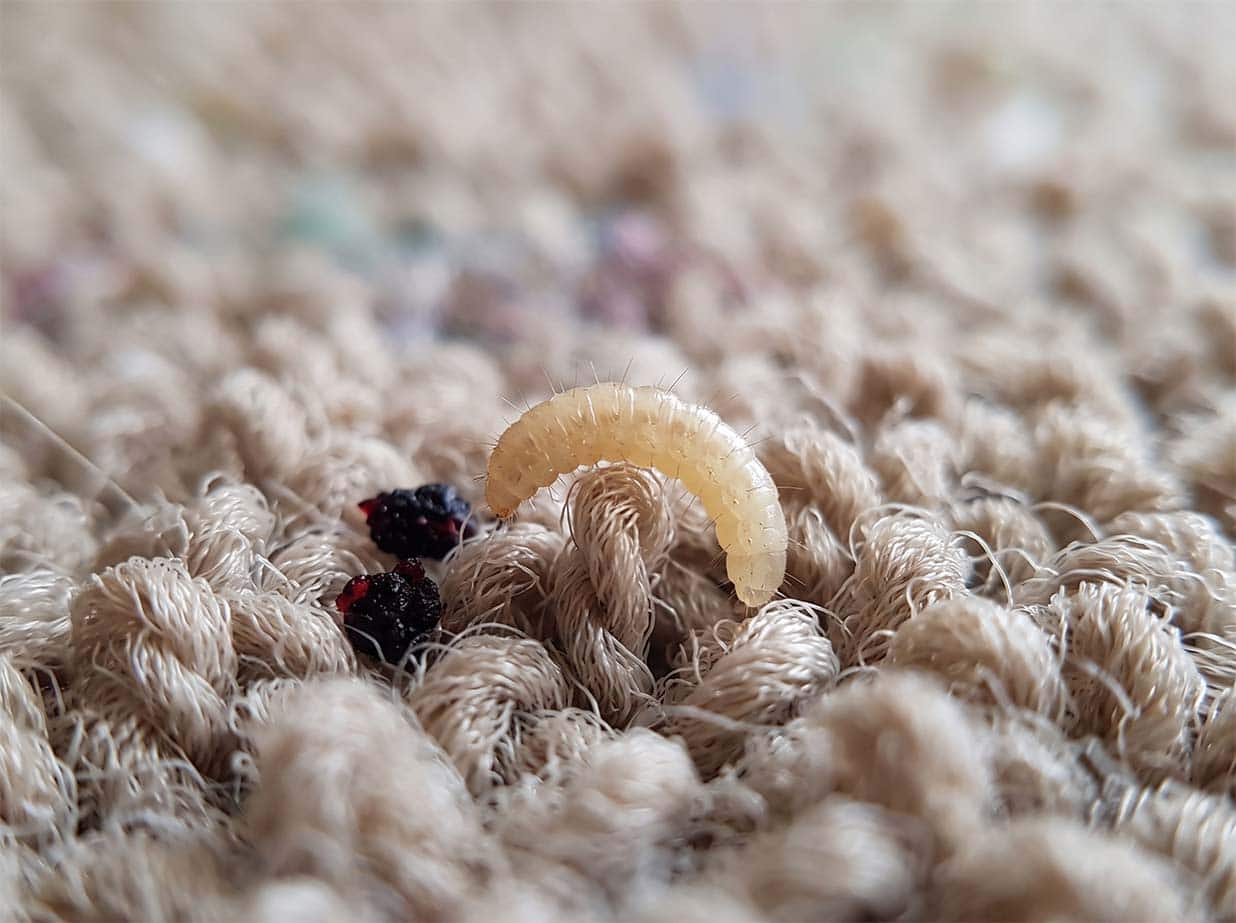
A flea goes through four life stages, and most of them are hiding in your home, not on the pet.
| Feature | Adult | Larva | Egg |
|---|---|---|---|
| Size | 1.5 to 4 mm | 2 to 5 mm | About 0.5 mm |
| Look | Dark reddish-brown, flattened side to side, jumps | Tiny, pale, worm-like, no legs | Tiny, oval, pearly white |
| Where | On the pet, feeding on blood | Deep in carpet, bedding and cracks | Laid on the pet, then falls into carpet and bedding |
| What it does | Bites and breeds | Feeds on flea dirt, then spins a cocoon | Hatches into a larva |
The fourth stage is the pupa (cocoon), which can lie dormant for weeks to months and resists many sprays, which is why fleas seem to "come back". Reference: Better Health Channel.
The flea, and the dirt that gives it away
You will often find the evidence before you catch a flea, since they are tiny and fast.
The pet usually tells you first
Fleas are small and quick, so the signs on your pet and around the house show up before you get a good look. Watch for these.
A pet that keeps scratching
Constant scratching, biting or licking, especially around the base of the tail, belly and behind the ears. It is usually the first thing anyone notices.
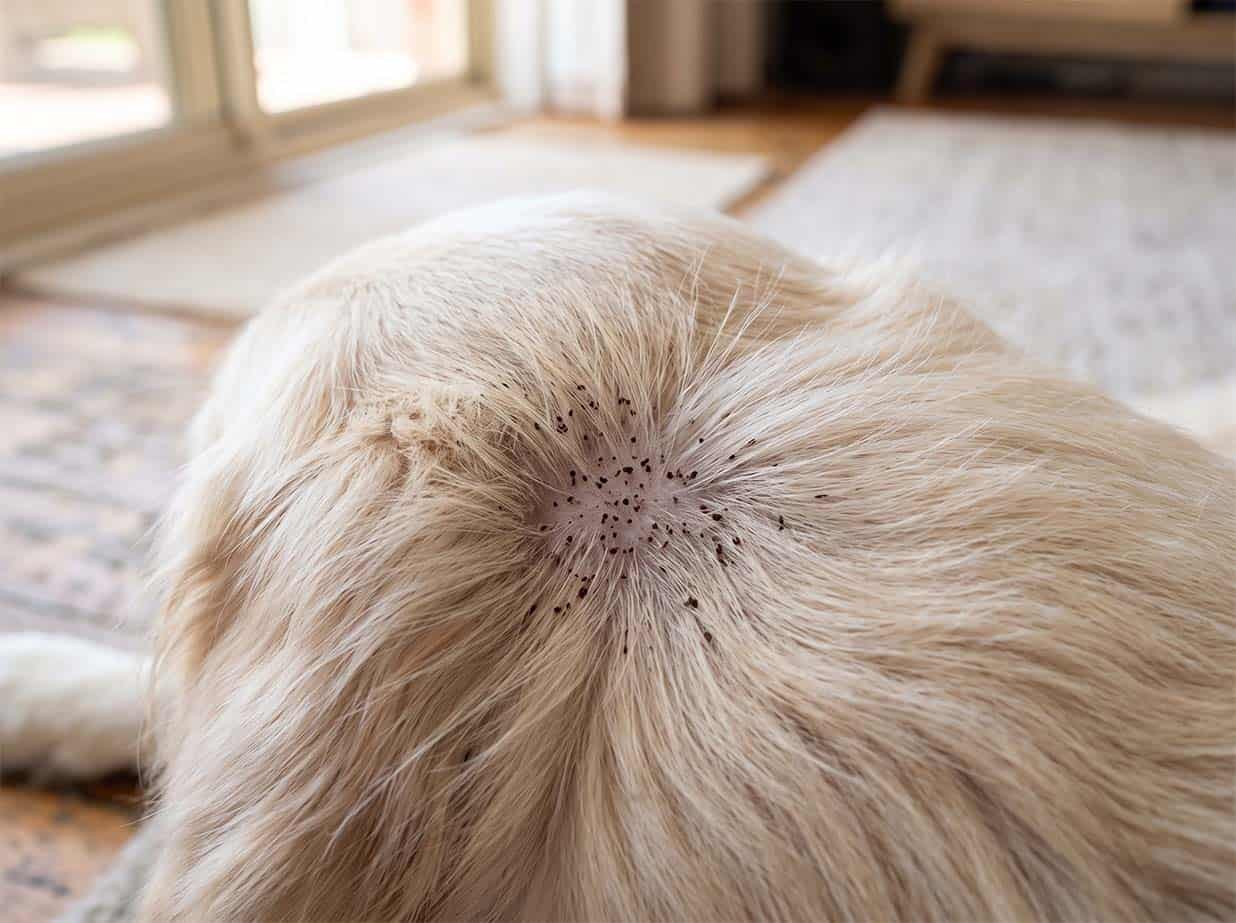
Flea dirt in the coat
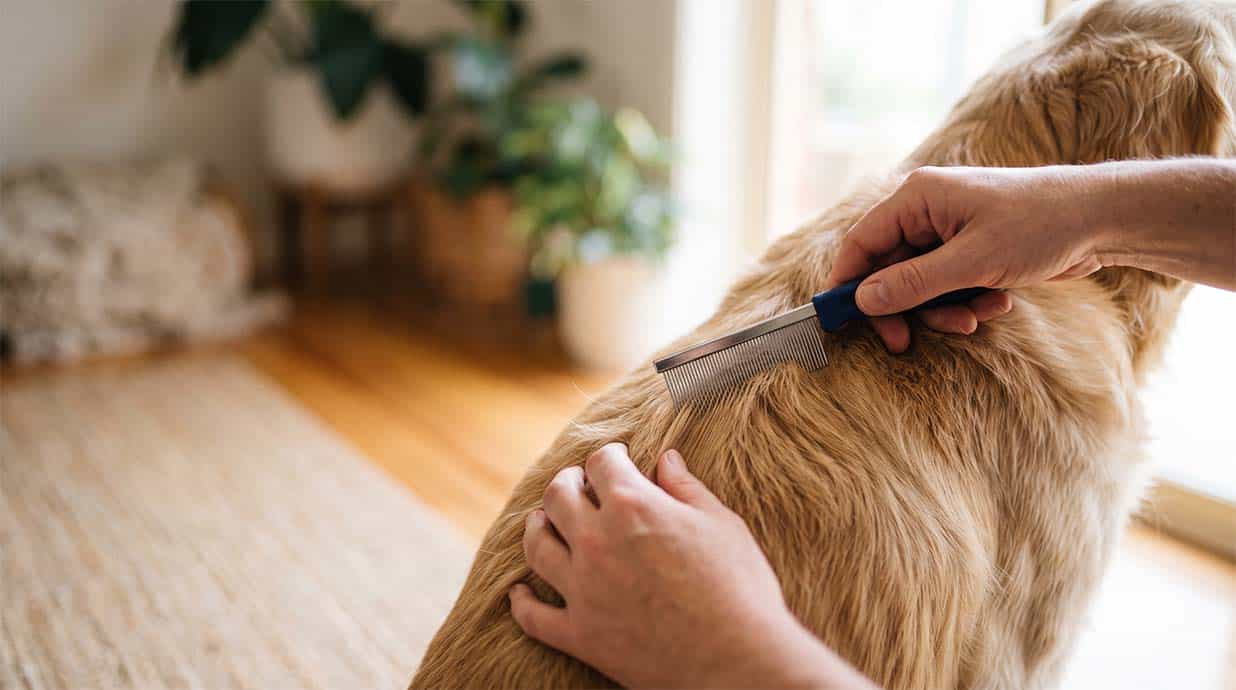
Black, pepper-like specks in the fur and pet bedding. Comb some onto a damp white tissue: if the specks smear rusty red, that is flea dirt, and it confirms fleas.
Itchy bites around your ankles
Small, red, itchy bumps in little clusters, usually on the ankles and lower legs, because newly hatched fleas jump up from floor level.
Fleas jumping in the carpet
Tiny dark specks that jump when you disturb the carpet or walk across it in pale socks. A useful test is to leave white socks on and walk the room, fleas show up against them.
Eggs and larvae in the bedding
Fine white grains and specks in pet bedding, along skirting and deep in the carpet. This is the hidden part of the problem, and where treatment has to reach.
Hair loss or red skin on the pet
Thinning fur, scabs or red, irritated skin, often near the tail. Many pets are allergic to flea saliva, so even a few fleas can cause a big reaction.
Fleas, bed bugs, and the bite question
Both bite at ankle height and cause itchy welts, so here is how to tell them apart.
Flea bites vs bed bug bites vs mosquito bites
| Feature | Flea | Bed bug | Mosquito |
|---|---|---|---|
| Where on the body | Ankles and lower legs | Exposed skin while you sleep: arms, neck, face | Anywhere skin is exposed |
| Pattern | Small random clusters, often groups of three | A line or small cluster | Single and scattered |
| How it looks | Small red bump with a single puncture, often a pale halo | Small red bump with a darker centre | A raised round welt |
| Timing | Any time, worse where pets are | Overnight | Comes up within minutes |
| The giveaway | A pet in the home and flea dirt | Spots and live bugs on the bed | You hear the whine at night |
See our bed bug guide for the full bite comparison. Reference: Better Health Channel.
Flea or bed bug?
The quickest tell is behaviour and location. A flea jumps, is linked to a cat or dog, and bites around the ankles, and you find flea dirt in the pet's coat. A bed bug crawls, cannot jump, is found around the bed, and leaves rusty spots on the mattress. If there is no pet and the bites are on the upper body overnight, think bed bugs, not fleas.
More than an itch, especially for pets
Fleas are mainly a nuisance for people, but they can make pets genuinely unwell and carry a parasite.
Itchy bites & skin reactions
Flea bites are itchy and can become infected if scratched. Many cats and dogs are allergic to flea saliva, a condition called flea allergy dermatitis, so even a few fleas can cause serious itching, hair loss and skin infection.
They carry tapeworm
Fleas are the intermediate host of a common tapeworm, and a pet swallows infected fleas while grooming, which can give it tapeworm. This is one reason flea control and worming go hand in hand, and worth raising with your vet.
They multiply fast
A few fleas become an infestation quickly, because a single female lays dozens of eggs a day that drop into the carpet and bedding. Left alone, the numbers build fast, which is why acting early and treating the whole home matters.
Worst in the warm, humid months
Fleas love warmth and humidity, so they are at their worst from spring through summer and into autumn, when eggs and larvae develop fastest. A warm, humid Sydney summer can turn a small problem into a full infestation in a few weeks.
They do not fully disappear in winter, though. In a heated home the life cycle keeps ticking over year-round, and dormant pupae can sit in the carpet for months and then hatch all at once when a host returns, which is the classic story of walking back into the house after a holiday and being swarmed.
Flea identification, answered
What do fleas look like?
Fleas are tiny, about 1.5 to 4 mm, dark reddish-brown, and their body is flattened side to side, which lets them slip through fur. They have no wings and cannot fly, but they have powerful back legs and jump surprisingly far. The most common in Australian homes is the cat flea, which despite the name lives on both cats and dogs and will also bite people. Because they are so small and fast, most people spot the signs, a scratching pet and flea dirt, before they get a clear look at a flea.
How do I know if my pet or home has fleas?
The simplest test is to look for flea dirt. Comb your pet over a sheet of white paper or a damp tissue and look for black, pepper-like specks, then dab them with water. If they smear rusty red, that is flea dirt, which is digested blood, and it confirms fleas. Other signs are a pet scratching, biting or losing hair, itchy bites around your own ankles, and tiny dark insects that jump when you disturb the carpet. Walking the room in white socks makes the jumping fleas easier to spot.
Do fleas bite humans?
Yes. While fleas prefer to live on a furry animal, they will readily bite people, usually around the ankles and lower legs because newly hatched fleas jump up from floor level. The bites are small, red and itchy, often in little clusters of two or three, and sometimes with a pale ring around them. Fleas do not live on people the way they live on pets, so bites on a person usually point to an infestation in the home or on a pet rather than fleas breeding on you.
Can I have fleas without a pet?
Yes. Fleas can be brought in by visiting animals, by wildlife such as possums and rodents in the roof or subfloor, or left behind by a previous owner's pet. Because flea pupae can lie dormant in carpet for weeks or months, a house can seem flea-free and then suddenly have fleas when people move in and the cocoons hatch in response to warmth and movement. So an infestation without a resident pet is uncommon but definitely possible, and it is treated the same way, by dealing with the whole environment.
Are fleas dangerous?
For most people fleas are an itchy nuisance rather than a serious health risk, though bites can become infected if scratched. The bigger concern is for pets: many are allergic to flea saliva and develop flea allergy dermatitis, with intense itching, hair loss and skin infection, and fleas are also the intermediate host of a common tapeworm that pets can catch by swallowing fleas while grooming. That is why flea control and worming often go together, and why it is worth speaking to your vet as well as treating the home.
How do I get rid of fleas for good?
Treat the pet and the home together, because most of the fleas are not on the animal but in the carpet, bedding and yard as eggs, larvae and cocoons. Use a vet-recommended product on the pet, wash pet bedding on a hot wash, and vacuum thoroughly and often, emptying the vacuum outside, since vacuuming also helps trigger dormant cocoons to hatch. A professional treatment of the home environment reaches the hidden stages and is timed to catch newly emerging fleas, which is what finally breaks the cycle.
Fleas taken over? Let us clear the home
We treat where the fleas actually hide, the carpets, bedding and yard, so it does not just come straight back. Free quotes, no call-out charge, and a Sydney family business that has done this for 15 years.
Sources & references
Flea identification, life cycle and health information: Better Health Channel and the Australian Museum. Measurements are typical ranges and vary with the stage. This guide is for identification and general information; for treating a pet, follow your veterinarian's advice.