
German Cockroaches in Sydney: How to Identify Them
Small tan cockroaches scattering when you flick the kitchen light on? Here is how to know it is the German cockroach, the most common indoor roach, tell it from the bigger ones, and understand why it spreads so fast.
The quick answer
How do you identify a German cockroach?
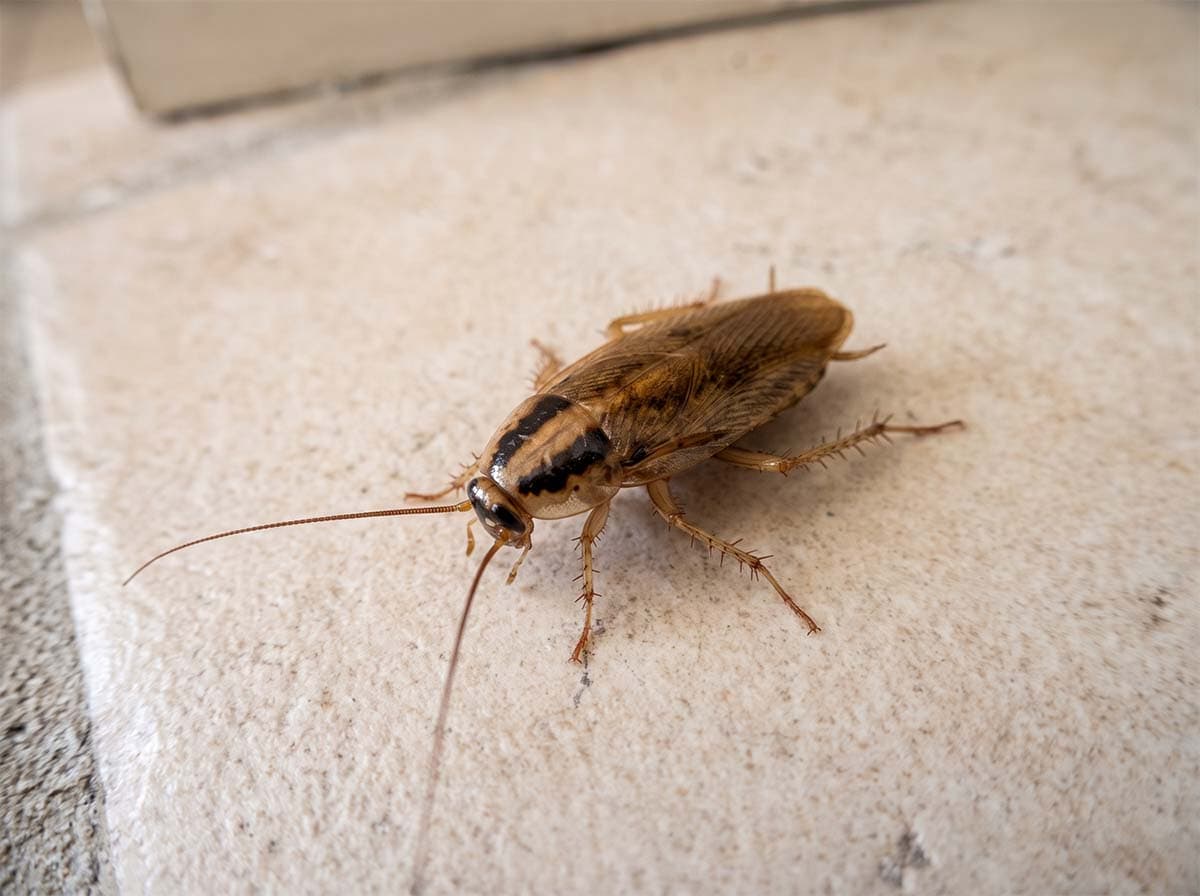
A German cockroach is small, about 12 to 15 mm long, light tan to brown, with two dark parallel stripes running lengthwise behind its head. It has wings but rarely flies, and it clusters in warm, humid spots near food and water, especially kitchens and bathrooms. Its small size and the two stripes set it apart from the much larger reddish American cockroach and the dark Australian cockroach, which are both around twice the length and prefer damp or outdoor areas.
The German cockroach in brief
The fast facts that separate it from every other cockroach in a Sydney home.
| Feature | German cockroach |
|---|---|
| Scientific name | Blattella germanica |
| Adult size | 12 to 15 mm (about 1.5 cm) |
| Colour | Light tan to brown |
| Key marking | Two dark parallel stripes running lengthwise behind the head |
| Wings | Present in adults, but they rarely fly, they run |
| Nymphs (young) | Smaller and darker, wingless, with the same two stripes |
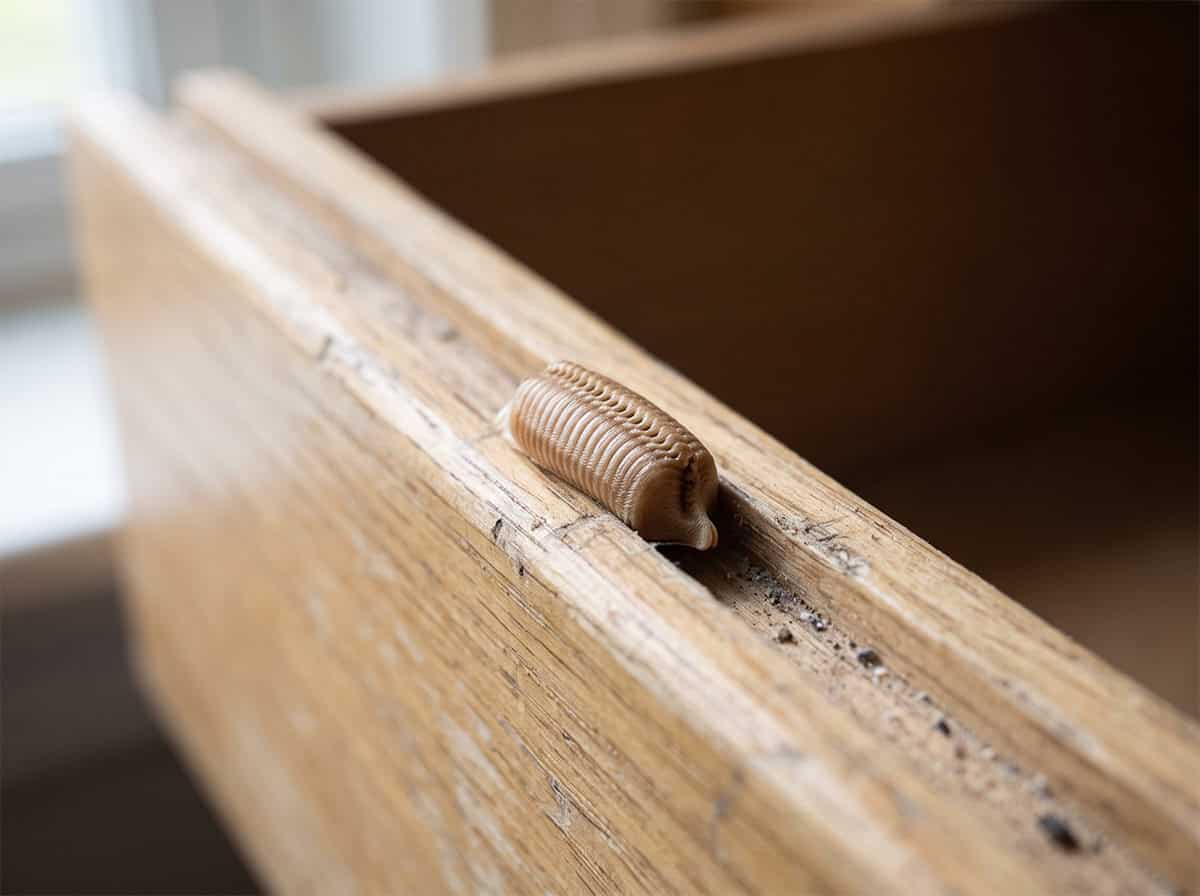
| Egg case | Light brown, purse shaped, holds around 30 to 40 eggs |
| Where in the home | Kitchens and bathrooms, behind fridges, dishwashers, kettles and under sinks |
| Active | Year round indoors, mostly at night, drawn to warmth and moisture |
| Risk level | High: contaminates food and triggers asthma and allergies |
The two stripes and the small size are the quickest tell. Anything much bigger than a 20 cent coin is a different species (see below).
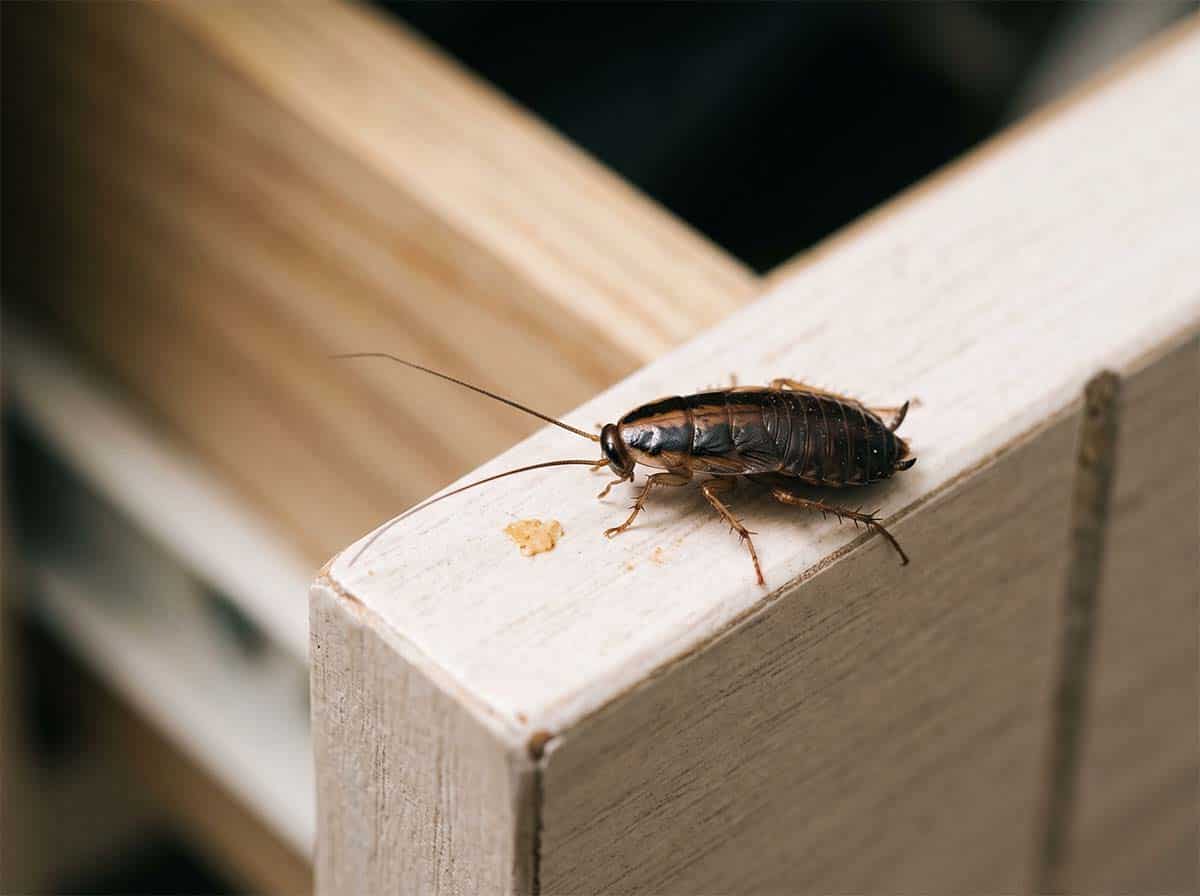
Adult, nymph and egg case
The three stages you are likely to find, so you can match what you saw.
What a German cockroach problem looks like
They hide in cracks by day, so the evidence often shows before you see a live one.
Roaches when the light goes on
Flick on the kitchen light at night and see them scatter for cover. The classic sign, since German cockroaches are most active after dark.
Droppings like pepper
Tiny dark specks and smears that look like ground black pepper or coffee grounds, in drawers, cupboard corners and along benchtop edges.
A musty, oily smell
A larger population gives off a distinctive musty, greasy odour that lingers in cupboards and around appliances.
Egg cases & shed skins
Small brown purse-shaped egg capsules and pale cast skins tucked into cracks, drawer runners and behind kickboards.
Cockroaches in daylight
Seeing them out and about during the day usually means the harbourage is crowded, a sign the population is already large.
Clustered near warmth & water
They gather where it is warm and damp: behind the fridge and dishwasher, around the kettle and toaster, under the sink and in the bathroom.
German, American or Australian cockroach?
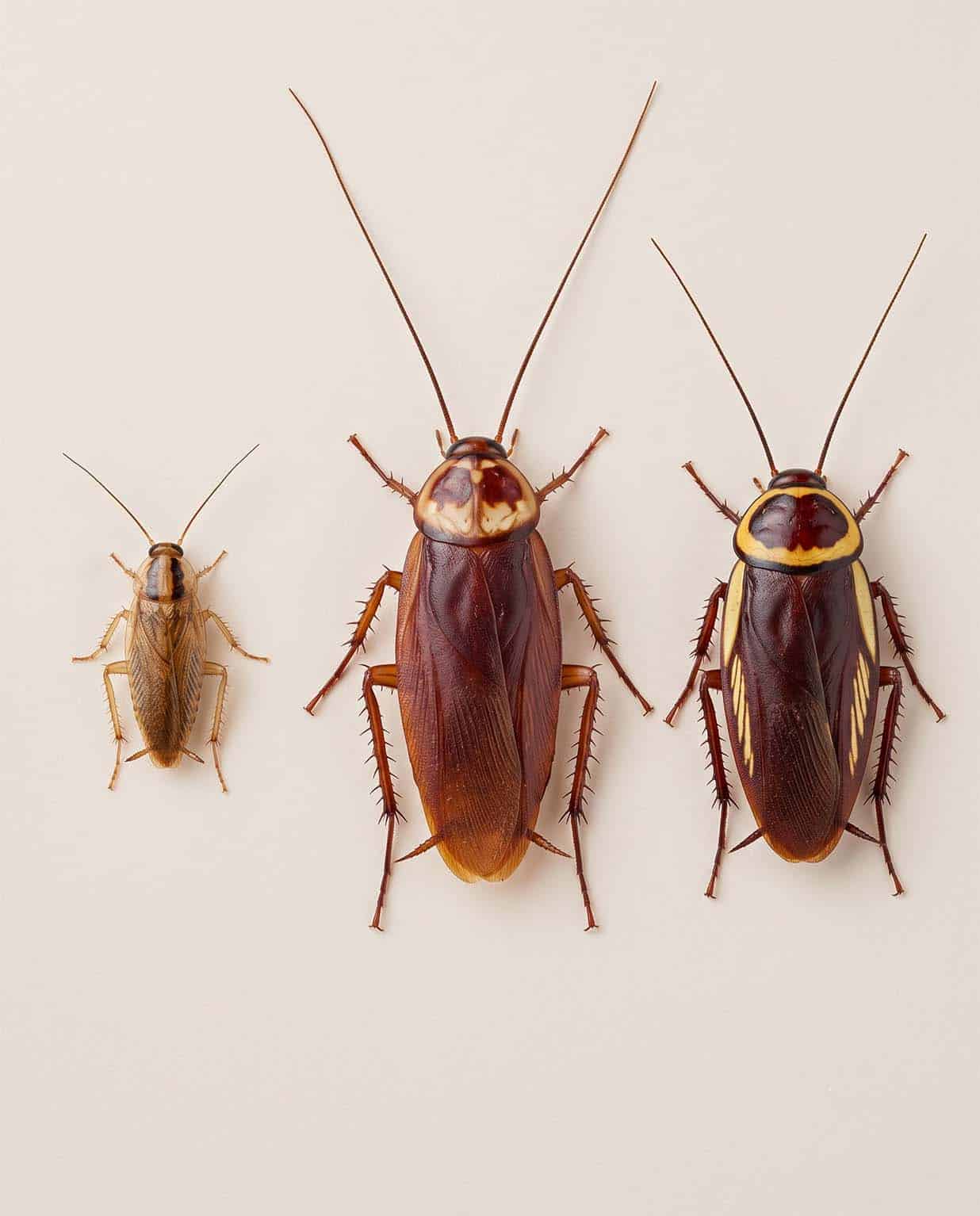
Sydney has three common cockroaches. Size, markings and where you find them tell them apart at a glance.
| Feature | German | American | Australian |
|---|---|---|---|
| Size | 12 to 15 mm, small | 35 to 40 mm, large | 30 to 35 mm, large |
| Colour | Light tan to brown | Reddish brown | Dark reddish brown |
| Key marking | Two dark stripes behind the head | Pale figure-8 or halo behind the head | Yellow band behind the head, yellow wing edges |
| Flies? | Rarely, mostly runs | Can glide in warm weather | Can fly short distances |
| Where it lives | Indoors: kitchens, bathrooms, appliances | Warm damp spots: drains, subfloors, grease traps | More outdoors: gardens and subfloors, wanders inside |
| In the home | The common indoor infester | Around drains and commercial kitchens | Usually a visitor from the garden |
If it is small, tan and in the kitchen, it is almost certainly German. If it is large, reddish and near a drain or subfloor, it is American or Australian. If it is large and uniformly dark and glossy with no markings at all, it is a smoky brown cockroach, which lives outdoors and is treated a different way. Reference: Australian Museum.
Is it a baby cockroach?
German cockroach nymphs are small, dark, almost black, and wingless, so people often mistake them for a different insect or a beetle. Look for the two pale stripes running down the back, which the nymphs share with the adults. Finding nymphs is important: it means the roaches are breeding where you found them, not just wandering in, so the source is inside the home.
Why German cockroaches are a health pest
They do not bite, but they are one of the more serious pests for food safety and indoor air quality.
Food contamination
Cockroaches crawl through drains, bins and food waste, then over benches, crockery and stored food, spreading bacteria such as salmonella as they go. They are linked to gastroenteritis and food poisoning, which is why they are taken so seriously in kitchens.
Asthma & allergies
Cockroach droppings, shed skins and body fragments are a recognised trigger for asthma and allergies, particularly in children. In a heavy infestation these allergens build up in kitchen dust, which is a real indoor air-quality issue.
They breed fast
The German cockroach is one of the fastest-breeding roaches, with each egg case holding around 30 to 40 eggs. A handful can become an entrenched infestation in weeks, so a few sightings are worth acting on quickly.
An indoor pest that does not stop for winter
Unlike outdoor pests, the German cockroach lives indoors all year and does not die back when it turns cold. It needs warmth and moisture, so a heated Sydney kitchen suits it just fine through winter, and they often concentrate around warm appliances as the weather cools.
That makes it a genuine winter pest, not just a summer one. Warmth speeds up breeding, so activity can climb in the warmer months, but an established indoor population stays busy right through the year.
German cockroach identification, answered
How do I know if I have German cockroaches?
Look for small tan to brown cockroaches, about 12 to 15 mm long, with two dark parallel stripes running lengthwise behind the head, most often in the kitchen or bathroom. They are fast, hide in cracks by day and scatter when you turn on the light at night. Finding several of that size and colour, plus pepper-like droppings around cupboards and appliances, is a strong sign of a German cockroach infestation rather than the odd larger roach wandering in.
What do German cockroach droppings look like?
German cockroach droppings are tiny, like specks of ground black pepper or coffee grounds, along with dark smear marks in humid areas. You will usually find them in drawers, cupboard corners, along benchtop edges and around the fridge, dishwasher and kettle. The more droppings and the wider they are spread, the larger the population. Because the droppings and shed skins can trigger allergies, wipe them up with disinfectant rather than brushing them into the air.
Why do I see cockroaches during the day?
German cockroaches are mainly active at night and prefer to stay hidden, so seeing them out in daylight usually means the hiding spots are overcrowded. That is a sign the population is already large and the roaches are being pushed out to find new harbourage and food. It is worth acting quickly, since German cockroaches breed fast and a visible daytime problem tends to get worse rather than settle on its own.
Are German cockroaches dangerous?
They do not bite or sting, but they are a genuine health pest. Cockroaches move through drains, bins and food waste and then across benches and food, spreading bacteria such as salmonella and contributing to gastroenteritis and food poisoning. Their droppings, shed skins and body fragments are also a recognised trigger for asthma and allergies, especially in children. For those reasons an active German cockroach infestation in a kitchen is worth treating promptly.
What is the difference between German and American cockroaches?
Size is the fastest tell. The German cockroach is small, about 12 to 15 mm, light tan to brown, with two dark stripes behind the head, and it lives indoors in kitchens and bathrooms. The American cockroach is much larger, about 35 to 40 mm, reddish brown, with a pale figure-8 or halo marking behind the head, and it prefers warm damp places like drains, subfloors and grease traps. If it is small and in the kitchen it is German; if it is large, reddish and near a drain, it is American.
Why do German cockroaches keep coming back after I spray?
Supermarket surface sprays often make German cockroaches worse. Many sprays are repellent, so instead of clearing the population they scatter it deeper into wall cavities and appliances, and they do not reach the hidden harbourage where the roaches breed. The eggs are also protected inside their cases, so numbers bounce back after the spray wears off. A lasting result usually needs professional gel baits and an insect growth regulator to break the breeding cycle, applied to the places the roaches actually live.
Cockroaches in the kitchen? Let us clear them out
A quick inspection confirms what you are dealing with and how to stop it for good. Free quotes, no call-out charge, and a Sydney family business that has done this for 15 years.
Sources & references
Species descriptions and identification: Australian Museum. Health risks, food safety and cockroach allergens: NSW Health. Measurements are typical adult ranges and vary with age and condition. This guide is for identification and general information; for an active infestation, arrange a professional inspection.