
Termites in Sydney: How to Identify Them
Found mud tubes on a wall, timber that sounds hollow, or a pile of tiny wings on the windowsill? Here is how to tell termites from flying ants, read the warning signs, and know exactly what to do (and what not to do) next.
The quick answer
What do termites look like?
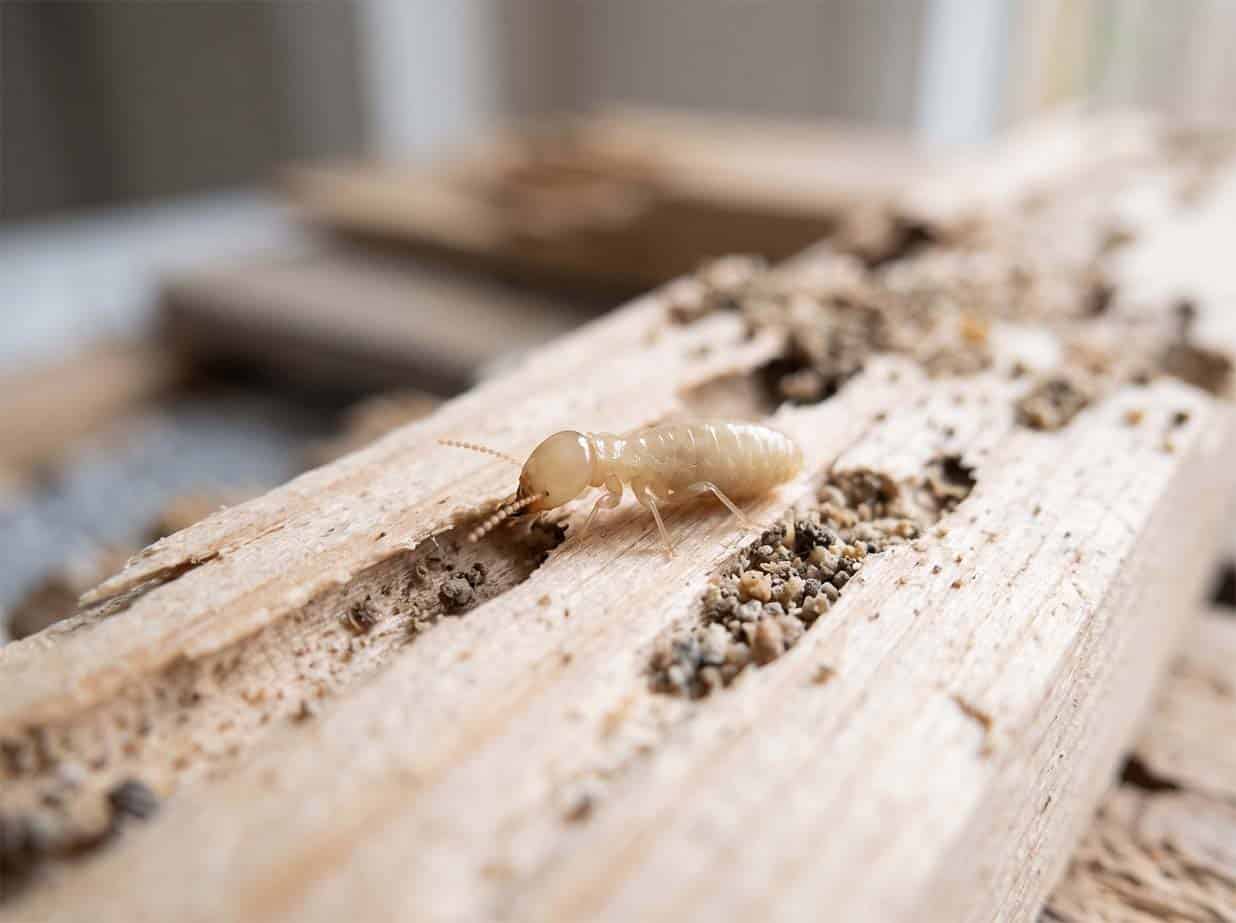
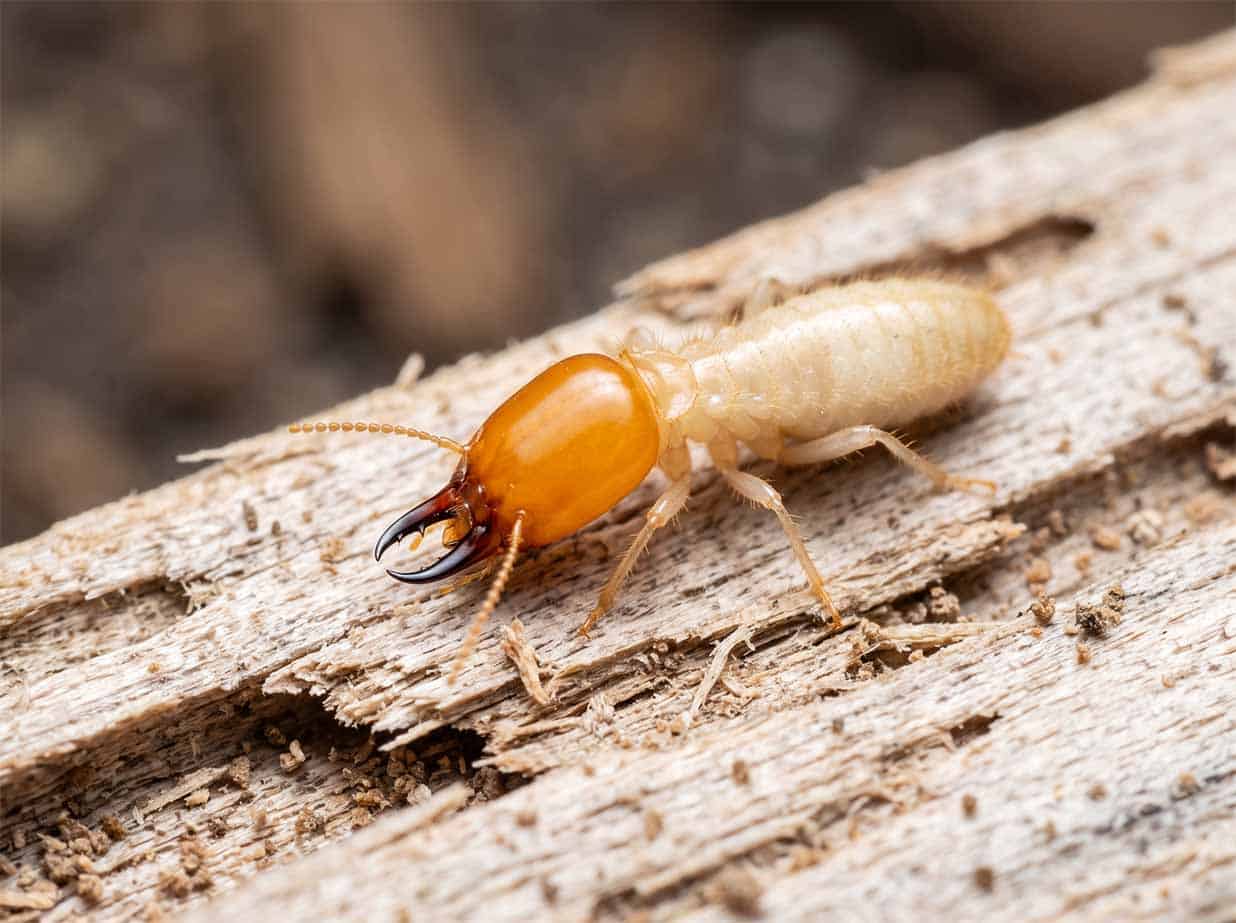
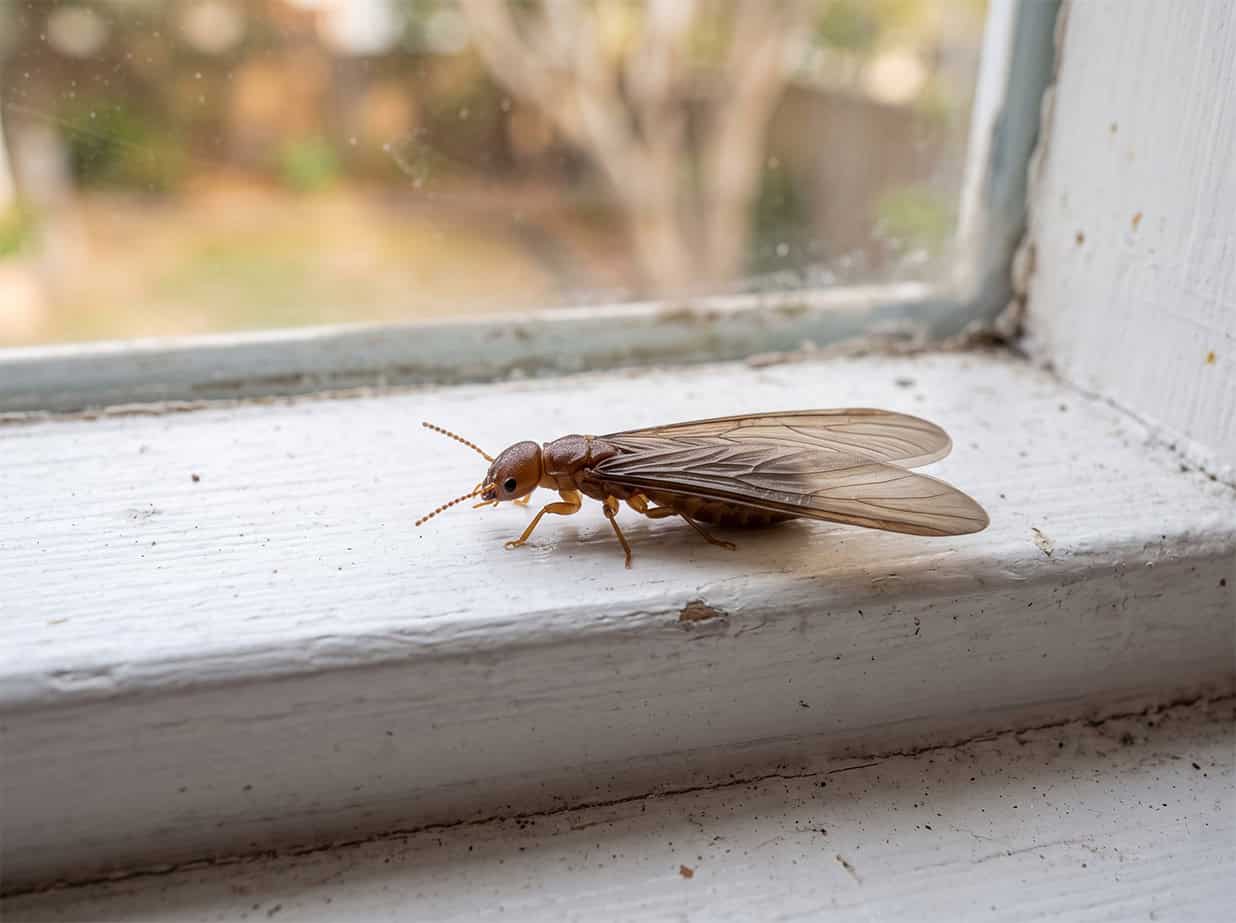
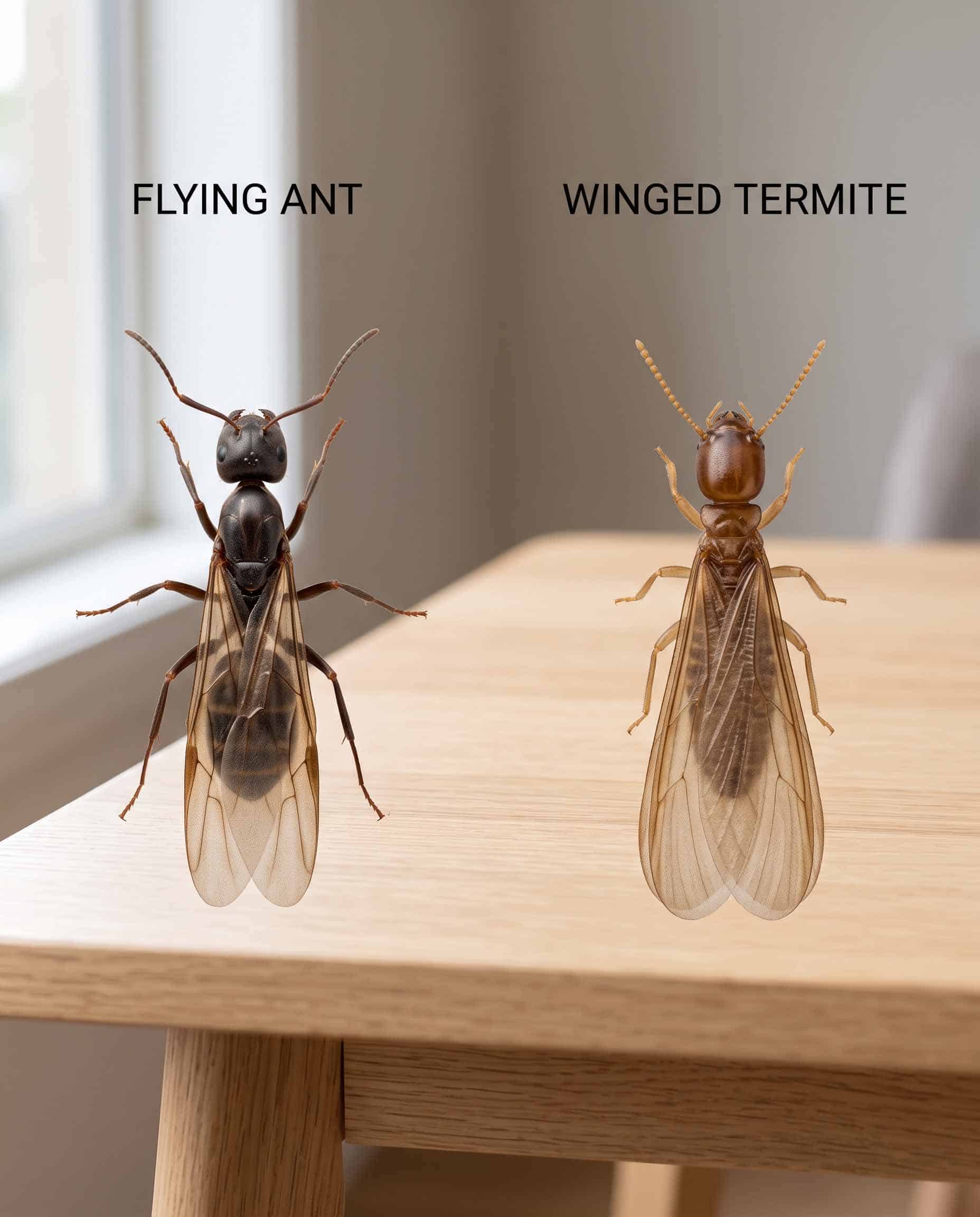
The worker termites that damage timber are small (about 3 to 4 mm), soft-bodied and creamy-white, which is why they are wrongly called white ants. Soldiers are similar but have a hardened orange-brown head, and the winged swarmers you see in spring are about 10 to 12 mm with four equal-length, see-through wings and straight antennae. Unlike ants, termites have a broad waist, not a pinched one. In Sydney the most destructive is the subterranean termite Coptotermes acinaciformis, which nests out of sight and reaches your timber through pencil-thick mud tubes.
Worker vs soldier vs swarmer
A termite colony has three forms you might come across, and they look very different. What you are seeing tells you a lot.
| Feature | Worker | Soldier | Swarmer (alate) |
|---|---|---|---|
| Its job | Eats timber, builds the mud tubes, feeds the colony | Defends the colony | Flies off to start a new colony |
| Size | About 3 to 4 mm | About 3 to 6 mm | About 10 to 12 mm including wings |
| Colour | Creamy-white, almost translucent | Pale body, darker orange-brown head | Light to dark brown |
| Body | Soft, wingless, blind, no waist | Soft body with a large hardened head and jaws (a pointed snout in some species) | Straight, bead-like antennae, a broad waist, no pinch |
| Wings | None | None | Four wings of equal length, clear, longer than the body, shed quickly |
| Where you would see it | Inside timber and mud tubes, rarely out in the open | Pours out if a mud tube or piece of timber is broken open | Around windows and lights on warm, humid evenings, mostly spring to early summer |
Termites are not ants. They are soft-bodied insects more closely related to cockroaches, which is why "white ant" is a misnomer. Reference: Australian Museum.
The three you might actually see
Plain-English descriptions, so you can match what you found to the right form of the colony.
You will almost always see the damage before the termite
Subterranean termites work silently, inside timber and behind walls, so the evidence shows up long before the insect does. Look for these.
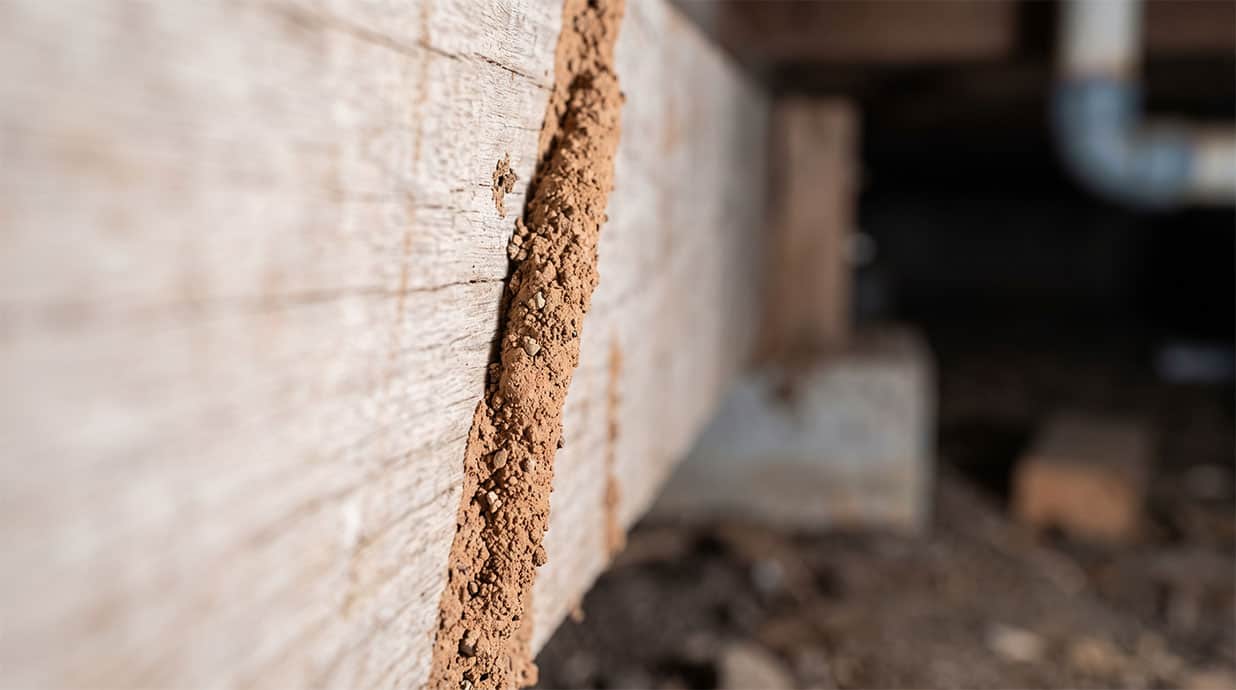
Mud tubes (leads)
Pencil-thick tunnels of packed earth running up brick piers, foundation walls, subfloor timbers or inside wall cavities. Termites build them to travel under cover between the nest and your timber.
Hollow or papery timber
Tap skirting boards, architraves, door frames and floors. Termites eat wood from the inside out, leaving a thin veneer, so affected timber sounds hollow, papery or drum-like.
Discarded wings
Small piles of identical, clear, equal-length wings on windowsills, floors or in cobwebs. Swarmers shed their wings soon after flying, so a scatter of wings indoors is a strong warning.
Blistered or rippled surfaces
Paint that bubbles, plasterboard that ripples, or skirting and door frames that look distorted. Press gently and the surface may give way to soft, damaged timber or packed mud behind it.
Swarmers around lights
Flying termites gathering at windows, lamps and doorways on a warm, humid evening, often after rain in spring or early summer. If they are coming from inside the house, the colony is already close.
Sticking doors & an earthy smell
Doors and windows that suddenly jam, and a faint damp, earthy or mouldy smell from the moisture termites bring into timber. Note: subterranean termites pack galleries with mud, they do not leave the frass pellets that drywood termites do.
The lookalikes people get wrong
The big one is flying ants, then the timber damage that mimics termites, then the local species themselves.
Flying ants vs termites
| Feature | Termite (swarmer) | Flying ant |
|---|---|---|
| Waist | Broad, no pinch between body sections | Narrow, clearly pinched waist |
| Antennae | Straight and bead-like | Bent, with a distinct elbow |
| Wings | Four wings, all the same length, noticeably longer than the body | Four wings, the front pair larger than the back pair |
| Colour | Usually pale to mid brown | Usually darker, black or reddish |
| After the swarm | Sheds wings quickly, leaving piles of identical wings | Keeps its wings much longer |
| Eats timber? | Yes, this is the destructive one | No, harmless to your timber |
This is the single most useful termite check. If the waist is broad, the antennae are straight and all four wings are the same length, treat it as a termite until proven otherwise. Reference: Australian Museum.
Is it termites, borers or rot?
Not all damaged timber means termites. Wood borers leave neat round exit holes and a fine, flour-like dust (frass), and the damage is usually shallow. Rot and fungal decay leave timber soft, dark, crumbly and often damp, with no mud and no insect. Subterranean termites are the ones that pack galleries with mud, hollow timber out from the inside while leaving the surface intact, and build mud tubes to reach it. If you can see mud in the timber, think termites first.
The termites you get in Sydney
| Species | Where it nests | The tell | Risk to homes |
|---|---|---|---|
| Coptotermes acinaciformis | Underground, in tree trunks, or inside wall cavities and subfloors | Soldier oozes a white, milky fluid from the head when disturbed | Very high, the most destructive termite in Sydney |
| Schedorhinotermes intermedius | Tree stumps, buried timber, fence posts and timber in ground contact | Two clearly different soldier sizes (major and minor) in the one colony | High, a serious structural pest along the coast |
| Nasutitermes | Mounds, tree nests and fence timbers, more common on the bush fringe | Soldier has a dark, pointed snout instead of large jaws | Lower for most homes, but still attacks damp or poor timber |
Identifying the species matters because it changes the treatment. Confirming it is a job for a licensed technician, not a guess from a photo. Reference: Australian Museum.
Termites do not hurt you, they hurt your home
The danger from termites is structural and financial, not a health risk, and how you react in the first hour matters.
Serious, hidden structural damage
A single Coptotermes colony can number in the hundreds of thousands and works around the clock, unseen inside walls, floors and roof timbers. Because they hollow timber from the inside, significant structural damage can build up before there is any visible sign. Reference: CSIRO and the Australian Museum.
Usually not covered by insurance
Standard home and contents policies in Australia generally exclude termite damage, treating it as a preventable maintenance issue. That means the repair bill, which can run into tens of thousands, typically falls on the owner. Regular inspections are the cheap insurance.
Not a health risk, but do not disturb
Termites do not bite people or spread disease. The worst thing you can do is break open the mud or spray them, because disturbed termites abandon the area and re-route, hiding the problem and making professional treatment harder. Leave it exactly as you found it.
Termites work all year, you just see them in spring
Unlike most pests, termites are not a summer problem that goes away when it cools. Subterranean termites live insulated in soil and timber, so the colony feeds and damages your home every month of the year, in drought or downpour. That is exactly why a termite inspection is a year-round job, not a seasonal one.
What is seasonal is the swarm. On warm, humid evenings in spring and early summer, often after rain, mature colonies release winged swarmers to start new nests. That is when most people first notice termites. The smart move is an annual inspection, ideally before the spring swarm, so a colony is caught before it flies and spreads.
Termite identification, answered
What do termites look like?
It depends which one you see. Worker termites, the ones that eat timber, are small (about 3 to 4 mm), soft-bodied and creamy-white, which is why people call them white ants, though they are not ants. Soldiers are similar with a hardened orange-brown head and large jaws. The winged swarmers you notice in spring are about 10 to 12 mm, mid-brown, with four clear wings of equal length and straight antennae. Unlike ants, termites have a broad waist rather than a pinched one.
How do I tell flying ants from termites?
Look at three things: the waist, the antennae and the wings. A termite has a broad waist with no pinch, straight bead-like antennae, and four wings that are all the same length and longer than its body. A flying ant has a narrow, pinched waist, bent elbowed antennae, and front wings that are larger than the back pair. Termites also shed their wings quickly, so piles of identical clear wings on a windowsill point to termites. If in doubt, treat it as a termite and get it checked.
What are the first signs of termites in a house?
The earliest signs are usually the damage, not the insect. Look for pencil-thick mud tubes on piers, walls or in the subfloor, timber that sounds hollow or papery when tapped, small piles of discarded wings, paint that blisters or plasterboard that ripples, doors that suddenly stick, and winged termites around lights on a warm humid evening. Subterranean termites pack their galleries with mud, so unlike drywood termites they do not leave frass pellets. Any of these is worth a professional inspection.
Are termites dangerous, and do they bite?
Termites are not a health risk. They do not meaningfully bite people or spread disease. Their danger is to your home: a colony can quietly cause serious structural damage to timber, and standard home insurance in Australia generally does not cover termite damage, so the repair cost usually falls on the owner. That is why early identification and regular inspections matter so much. If you find them, do not disturb or spray them, as that only makes treatment harder.
What time of year are termites most active in Sydney?
All year. Subterranean termites live insulated in soil and timber, so the colony keeps feeding and damaging timber through every season, including winter. What is seasonal is the swarm: on warm, humid evenings in spring and early summer, often after rain, mature colonies release winged swarmers to start new nests, and that is when most people first see them. Because the damage never stops, a timber inspection at least once a year is recommended under Australian Standard AS 3660, ideally before the spring swarm.
I think I have found termites, what should I do?
Leave them completely alone. Do not break open the mud tubes, do not spray them, and do not disturb the damaged timber. Termites react to disturbance by retreating and re-routing, which hides the colony and makes it harder to treat. Note where you found the activity, then book a professional timber pest inspection. A licensed technician will confirm the species, work out how far it has spread, and recommend the right treatment, such as a chemical soil barrier or a baiting system.
Worried it might be termites? Get it checked
A thorough inspection tells you exactly what you are dealing with before it costs you a floor. Free quotes, no call-out charge, and a Sydney family business that has done this for 15 years.
Sources & references
Termite biology, castes and Australian species: Australian Museum and CSIRO. Inspection cadence: Australian Standard AS 3660 (termite management), which recommends a professional inspection at least every 12 months. Measurements are typical ranges and vary by species. This guide is for identification and general information; if you suspect termites, do not disturb them and arrange a professional timber pest inspection.