
Possums in Your Roof: What to Do, and What the Law Says
Heavy thumping overhead at night is usually a possum, not a rat. Here is how to tell which you have, how to tell a brushtail from a ringtail, and what you are legally allowed to do about it in New South Wales.
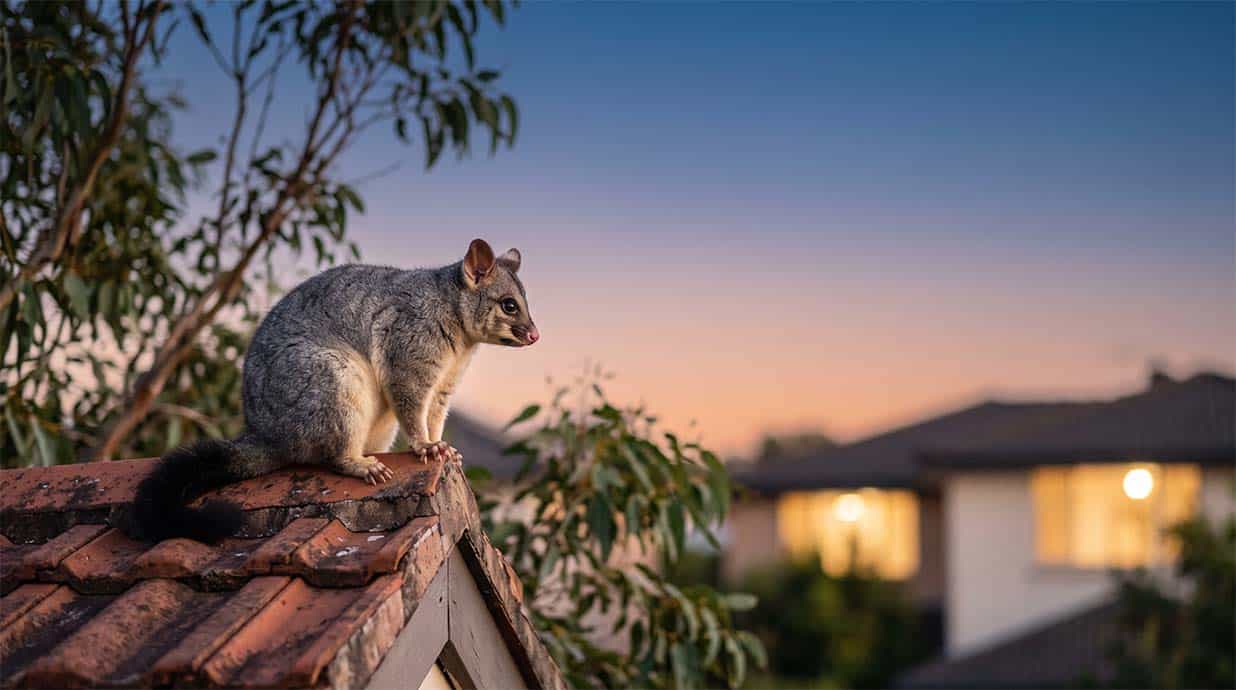
The quick answer
Is it a possum or a rat in my roof?
Listen to the weight of the sound. A possum is heavy and slow, so you hear distinct thumps, thuds and what sounds like a small person walking across the ceiling, usually just after dark and again before dawn. Rats and mice are light and fast, so you hear rapid scurrying, scratching and gnawing that carries on through the night. Possums are also loud: brushtails hiss, growl and screech at each other, which no rodent does. If it sounds like footsteps, it is almost certainly a possum, and that matters because possums are protected native animals in New South Wales and cannot legally be harmed, poisoned or taken away.
Brushtail vs ringtail vs roof rat
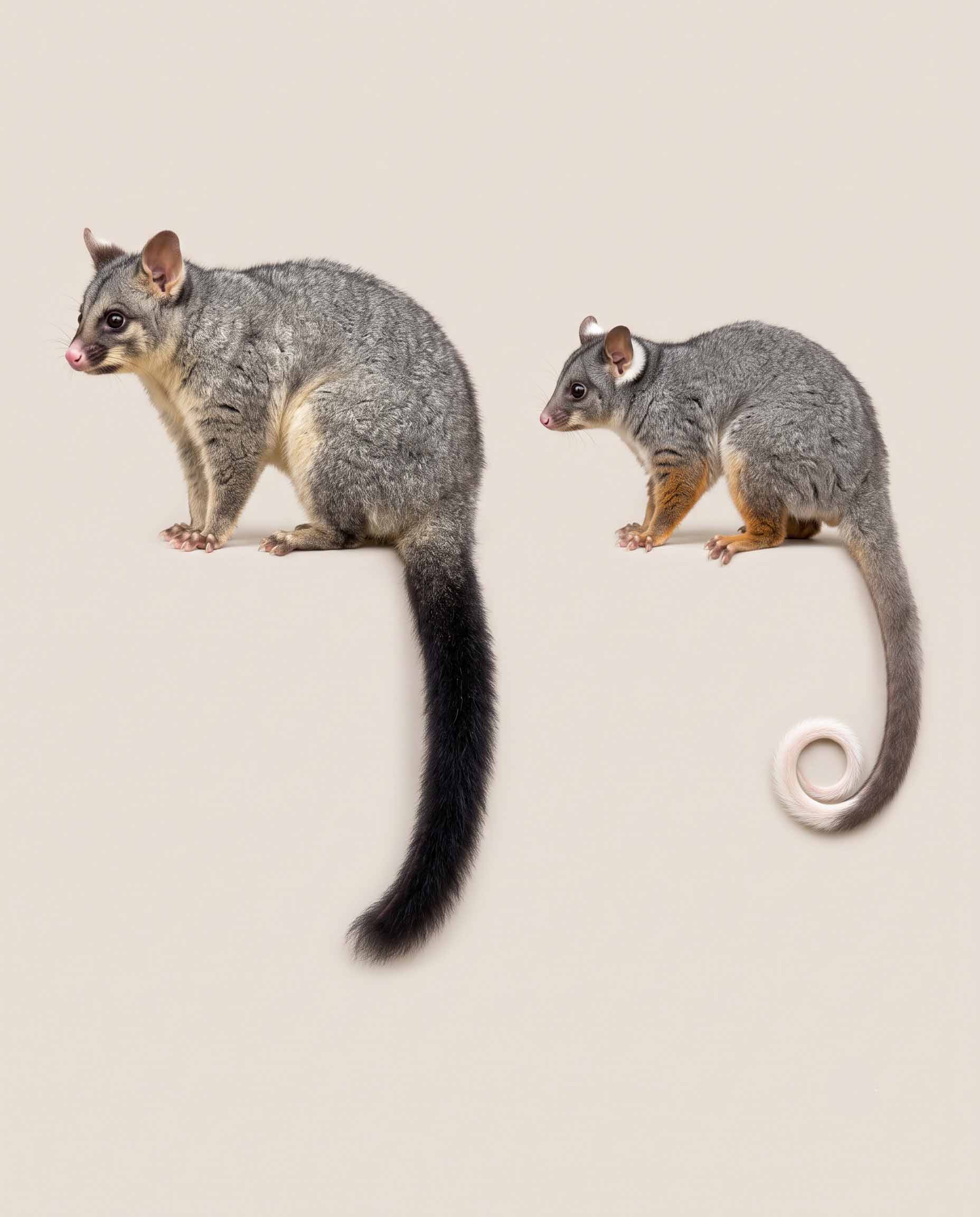
The two possums you get in Sydney, next to the rodent people most often confuse them with.
| Feature | Common brushtail possum | Common ringtail possum | Black (roof) rat |
|---|---|---|---|
| Body length | 35 to 50 cm | 32 to 38 cm | 16 to 24 cm |
| Weight (approx) | Up to about 4 kg | About 0.7 to 1.1 kg | 120 to 250 g |
| Tail | Bushy and black, narrowing towards the tip | Slender, tapered, with a distinct white tip, often curled into a ring | Thin, hairless, longer than the body |
| Ears | Short, rounded, prominent | Small and rounded | Large and thin |
| Face | Black eye patches and a dark band across the snout | White patches behind the eyes | Pointed nose, no markings |
| Colour | Silver-grey with cream to brownish-yellow underparts | Grey with orange-brown tinges on tail and limbs, pale belly | Dark grey to black, sleek |
| Where it sleeps | Tree hollows, hollow logs, and roof cavities | A woven nest (drey) in dense vegetation, rarely in roofs | Roof voids, ceilings, upper walls |
| Sound in the roof | Heavy thumps, dragging, hissing and screeching | Usually none, it is outside | Fast scurrying, scratching, gnawing |
| Legal status in NSW | Protected native animal | Protected native animal | Introduced pest, not protected |
| Can it be baited or killed? | No, illegal | No, illegal | Yes, standard pest control |
Measurements are typical adult ranges and vary with age and condition. The legal distinction matters more than the size one: getting the identification wrong can turn a routine job into an offence.
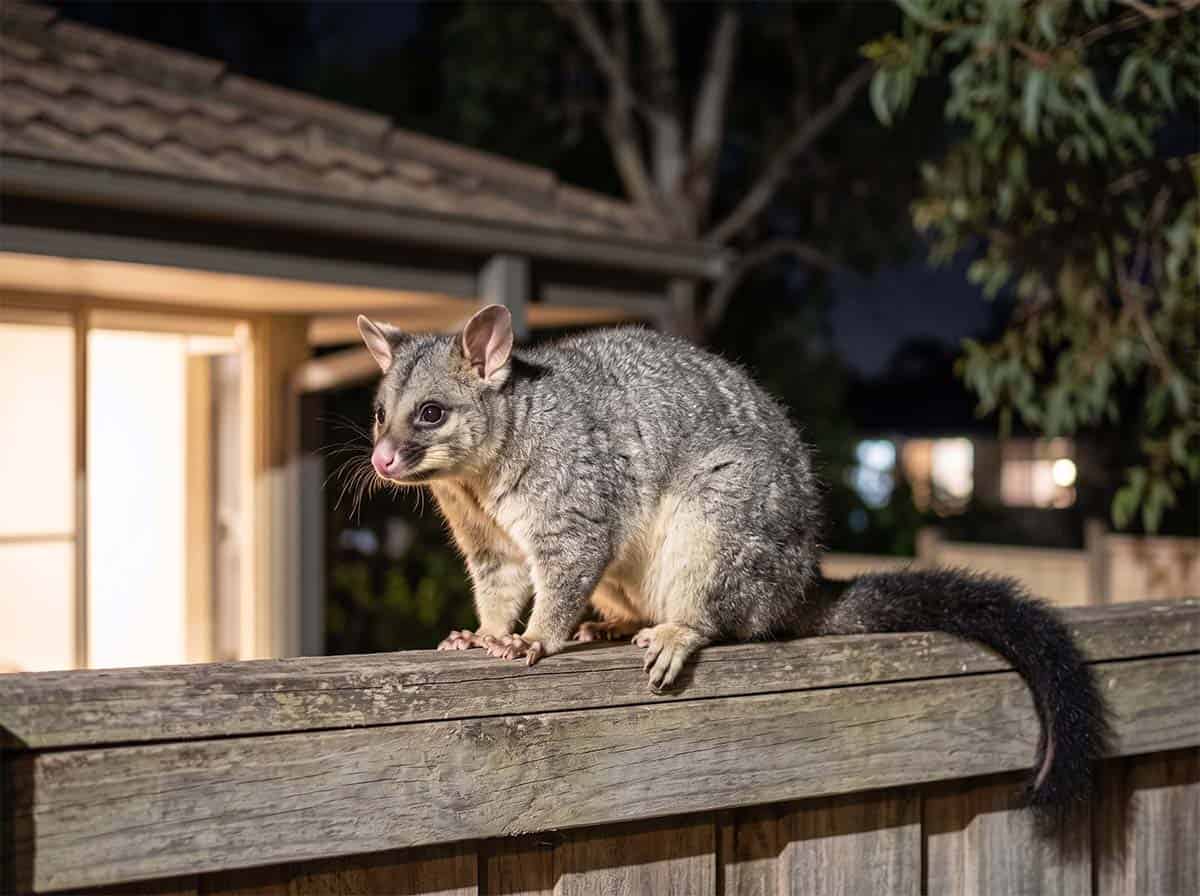
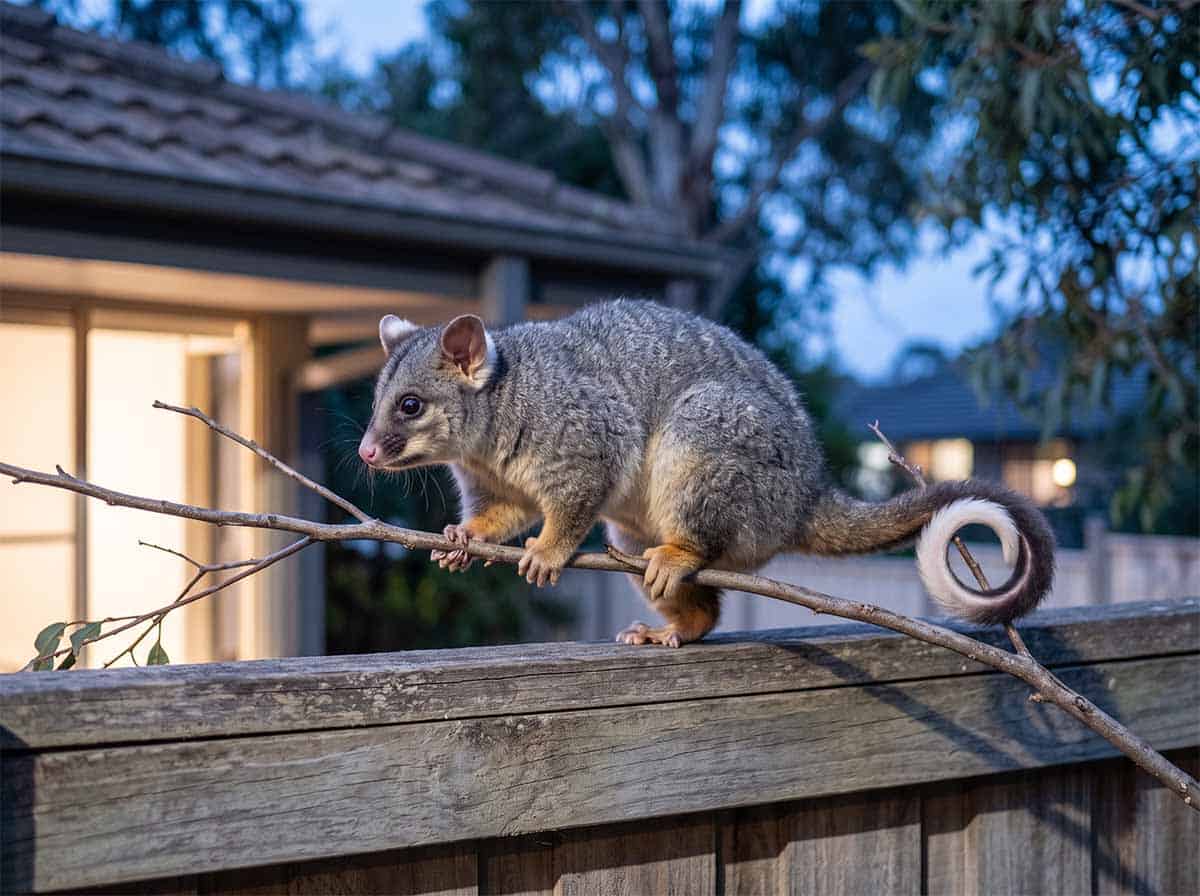
The two possums you will see in Sydney
Both are common across the suburbs, but only one of them routinely moves into a roof.
How to know it is a possum and not something else
Possums are nocturnal, so the evidence turns up at night and in the roof cavity. Look and listen for these.
Heavy thumping after dark
Distinct thuds and what sounds like footsteps across the ceiling, typically shortly after sunset when they leave to feed and again before dawn when they return. Rodents never sound this heavy.
Hissing, growling and screeching
Brushtails are vocal, especially when two of them argue over territory. A sudden loud screech from the roof at 2am is a possum, not a rat.
Large droppings
Possum droppings are far bigger than rodent droppings, cylindrical and often found in clusters in the roof cavity, on the roof itself, on decks or along fence lines and pergolas.
Stains on the ceiling and a strong smell
Possum urine soaks through plasterboard and leaves brown patches on the ceiling, along with a heavy, musky ammonia smell that gets worse in warm weather.
Flattened insulation and a worn entry
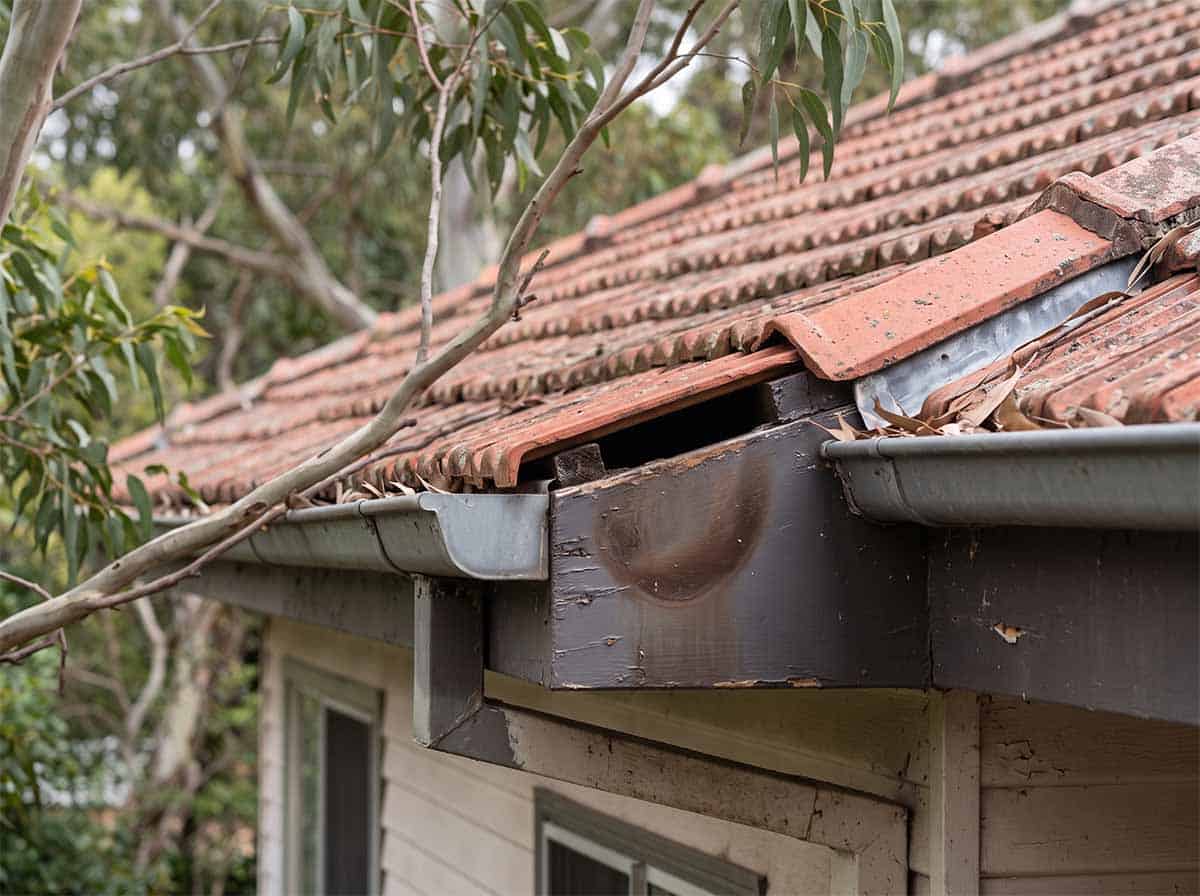
A possum beds down in one spot, so the insulation is pressed flat into a hollow rather than shredded into a nest. Look for a smooth, grubby rub mark at the entry point where it squeezes through nightly.
Garden damage overnight
New shoots, buds, roses and fruit stripped overnight, and pot plants knocked about. Brushtails will eat almost anything in a suburban garden.
The two mix-ups worth getting right
One affects how you treat the problem. The other affects whether treating it is legal at all.
Possum or rodent?
| Clue | Possum | Rat or mouse |
|---|---|---|
| Sound | Heavy thumps, dragging, like footsteps | Light, fast scurrying and scratching |
| Timing | A burst at dusk, a burst before dawn | On and off all through the night |
| Voice | Hisses, growls, loud screeches | Silent, or faint squeaks |
| Gnawing | Rare, it does not need to gnaw | Constant, including on cabling and timber |
| Droppings | Large, cylindrical, in clusters | Small, 3 to 20 mm, scattered along runs |
| Insulation | Pressed flat into a sleeping hollow | Shredded and pulled into a nest |
Still unsure? See the rats and mice guide for the rodent side of the comparison.
Brushtail or ringtail?
Look at the tail. A brushtail has a thick, bushy, black tail that tapers towards the tip, and it is the larger, stockier animal with short rounded ears and dark patches around the eyes. A ringtail has a slender tapered tail with an unmistakable white tip, which it curls into a ring and uses as a fifth limb to grip branches, fences and powerlines. In practice, if something is living in your roof cavity it is almost always a brushtail. Ringtails build a woven nest called a drey in dense shrubs and generally stay outside.
Possums are protected, and that changes everything
This is the part most people get wrong, and it is the reason a possum cannot be treated like a rodent.
Possums are protected native animals under the Biodiversity Conservation Act 2016 (NSW). It is an offence to harm, kill or relocate one without a licence. You cannot poison a possum, you cannot use a lethal trap, and you cannot catch one and drive it to a park down the road. Trapping is only legal under a catch and release possum licence issued by the NSW National Parks and Wildlife Service.
| Under a catch and release licence | What the conditions require |
|---|---|
| Trap type | Live cage trap only, at least 30 cm by 30 cm. Lethal traps, leg snares and poison of any kind are prohibited |
| Time in the cage | No more than 24 hours, with the cage checked daily between 5am and 10am, and food and water provided |
| Where it is released | On the same property it was caught on, within 150 metres of the point of capture |
| When it is released | After sunset, unharmed, against a structure it can immediately climb |
| Sealing the roof | The licence holder must make a reasonable effort to have the roof cavity sealed, after checking no animals remain inside |
| Who may do it | Only persons named on the licence. The licence is not transferable |
Source: NSW Department of Planning, Industry and Environment, Catch and release possum licence standard conditions. The Prevention of Cruelty to Animals Act 1979 and your local council requirements also apply.
The 150 metre rule surprises people, but it exists for a reason. A possum released outside its own territory has no den, no food range and no standing with the possums already there. Councils across Sydney warn that relocated possums commonly die from predation by cats, dogs and foxes, from vehicles, from stress, or from simple starvation. Moving the problem somewhere else is not a kindness, and it is not legal.
Which leads to the practical point. Because a released possum must stay on the same property, trapping on its own achieves nothing. It will simply walk back into the same gap the following night. The only thing that actually solves a possum in the roof is closing the entry points, which is why sealing the roof cavity is written into the licence conditions rather than left as a suggestion.
What a possum in the roof actually costs you
Possums are not aggressive and they are not vermin, but a possum living in a roof cavity causes real damage.
Building damage
Urine and droppings soak into insulation and plasterboard, staining ceilings and sometimes bringing them down in bad cases. Insulation gets crushed flat and stops working, and the smell can persist in the cavity long after the animal has gone.
Hygiene and parasites
Droppings and urine in a roof cavity are a hygiene problem, and possums carry their own fleas, ticks and mites. When a possum dies in a wall or ceiling cavity, the smell and the fly activity that follow are a serious job to resolve.
Getting it wrong is an offence
Blocking a roof while a possum is still inside will trap and kill it, which breaches both the Biodiversity Conservation Act and animal cruelty law. So does poisoning or relocating one. The legal risk is a genuine reason to have the work done properly rather than at the weekend.
A year-round resident, loudest in the cooler months
Unlike most pests, a possum does not arrive on a season and leave on another. A brushtail that has claimed your roof treats it as a permanent den and will use it every day until the gap is closed. What changes through the year is how much you notice it.
Possums in the roof, answered
Is it a possum or a rat in my roof?
Listen to the weight of the sound. A possum is heavy and slow, so you hear distinct thumps and what sounds like a small person walking across the ceiling, usually just after dark and again before dawn. Rats and mice are light and fast, so you hear rapid scurrying, scratching and gnawing on and off through the night. Possums also hiss, growl and screech, which rodents do not. Possums leave large cylindrical droppings and press insulation flat into a sleeping hollow, while rodents leave small scattered droppings and shred insulation into a nest.
Is it legal to remove a possum from my roof in NSW?
Possums are protected native animals under the Biodiversity Conservation Act 2016, so it is an offence to harm, kill or relocate one without a licence. You cannot poison a possum, use a lethal trap, or take it somewhere else. Trapping is only legal under a catch and release possum licence issued by the NSW National Parks and Wildlife Service, and that licence requires the animal to be released on the same property within 150 metres of where it was caught. What you can always do legally is seal the entry points once the possum is outside, which is the part that actually solves the problem.
How far away can a trapped possum be released?
Under the NSW catch and release possum licence conditions, a possum must be released on the property where it was caught and within 150 metres of the point of capture. It must be released after sunset, unharmed, and against a structure it can immediately climb. It cannot be held for more than 24 hours. The distance limit exists because a possum moved outside its own territory usually dies, from predation, vehicles, stress or starvation. Relocating a possum across the suburb is both illegal and, in practice, fatal to the animal.
Can I just block the hole once the possum leaves?
Sealing entry points is the right fix, but the timing has to be correct. Blocking a roof while a possum is still inside will trap and kill it, which breaches both wildlife protection and animal cruelty law, and leaves you with a dead animal in the cavity. The work needs to be done at night once the possum has gone out to feed, after checking the cavity is empty, and every gap has to be closed at once or it will simply use another. Providing a nest box in a tree nearby gives the possum somewhere else to go and makes the outcome stick.
What is the difference between a brushtail and a ringtail possum?
The tail is the giveaway. A common brushtail possum is the larger, stockier animal, roughly cat-sized at 35 to 50 cm plus tail, silver-grey with cream underparts, short rounded ears, dark patches around the eyes and a thick bushy black tail. A common ringtail possum is smaller and finer at 32 to 38 cm, grey with white patches behind the eyes, and has a slender tapered tail with a distinct white tip that it curls into a ring. Brushtails den in tree hollows and roof cavities, so they are the ones found in roofs. Ringtails build a woven nest called a drey in dense shrubs and rarely come inside.
Are possums dangerous, and do they carry disease?
Possums are not aggressive and will avoid people, though a cornered one will hiss, scratch and bite, so never handle one. The real problems are hygiene and damage. Urine and droppings soak into insulation and plasterboard, staining ceilings and creating a persistent smell, and possums carry their own fleas, ticks and mites. If a possum dies inside a wall or ceiling cavity, the odour and fly activity that follow are a significant job to put right. Treat a possum in the roof as a building and hygiene issue to resolve promptly, rather than a threat to your family.
Something heavy in the roof? Let us take a look
A quick inspection tells you whether it is a possum or rodents, where it is getting in, and what can legally be done about it. Free quotes, no call-out charge, and a Sydney family business that has done this for 15 years.
Sources & references
Species descriptions, measurements and Sydney distribution: Australian Museum. Legal status, licensing, trap conditions and the 150 metre release limit: NSW Department of Planning, Industry and Environment, Catch and release possum licence standard conditions, issued under the Biodiversity Conservation Act 2016. The Prevention of Cruelty to Animals Act 1979 and local council requirements also apply. Measurements are typical adult ranges and vary with age and condition. This guide is general information, not legal advice; confirm current requirements with NSW National Parks and Wildlife Service or your council before acting.