
Mosquitoes in Sydney: How to Deal With Them
Whining at night and itchy welts by morning? Here is what mosquitoes need to breed, the bite and disease risk in Sydney, and the one thing that cuts their numbers most: getting rid of standing water.
The quick answer
Why are mosquitoes a problem, and how do I stop them?
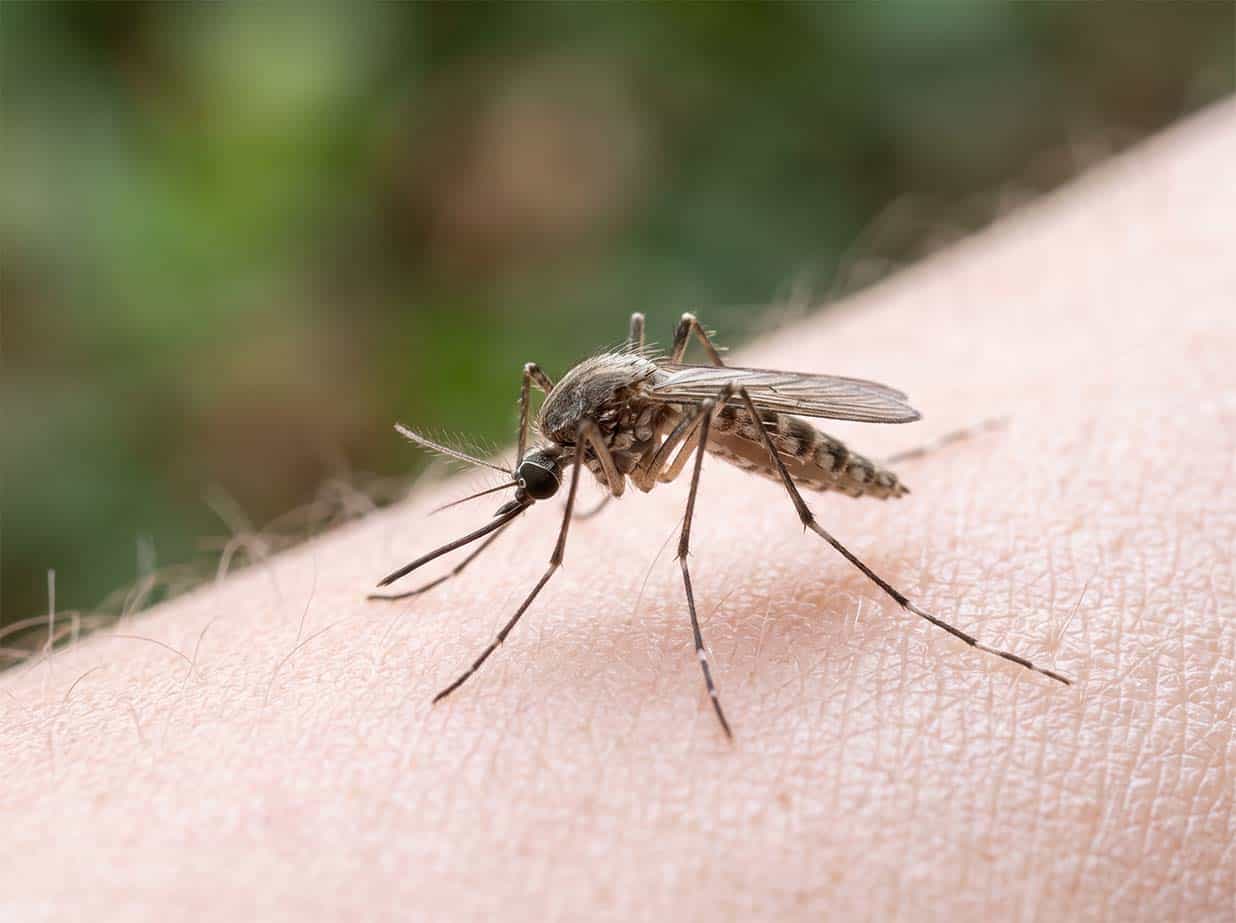
Mosquitoes are small flying insects with a slender body, long legs and a needle-like mouth, and only the females bite, leaving itchy raised welts on exposed skin. In Sydney they breed in still water and are worst from spring to autumn and after rain. Beyond the itch, they can spread viruses such as Ross River and Barmah Forest, so the best protection is to remove standing water around the home, cover up at dawn and dusk, and use an effective repellent. Tipping out and storing anything that holds water, every week, is the single most effective thing you can do.
The mosquitoes you meet in Sydney
They look similar, but where they breed and when they bite differs, which changes how you deal with them.
| Type | Where it breeds | When it bites | Notes |
|---|---|---|---|
| Backyard mosquito | Small containers: pot saucers, buckets, blocked gutters, bird baths | Day and dusk, close to home | The classic backyard biter, breeds in tiny amounts of water |
| Common house mosquito | Stagnant water: drains, ponds, neglected pools | Evening and night | The one whining around the bedroom after dark |
| Saltmarsh mosquito | Coastal wetlands, estuaries and mangroves | Dusk, but flies a long way | Can travel kilometres inland from the coast, worse after high tides |
Only female mosquitoes bite, as they need a blood meal to develop eggs. Reference: NSW Health and the Australian Museum.
The mosquito, and where it comes from
The adult is the part you notice, but the fix is at the breeding site, the still water where the young develop.
The bites, and where they are coming from
You notice mosquitoes by the bites and the whine, but the source is nearly always water close by. Check these.
Whining around your ears at night
The high-pitched whine near your ear in bed is the sound of a female mosquito's wings. It usually means one has got inside, often through a gap in a screen.
Itchy raised welts
Round, raised, itchy welts that come up within minutes of being bitten, on any exposed skin. Reactions vary, and some people swell up far more than others.
Worst at dawn and dusk
Mosquitoes are usually most active in the couple of hours around dawn and dusk, though some backyard types bite through the day, especially in shade.
Standing water around the yard
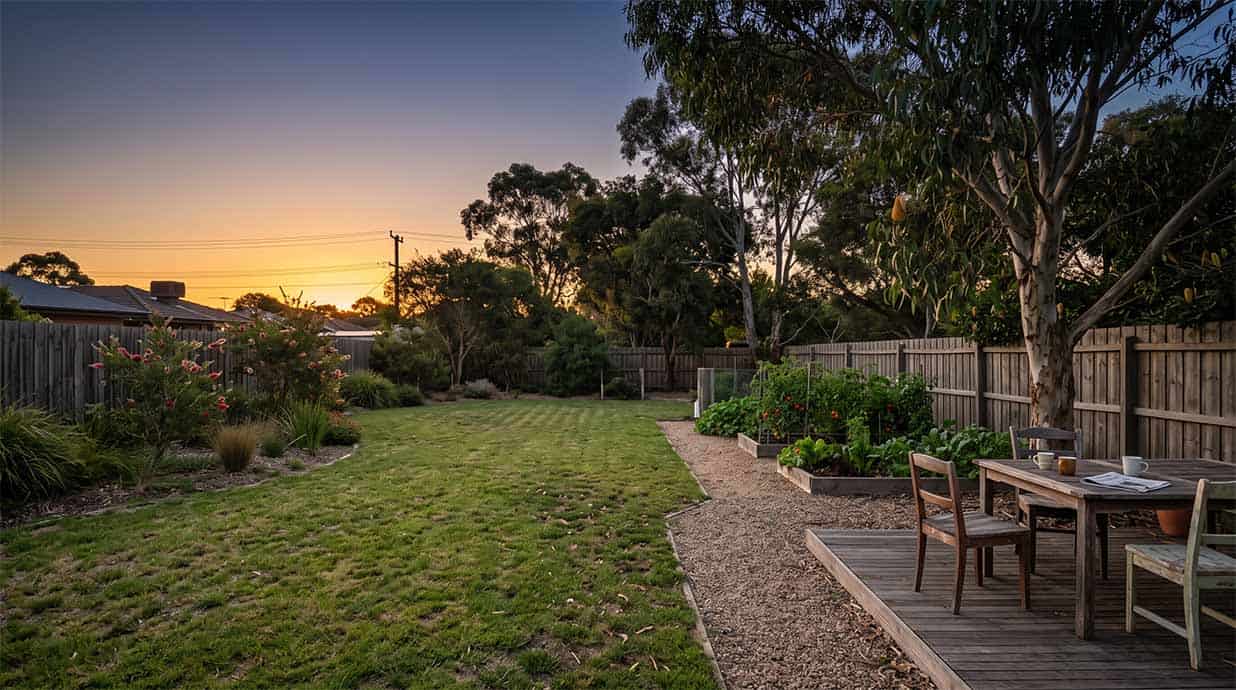
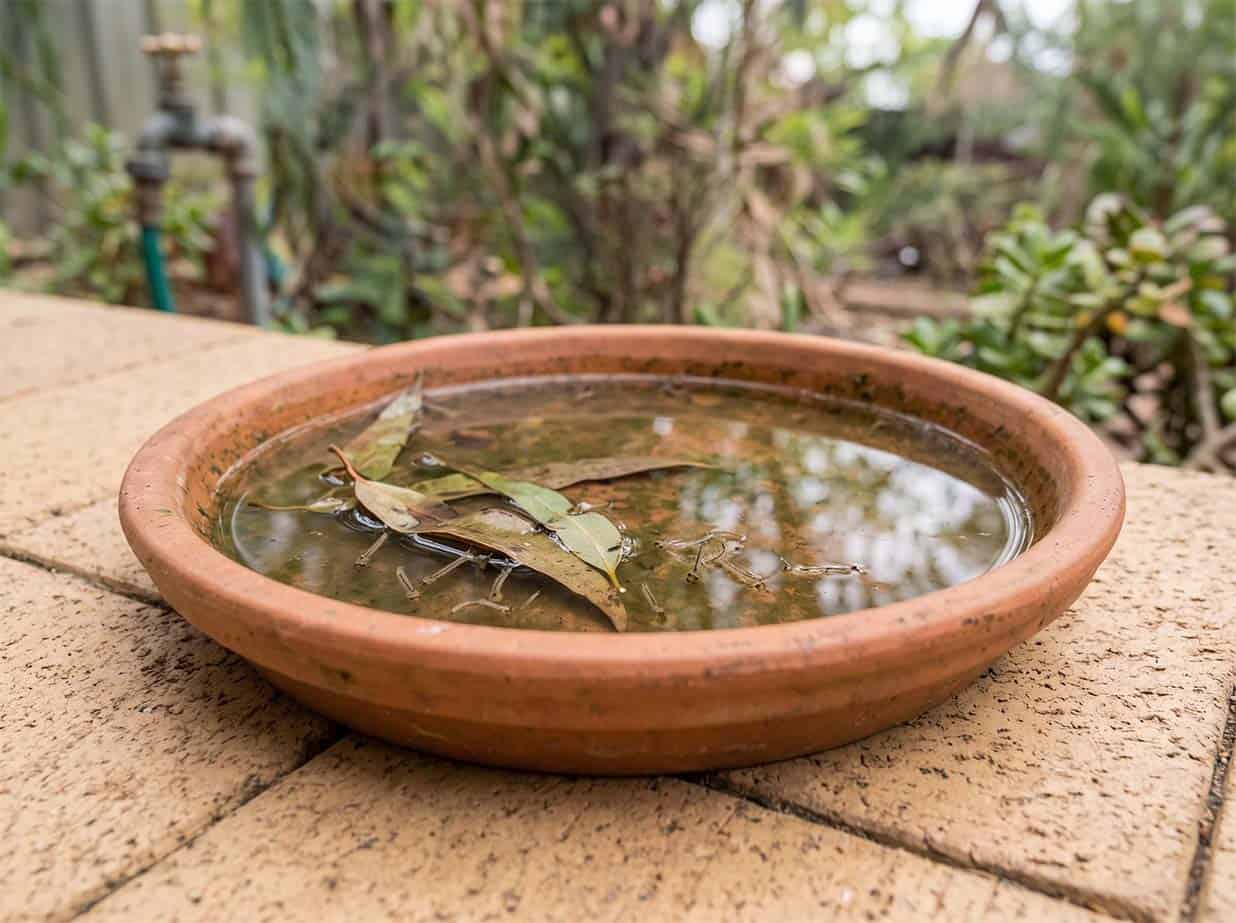
Pot saucers, buckets, tarps, old tyres, bird baths, blocked gutters, a neglected pool or a pond with no fish. Any water sitting for more than a few days can breed mosquitoes.
Wrigglers in the water
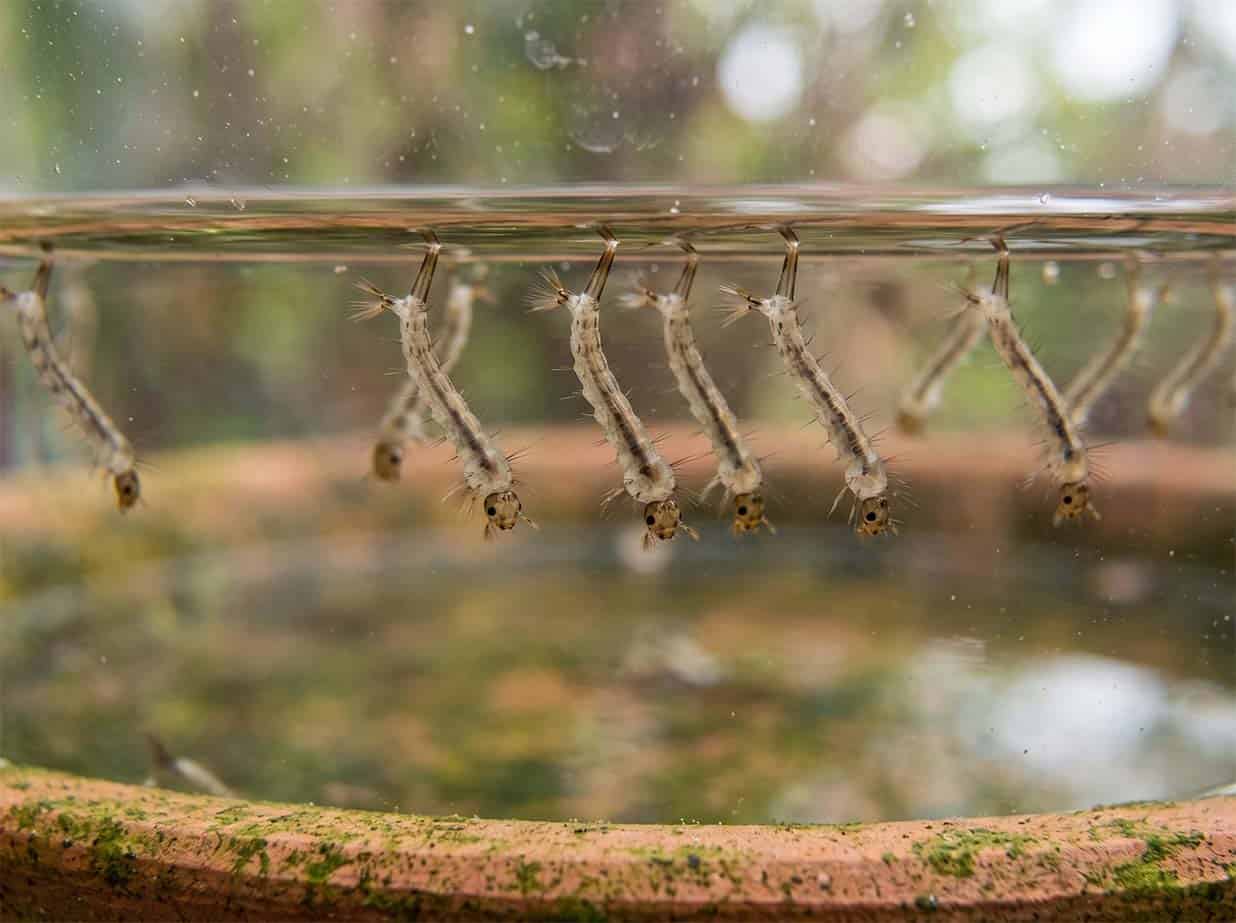
Tiny larvae wriggling just under the surface of any still water. Spotting these confirms a breeding site, and tipping the water out stops that batch before they fly.
A jump in numbers after rain
Mosquito numbers surge a week or two after heavy rain fills up containers and low spots. If they suddenly get bad, it is usually rain plus water sitting around the yard.
Mosquito bites, and the other biters
A mosquito bite is easy to mix up with other itches, and mosquitoes get blamed for bites that are really midges or fleas.
Mosquito bites vs flea bites vs bed bug bites
| Feature | Mosquito | Flea | Bed bug |
|---|---|---|---|
| Where on the body | Any exposed skin | Ankles and lower legs | Exposed skin while you sleep: arms, neck, face |
| Pattern | Single and scattered | Small clusters, often groups of three | A line or small cluster |
| How it looks | A raised round welt | Small red bump with a pale halo | Small red bump with a darker centre |
| Timing | Comes up within minutes, worst at dawn and dusk | Any time, worse where pets are | Overnight |
| The giveaway | You heard the whine | A pet and flea dirt | Spots and live bugs on the bed |
See the flea and bed bug guides if the bites are around the ankles or on the upper body overnight.
Mosquito or biting midge?
Near the coast and wetlands, a lot of "mosquito" bites are actually biting midges, also called sandflies or no-see-ums. They are far smaller than mosquitoes, almost too small to see, do not whine, and bite in the still air around dawn and dusk, leaving tiny, intensely itchy spots. Mosquitoes are bigger, you can hear and see them, and their bite is a larger welt. Both are managed the same way: cover up, use repellent, and reduce the damp breeding areas nearby.
Mostly an itch, but not only an itch
For most people a mosquito bite is just itchy. The reason to take them seriously is the small but real chance of a mosquito-borne virus.
Itchy bites & reactions
Most bites are simply itchy welts that settle in a day or two. Some people, especially children, react more strongly with large swellings, and scratching can lead to a skin infection. A cold pack and an antihistamine help.
Mosquito-borne viruses
In NSW mosquitoes can spread Ross River virus and Barmah Forest virus, which cause fever, rash and joint pain that can linger. Rarer but serious are Murray Valley encephalitis and Japanese encephalitis, mostly an inland and flood-related risk, and Japanese encephalitis is vaccine-preventable. Reference: NSW Health.
Protection is straightforward
The risk from any single bite is low, and it is easily reduced. Remove standing water so fewer mosquitoes breed, cover up at dawn and dusk, screen the house, and use a repellent containing picaridin or DEET. Prevention does far more than swatting.
A summer pest, worse after rain
Mosquitoes need warmth and water, so Sydney's mosquito season runs through the warmer months, roughly November to April, and peaks in a warm, wet summer. Numbers can spike a week or two after heavy rain, once containers and low-lying spots fill up and the young have time to develop.
They quieten right down over winter, which makes late winter and spring the smart time to get on top of breeding sites, before the season builds. Clearing gutters and tipping out water before summer means far fewer mosquitoes when the warm evenings arrive.
Mosquitoes in Sydney, answered
Why are there so many mosquitoes at my place?
Mosquitoes breed in still water, so a yard with lots of mosquitoes almost always has water sitting somewhere nearby. It takes surprisingly little: a pot saucer, a bucket, a blocked gutter, a bird bath, an old tyre or a neglected pool is enough for a batch to develop. Numbers also surge a week or two after heavy rain. If you suddenly have a lot of mosquitoes, the fastest fix is to walk the yard and empty or cover everything holding water.
How do I stop mosquitoes breeding around my home?
Once a week, tip out, cover or store anything that holds water, including pot saucers, buckets, tarps, toys and old containers. Keep gutters clear so they drain, change bird bath and pet water regularly, keep swimming pools chlorinated, and stock ornamental ponds with fish that eat larvae. Because mosquitoes can develop in a tiny amount of water in about a week, a weekly tip-out is the single most effective thing you can do to cut their numbers.
What diseases do mosquitoes carry in NSW?
In New South Wales the mosquito-borne infections people most often catch are Ross River virus and Barmah Forest virus, which can cause fever, rash and joint pain that sometimes lasts for weeks or months. Rarer but more serious are Murray Valley encephalitis and Japanese encephalitis, which are mainly an inland and flood-related risk, and Japanese encephalitis is vaccine-preventable. The risk from any single bite is low, but it is why reducing bites matters. For current advice, NSW Health is the authority.
When are mosquitoes worst in Sydney?
Mosquitoes are a warm-season pest, worst through the warmer months from around November to April, and they peak in a warm, wet summer. Numbers often spike a week or two after heavy rain, once containers and low spots fill with water and the young have time to develop. Through the day they are usually most active around dawn and dusk, though some backyard types will bite in shade during the day. They quieten right down over winter.
What is the best mosquito repellent?
The most effective and well-studied repellents are those containing picaridin or DEET, and oil of lemon eucalyptus is another option. Apply an even layer to all exposed skin, following the label, and reapply as directed, especially after swimming or sweating. Repellent works best alongside covering up with light-coloured, long-sleeved clothing at dawn and dusk and keeping insect screens in good repair. For young children, check the product label for the recommended age and strength.
How do I get rid of mosquitoes in my yard?
Start by removing the breeding sites, since that is where the numbers come from: tip out standing water weekly, clear the gutters, and sort out any pond or pool. Then reduce the damp, shaded spots where adult mosquitoes rest during the day, such as dense low planting and overgrown corners. If the yard stays bad despite this, especially near wetlands or heavy shade, a professional treatment of the resting harbourage can bring numbers down for the season, on top of your own water management.
Backyard unusable at dusk? Let us help
We treat the resting spots and help you cut the breeding sites, so you can use the yard again. Free quotes, no call-out charge, and a Sydney family business that has done this for 15 years.
Sources & references
Mosquito-borne disease and prevention: NSW Health. Mosquito biology: the Australian Museum. Dengue is not endemic in the Sydney region. This guide is for general information and is not a substitute for medical advice; for symptoms after mosquito bites, see your doctor.