
Smoky Brown Cockroaches: The Big One From Outside
One large, glossy, uniformly dark cockroach turning up at night near the back door or the bathroom? That is a very different problem from small striped roaches in the kitchen cupboard, and it needs a completely different fix.
The quick answer
What is a smoky brown cockroach?
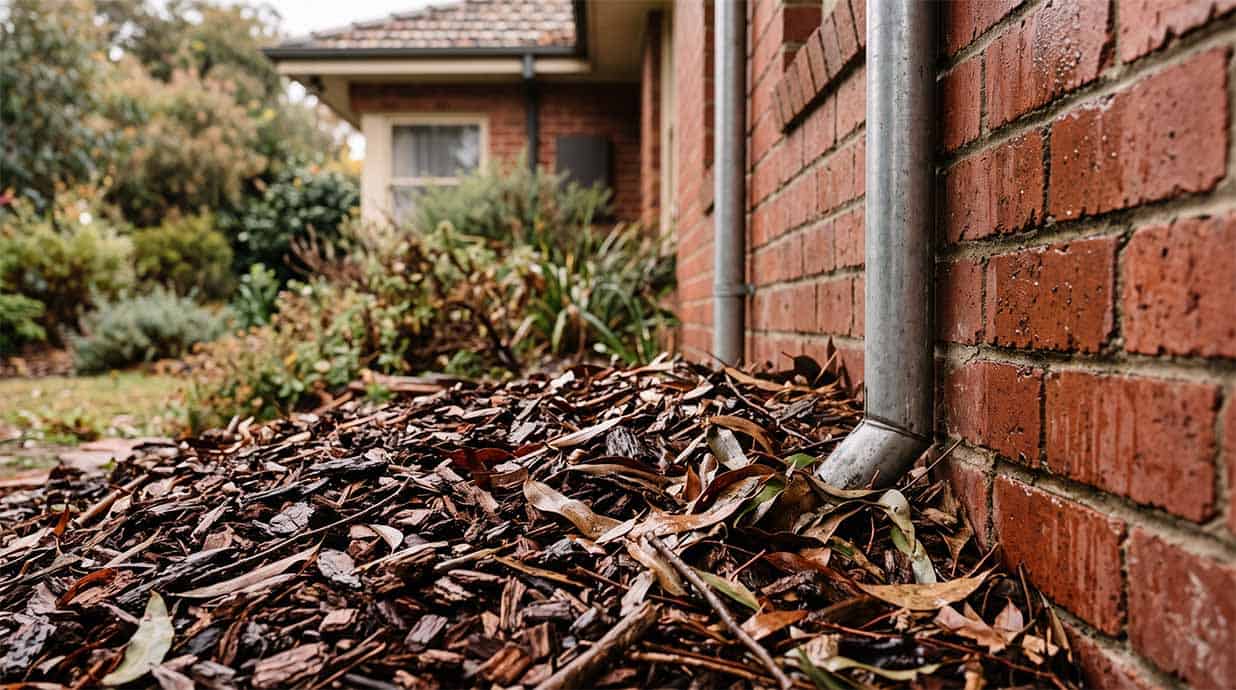
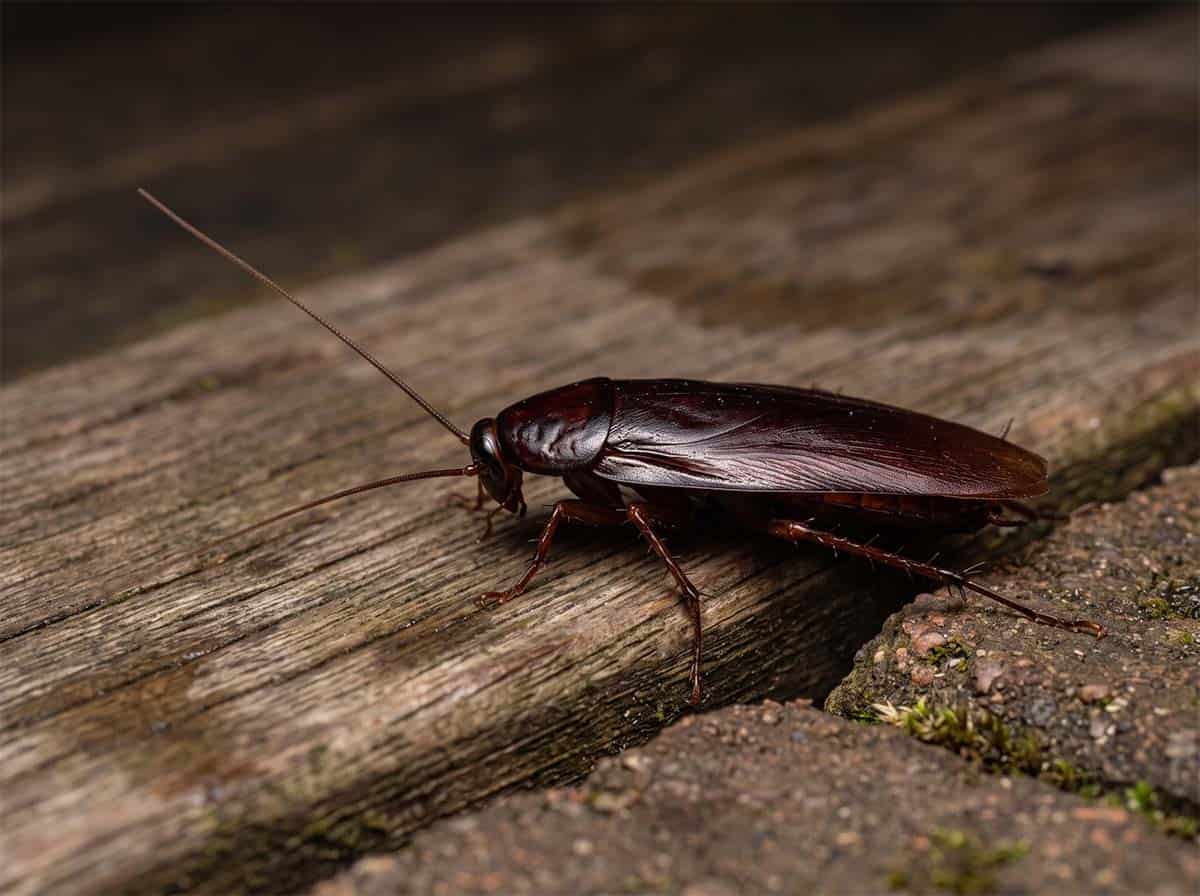
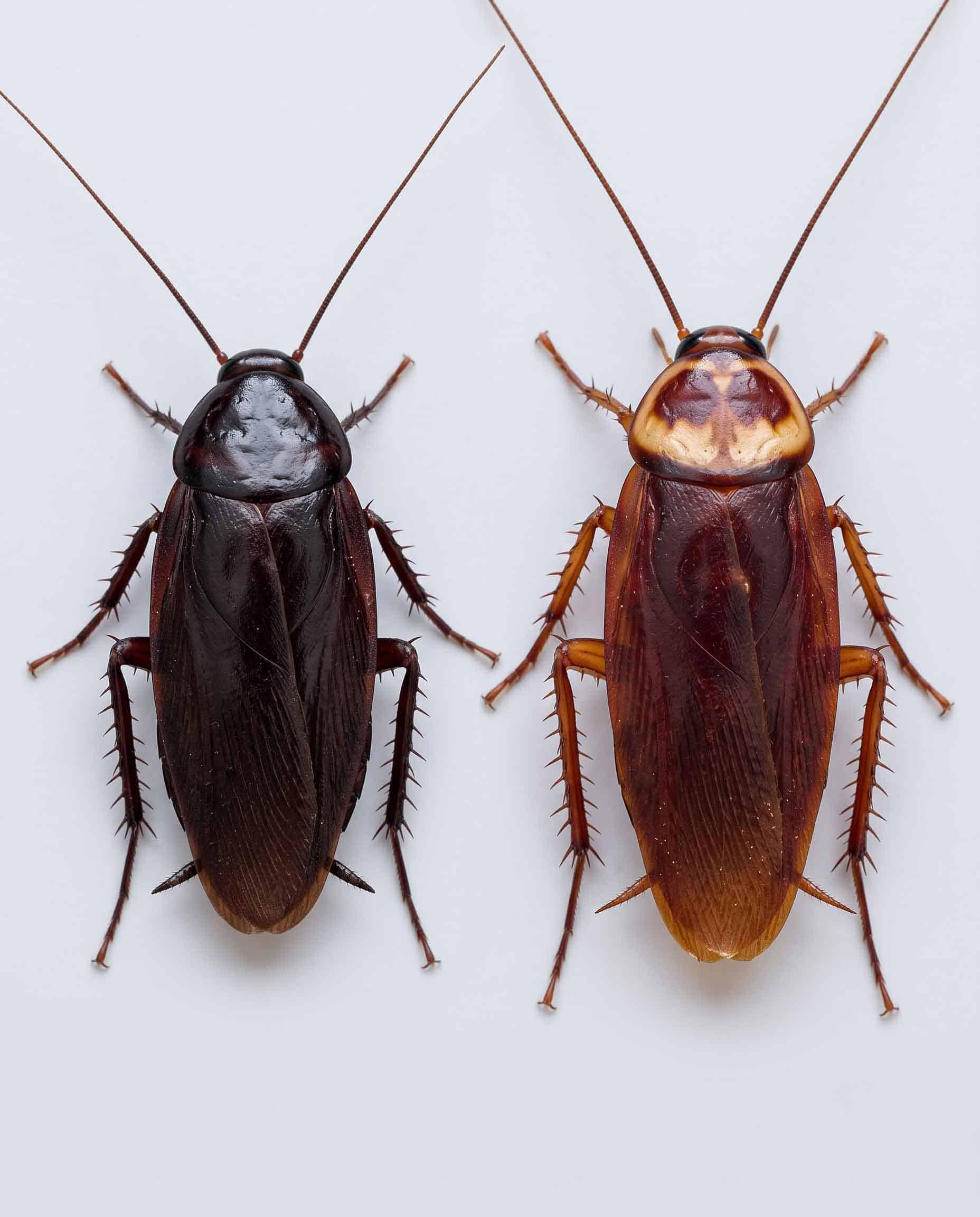
The smoky brown cockroach is a large cockroach, 25 to 38 mm long, in a uniform glossy dark mahogany to blackish-brown with no pale markings anywhere. Its wings extend past the tip of the abdomen and it flies readily, drawn to lights at night. The key thing to understand is that it lives outdoors, in mulch, leaf litter, tree hollows, wood piles and blocked gutters, and comes inside looking for moisture and shelter. It does not breed in your kitchen the way a German cockroach does, so the fix is outside the house: cut back the harbourage and moisture around the perimeter, then seal the ways in.
Sydney's four common cockroaches
Size and markings sort them out at a glance, and where you found one tells you what sort of job it is.
| Feature | Smoky brown | American | Australian | German |
|---|---|---|---|---|
| Size | 25 to 38 mm, large | 35 to 40 mm, large | 30 to 35 mm, large | 12 to 15 mm, small |
| Colour | Uniform glossy dark mahogany to blackish-brown | Reddish brown | Dark reddish brown | Light tan to brown |
| Key marking | None at all. No band, no halo, no stripes | Pale figure-8 or halo behind the head | Yellow band behind the head, yellow wing edges | Two dark stripes behind the head |
| Flies? | Yes, readily, and comes to lights | Can glide in warm weather | Can fly short distances | Rarely, mostly runs |
| Where it lives | Outdoors: mulch, leaf litter, tree hollows, gutters, wood piles | Warm damp spots: drains, subfloors, grease traps | More outdoors: gardens and subfloors | Indoors: kitchens, bathrooms, appliances |
| Breeds indoors? | No | Sometimes, in warm damp voids | Usually not | Yes, exclusively |
If it is small, tan and striped in the kitchen, read the German cockroach guide instead, because that is an indoor breeding infestation and is treated a completely different way. On naming: the smoky brown was reclassified in 2025 as Validiblatta fuliginosa, previously Periplaneta fuliginosa.
Adult, nymph and egg case
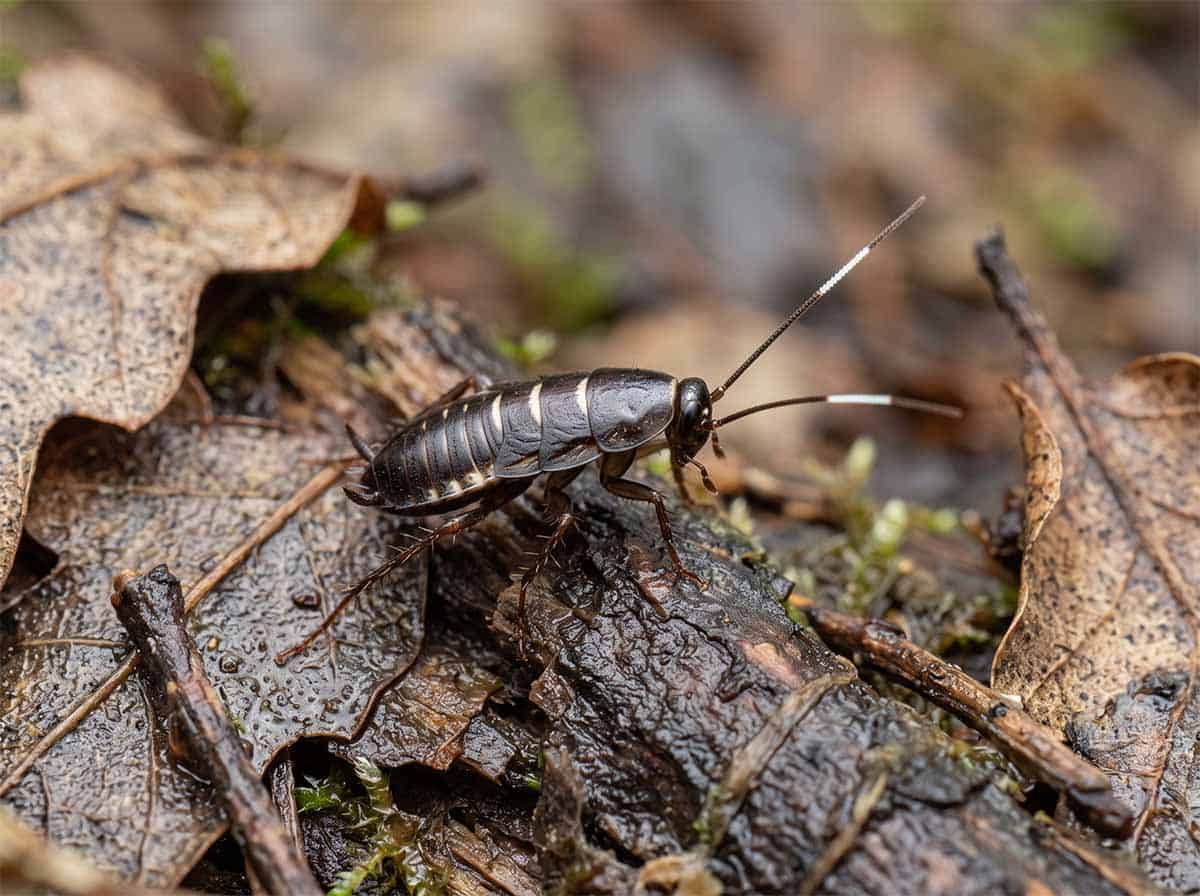
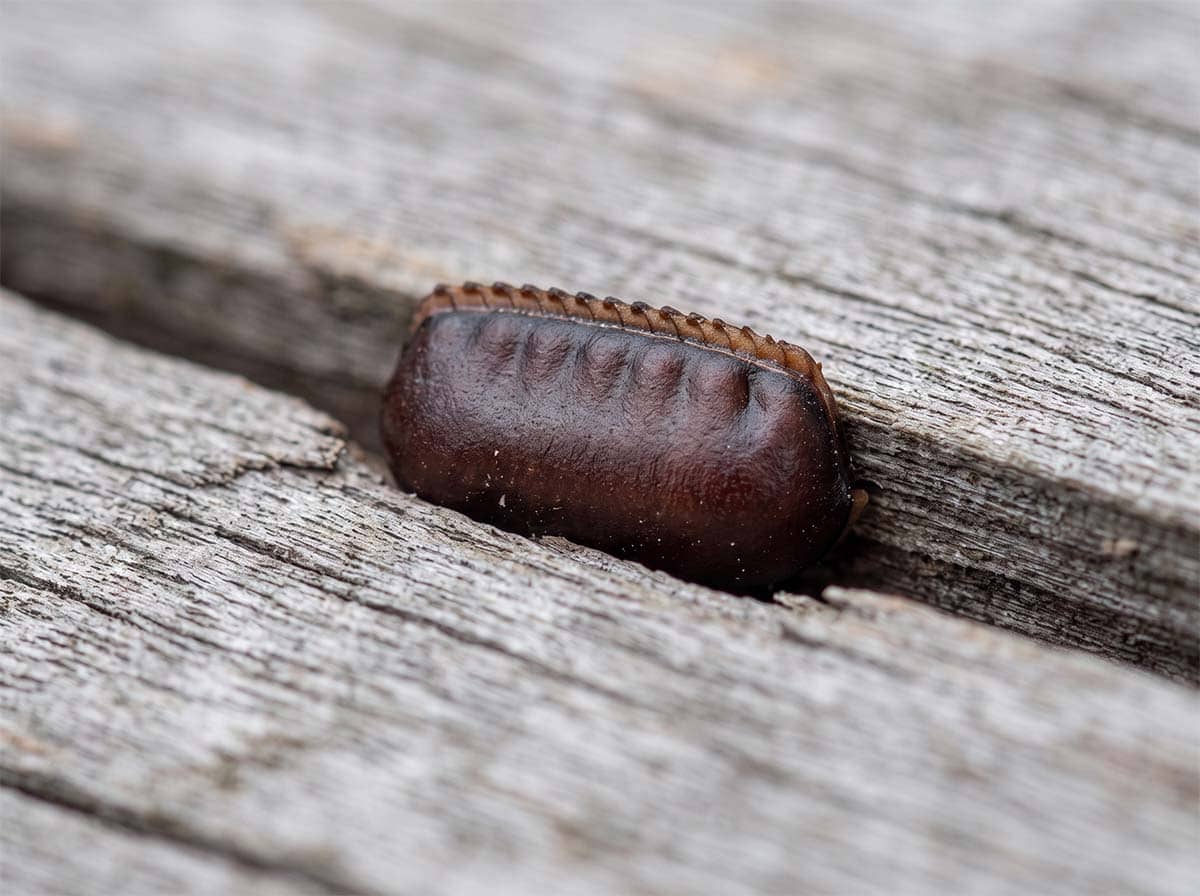
The adult is the plainest of the big cockroaches. The nymph, oddly, is the most distinctive of the lot.
Look outside, not in the cupboard
This cockroach loses moisture through its shell faster than most, roughly twice as fast as the American cockroach, so it has to live somewhere damp and sheltered. That single fact tells you where to look.
Deep mulch and leaf litter
Garden beds mulched right up against the wall, leaf litter, ivy and dense ground cover. The number one harbourage, and the number one thing to fix.
Blocked gutters
A gutter full of wet leaves is a perfect smoky brown nursery: damp, sheltered, full of rotting plant matter and right beside the roofline. Clearing them is one of the highest-value jobs you can do.
Tree hollows, bark and palm fronds
Hollows, loose bark and the crown of a palm are natural habitat. Overhanging branches touching the roof give them a direct bridge into the eaves.
Wood piles, decks and stacked gear
Firewood, landscape timbers, pavers, pot stacks and general junk sitting against the house. Damp underneath, dark inside, and a short walk to the back door.
Eaves, soffits and roof voids
Still, humid pockets away from airflow mimic a tree hollow closely enough that they will shelter there. This is also how you end up with one dropping into the bathroom.
Turning up at night near a light
They fly and are strongly drawn to lights, then walk in through a lit doorway or a gap under a door. A single big roach indoors at night is usually a wanderer, not a resident.
Not every big dark cockroach needs treating
This is the part most guides skip, and in Sydney it matters, because plenty of large dark cockroaches here are harmless natives.
Smoky brown, or a native bush cockroach?
Australia has many native black and dark cockroaches that live under bark, in leaf litter and in soil. They are shiny and dark and can be a similar size, but they do not infest houses and they need no treatment. The practical tell is the wings. The smoky brown is fully winged, with wings reaching past the tip of the abdomen, and it flies. Most of the native lookalikes are wingless or have only short wing pads, and cannot fly at all. So if you have found a big dark cockroach in the garden with no proper wings, it is very likely a native, and best left alone.
Smoky brown vs the other big roaches
| Look at the shield behind the head | What it means |
|---|---|
| Completely plain and dark | Smoky brown. No markings anywhere, and the whole body is one glossy dark colour |
| Pale figure-8 or halo | American cockroach, and it is usually reddish brown rather than near-black |
| Yellow band, plus yellow wing edges | Australian cockroach |
| Two dark stripes, and it is small | German cockroach, which is a much more serious indoor problem |
| Dark, but wingless or short wing pads | Very likely a harmless native bush cockroach. Not a pest |
Nymphs are worth knowing too: a young smoky brown is nearly black with two white bands and white antenna tips, which no other local cockroach nymph has.
A contamination and allergy problem
They do not bite and they are not venomous. The reasons to deal with them are hygiene and, more importantly, allergens.
They carry bacteria onto surfaces
They feed on decaying plant matter and on animal droppings, then walk across benches and stored food. Cockroaches can carry bacteria mechanically on their bodies and in their droppings, so the risk is contamination of food and surfaces rather than a bite or a sting.
Cockroach allergens trigger asthma
This is the better-established health concern. Droppings, shed skins and body fragments are recognised indoor allergens and asthma triggers in sensitised people, and the Australian Asthma Handbook lists cockroach allergens among airborne asthma triggers. Reducing an infestation reduces the allergen load, though pest control is not a treatment for asthma.
Slow to build, which is good news
A smoky brown takes around 600 days to go from egg to adult, against roughly 50 to 60 days for a German cockroach. So a few in the garden is not an emergency, and unlike German cockroaches they are not multiplying inside your kitchen while you read this.
A summer pest, peaking December to March
Smoky brown cockroaches need warmth and humidity, and Sydney sighting records follow that closely. Roughly 40% of Sydney records fall in summer, against about 11% in winter, so sightings are more than three times as common in the warm months. Egg production drops right off below about 15 degrees, which is why they go quiet over a Sydney winter.
They move indoors looking for moisture and shelter rather than warmth, so hot, dry spells are when you are most likely to meet one inside, along with anything that disturbs their harbourage such as garden work or clearing mulch. The smart time to deal with the outdoor habitat is late winter into spring, before the summer build-up starts.
Smoky brown cockroaches, answered
How do I know it is a smoky brown cockroach?
Look for a large cockroach, 25 to 38 mm long, in a uniform glossy dark mahogany to blackish-brown, with no markings anywhere on it. That plainness is the identifying feature: the American cockroach has a pale figure-8 or halo behind the head, the Australian cockroach has a yellow band plus yellow streaks along the wing edges, and the German cockroach is much smaller with two dark stripes. The smoky brown also has wings that extend past the tip of its abdomen and it flies readily, which is worth noting because many harmless native Australian cockroaches are wingless.
Are smoky brown cockroaches found in Sydney?
Yes. Sydney is actually its Australian stronghold. The great majority of Australian records for this species come from New South Wales, and a large share of those are from Greater Sydney, including the eastern suburbs. Across Australia as a whole it is recorded less often than the American or Australian cockroach, but within Sydney the three are much closer in number, so it is a genuinely common local species rather than an occasional curiosity.
Why do they keep coming inside?
They come in for moisture and shelter rather than to nest. This species loses water through its shell faster than most cockroaches, roughly twice as fast as the American cockroach, so it has to stay somewhere damp and sheltered. When conditions outside get hot and dry, or when their harbourage is disturbed by garden work, they move towards buildings. They also fly and are strongly attracted to lights, so a lit doorway on a summer night is an open invitation, and a gap under the door is all they need.
Are smoky brown cockroaches dangerous?
They do not bite people, they are not venomous, and cockroach bites are extremely rare in general. The genuine concerns are hygiene and allergies. Because they feed on decaying plant matter and animal droppings, they can carry bacteria on their bodies and in their droppings onto benches and stored food, so it is a contamination risk. The better-established issue is that cockroach droppings, shed skins and body fragments are recognised indoor allergens and asthma triggers for sensitised people, and the Australian Asthma Handbook lists them among airborne asthma triggers.
What is the difference between a smoky brown and a German cockroach?
Almost everything, which is why the treatment differs completely. A smoky brown is large at 25 to 38 mm, uniformly dark with no markings, flies, and lives outdoors in mulch, gutters and tree hollows, coming inside only to look around. A German cockroach is small at 12 to 15 mm, light tan with two dark stripes, does not really fly, and spends its entire life indoors breeding in kitchen and bathroom cracks. So seeing one big dark roach at night near the back door is a perimeter and garden job, while seeing small striped roaches in a cupboard means an indoor breeding infestation that needs gel baiting and hygiene work.
How do I get rid of smoky brown cockroaches?
Work on the outside of the house, because that is where they breed. Pull mulch, leaf litter and ground cover back from the walls, trim shrubs and branches so nothing touches the house, clear the gutters, and shift wood piles and stacked materials away from the building. Fix leaks and damp, seal gaps under doors and around vents and pipes, and move outdoor lighting away from doorways. A field study found this integrated approach outperformed a perimeter spray alone and lasted about twice as long, and that treating outdoors reduced the numbers found indoors. Because they reinvade from surrounding gardens, periodic servicing works better than a single spray.
Big roaches coming in at night?
We treat the harbourage, eaves and perimeter where they actually live, and tell you which garden changes will do the most. Free quotes, no call-out charge, and a Sydney family business that has done this for 15 years.
Sources & references
Identification, nymph markings, egg case, lifecycle, habitat and the integrated control study (Smith and others, Journal of Economic Entomology, 1995): Texas A&M AgriLife Extension Entomology and the University of Tennessee Extension. Native Australian cockroaches, and the point that cockroaches found outdoors are usually native species: the Australian Museum. Sydney distribution and seasonality are drawn from Australian occurrence records held by the Atlas of Living Australia and iNaturalist Australia, so they reflect recorded sightings rather than a formal survey. Bacteria and contamination: the Better Health Channel. Cockroach allergens as an asthma trigger: the Australian Asthma Handbook, National Asthma Council Australia. The species was reclassified from Periplaneta fuliginosa to Validiblatta fuliginosa in 2025. This guide is for identification and general information and is not medical advice; pest control is not a treatment for asthma.