
Ants in Sydney: How to Identify Them
A trail across the benchtop, a nest between the pavers, or a painful sting from a big one in the garden? Here is how to tell the common household ants from the ones that bite, and what to do about each.
The quick answer
How do I identify the ants in my house?
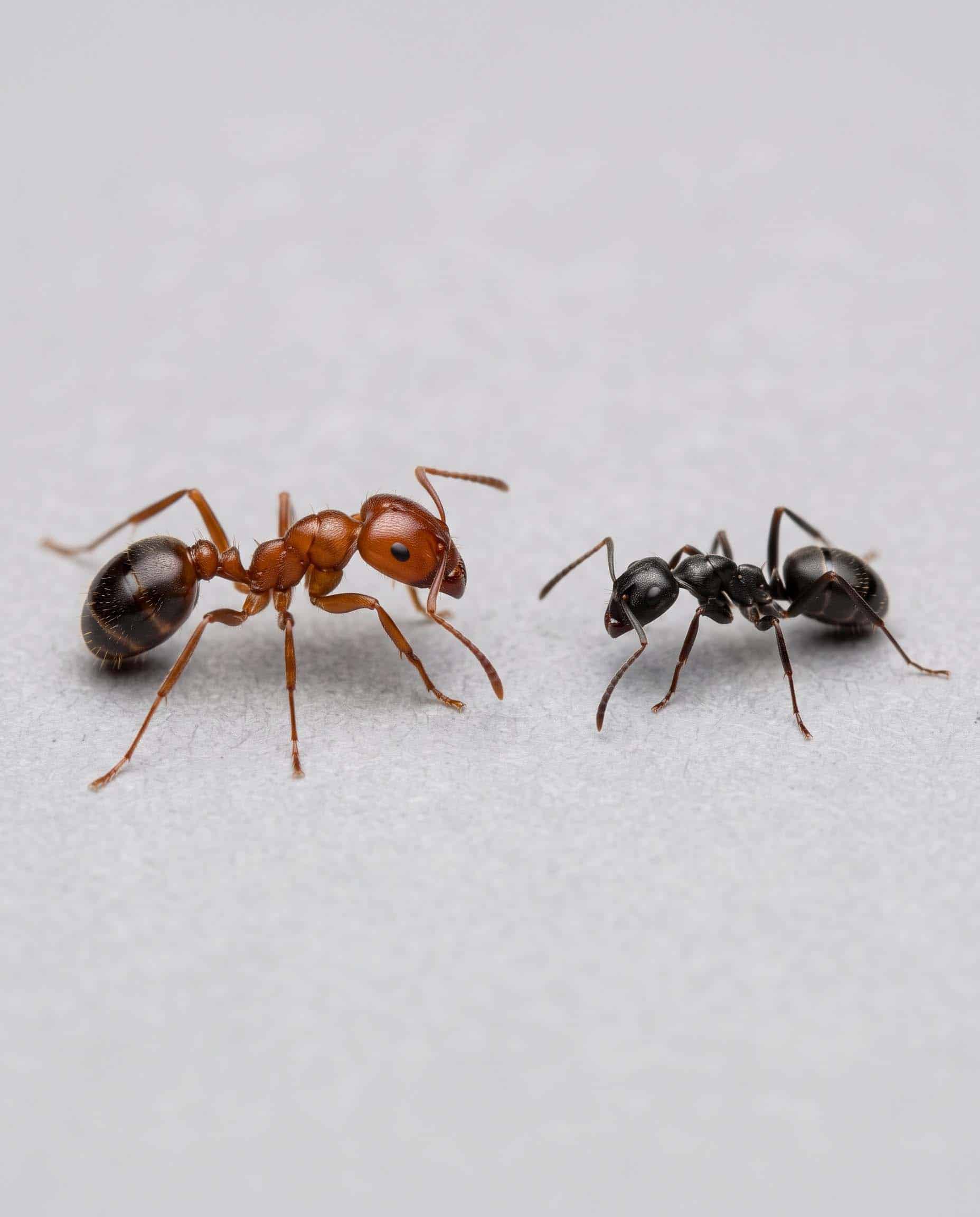
Most ants in Sydney homes are small (2 to 4 mm) nuisance ants, such as black house ants, Argentine ants and coastal brown ants, that follow trails to food and water but do not sting. The ants to respect are the much larger bull ants and jack jumpers (up to 40 mm), which are aggressive and can deliver a painful sting that triggers a severe allergic reaction in some people. If you think you have seen red imported fire ants, a serious pest not established in Sydney, report them to 13 22 68. For the common household ants, the fix is about the nest and the trail, not the sting.
The ants you see most in Sydney
The common household ants, plus the two big stingers and the one to report.
| Ant | Size | Look | Where & behaviour | Stings? |
|---|---|---|---|---|
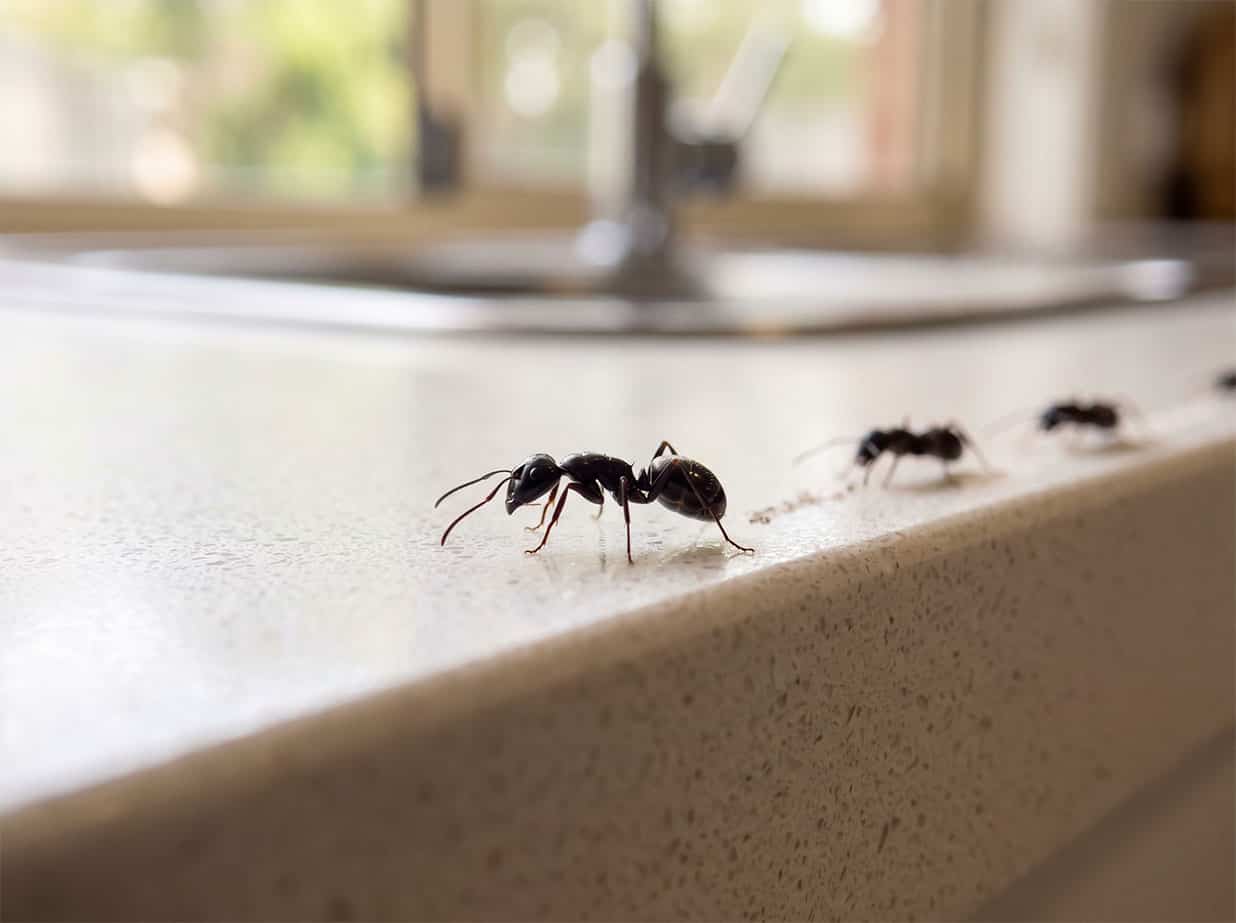
| Black house ant | 2.5 to 3 mm | Shiny black | Trails to food in kitchens, nests in walls and gardens | No, a nuisance |
| Argentine ant | 2 to 3 mm | Light to mid brown | Huge trails and supercolonies, pushes other ants out | No, a nuisance |
| Coastal brown ant | 1.5 to 2.5 mm | Light brown, big-headed soldiers | Pushes little piles of fine soil up between pavers | No, a nuisance |
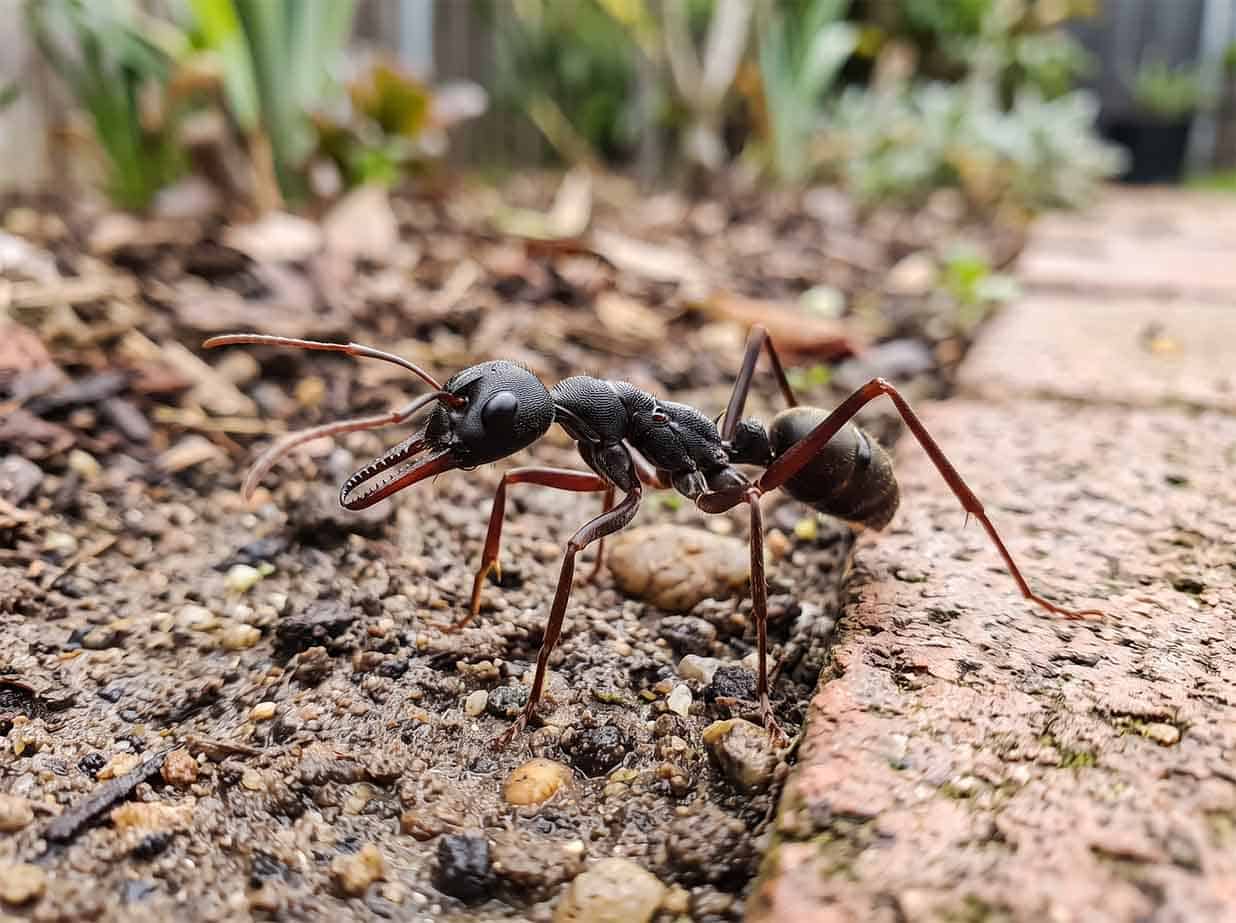
| Bull ant | 8 to 40 mm | Large, black or red-brown, big eyes and jaws | Ground nests, aggressive if disturbed | Yes, painful, can be severe |
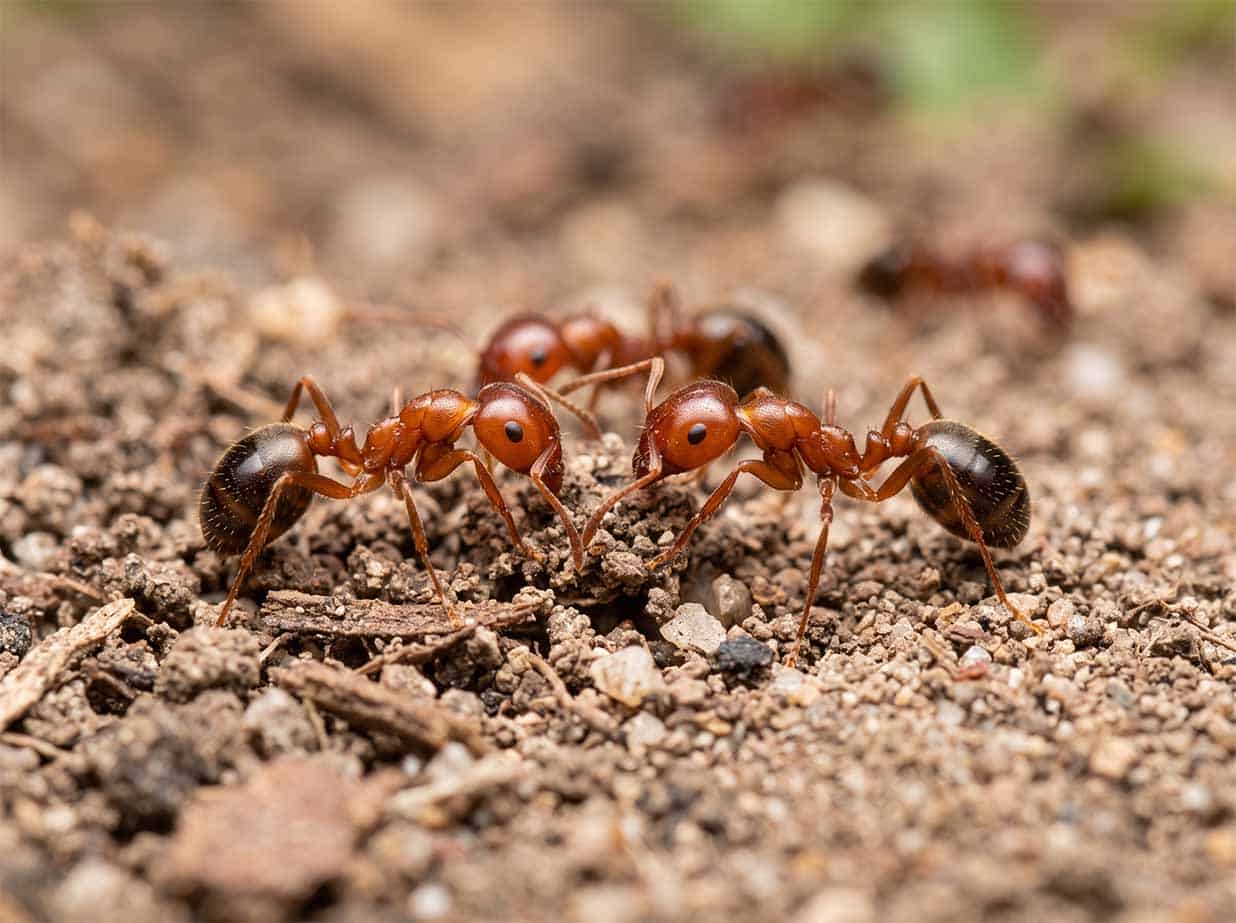
| Fire ant (report it) | 2 to 6 mm | Coppery brown, darker abdomen | Dome-shaped mounds, no clear entry hole | Yes, report to 13 22 68 |
Jack jumper ants (10 to 15 mm, black with orange legs, a hopping walk) are the other stinger to know, with a high allergy risk. Reference: Australian Museum and healthdirect Australia.
The three worth knowing on sight
The everyday trail ant, the big garden stinger, and the one the whole country is trying to keep out.
Trails, nests and the odd painful surprise
Ants are easy to see, but the nest that feeds the trail is usually hidden. Look for these.
Trails to food and water
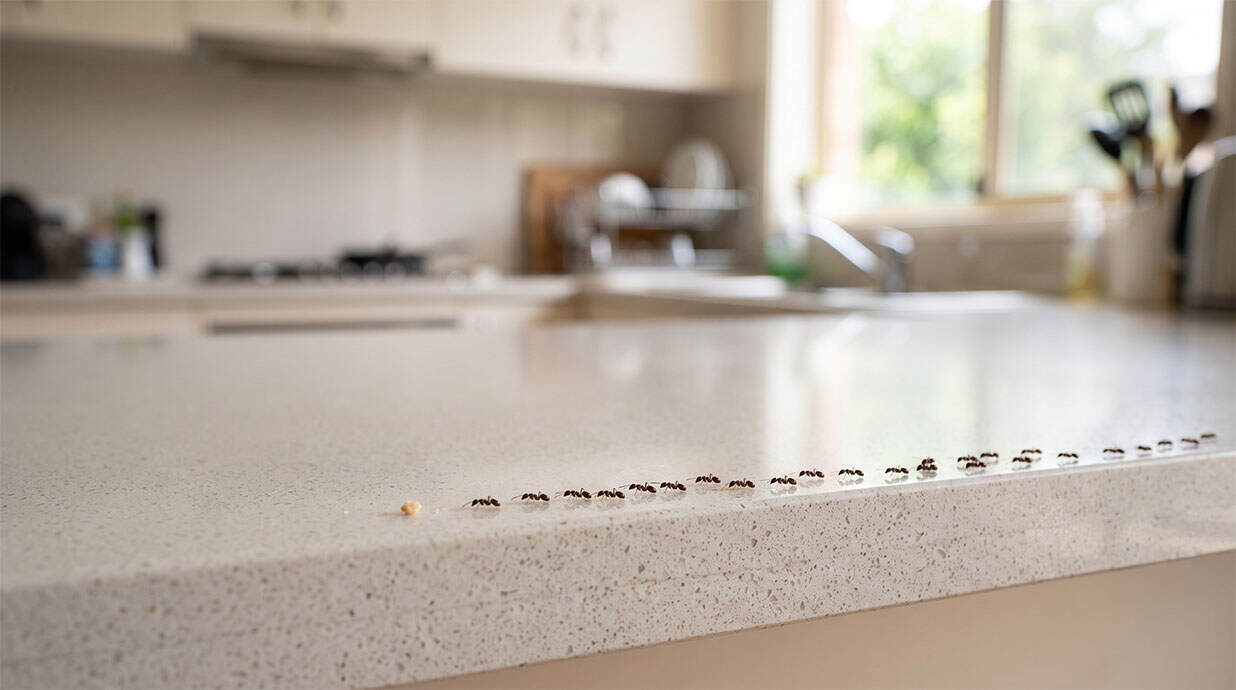
Lines of ants running along benchtops, skirting and window frames to the pantry, the pet bowl or a spill. The trail leads back to the nest.
Little piles of soil
Fine, sandy soil pushed up between pavers, along slab edges and in cracks in the path. That is the nest below the surface, common with coastal brown ants.
Ants in the pantry and pet bowl
Ants getting into sugar, honey, cereal and the dog or cat's food. Sweet and greasy foods are the biggest draw for the common household ants.
Winged ants swarming
Clouds of flying ants on a warm, humid day are a mating flight, not always a problem. But winged ants indoors can be confused with termites, so check the difference below.
A sudden, painful sting
A sharp sting from a large ant in the garden usually means a bull ant or jack jumper. They defend their nest fiercely, so the sting comes with little warning.
Mounds and anthills in the lawn
Raised nests or mounds in the lawn and garden beds. A neat dome with no obvious entry hole is worth a closer look, since it can be a sign of fire ants.
Which ants sting, and the termite mix-up
Two questions come up most: is this a biting ant, and are these flying ants or termites?
Flying ants vs termites
| Feature | Flying ant | Termite (swarmer) |
|---|---|---|
| Waist | Narrow, clearly pinched | Broad, no pinch |
| Antennae | Bent, with an elbow | Straight and bead-like |
| Wings | Front pair larger than the back pair | Four wings all the same length |
| Harm | Harmless to timber | Eats timber, a serious pest |
If the waist is broad, the antennae straight and all four wings equal, it is a termite, not an ant. See the full termite guide.
Which ants actually sting?
The everyday household ants, black house ants, Argentine ants and coastal brown ants, do not sting and are a nuisance rather than a danger. The ones that sting are the big natives, the bull ant and the jack jumper, whose stings are painful and can cause a serious allergic reaction in some people. The red imported fire ant also stings and is a declared pest, so a suspected sighting should be reported rather than treated yourself.
| Ant | Look | The sting | What to do |
|---|---|---|---|
| Bull ant | Very large, 8 to 40 mm, big eyes and jaws | Sharp and painful, can cause a severe reaction | Keep clear of the nest; treat by a professional |
| Jack jumper | 10 to 15 mm, black with orange legs, hops | Painful, a leading cause of ant-sting allergy | Keep clear; carry a plan if you are allergic |
| Fire ant | 2 to 6 mm, coppery brown, dome mounds | Burning sting, blisters, swarms when disturbed | Do not disturb, report to 13 22 68 |
Jack jumper allergy: ASCIA. Fire ant reporting: National Fire Ant Eradication Program, 13 22 68.
Mostly a nuisance, sometimes more
The common ants are about hygiene and annoyance. A few natives, and one invader, are a genuine health matter.
Food contamination
The everyday household ants walk over bins, drains and gardens, then across your food and benchtops. They will not sting you, but they contaminate food and are a hygiene problem worth clearing.
Painful stings & allergy
Bull ants and jack jumpers sting to defend the nest, and the pain is real. In some people the sting can cause a severe allergic reaction. Wash the sting, use a cold pack, and if there is any breathing difficulty or facial swelling, call 000.
Fire ants: a bigger problem
Red imported fire ants are one of the world's worst invasive pests and are not established in Sydney. Their sting burns and blisters, and a nest can swarm. If you suspect them, do not disturb the mound, and report it to 13 22 68 so it can be checked.
Ants come marching in the warm months
Ant activity climbs with the temperature, so trails and nests are most obvious from spring through summer. Hot, dry spells push ants indoors looking for water, while heavy rain can flood nests and send them inside for shelter, which is why a wet summer often brings them onto the benchtop.
Warm, humid days also trigger mating flights, when winged ants appear in numbers for a day or two. It looks dramatic but usually passes quickly. The nests themselves are active year-round, just quieter and deeper in the cold, so the best time to knock a colony back is before the summer build-up.
Ant identification, answered
How do I identify the ants in my kitchen?
Most kitchen ants in Sydney are small nuisance ants, 2 to 4 mm long, that follow trails to food and water. Shiny black ones are usually black house ants, light brown ones in huge trails are often Argentine ants, and tiny light brown ants that push soil up between pavers are coastal brown ants. None of these sting. Large ants, 8 mm and up, with big eyes and jaws are bull ants or jack jumpers, which live outdoors and sting, so they are rarely the ones on your benchtop.
Why have ants suddenly appeared in my house?
Ants come inside looking for food and water, and the trigger is often the weather. Hot, dry spells send them indoors for moisture, while heavy rain floods their nests and pushes them in for shelter, which is why they often turn up on the benchtop after a storm. Once a scout finds food, it lays a scent trail that the rest of the colony follows. Wiping the trail and sealing the food helps, but the colony will keep sending more until the nest itself is treated.
Which ants in Sydney sting or are dangerous?
The common household ants do not sting. The stinging ants are the large native bull ants and jack jumpers, which defend their nests aggressively and deliver a painful sting that can, in some people, cause a severe allergic reaction. The red imported fire ant also stings, but it is a declared biosecurity pest not established in Sydney. If you are stung and develop breathing difficulty, facial swelling or dizziness, call 000, as this can signal a serious allergic reaction.
Are these flying ants or termites?
Look at the waist, antennae and wings. A flying ant has a narrow pinched waist, bent elbowed antennae, and front wings larger than the back pair. A termite has a broad waist with no pinch, straight bead-like antennae, and four wings all the same length. Termites also shed their wings quickly. Flying ants are harmless to timber, but termites are a serious pest, so if it looks like a termite, do not disturb it and read our termite guide.
How do I know if I have fire ants?
Red imported fire ants are small, 2 to 6 mm, coppery brown with a darker abdomen, and a single nest contains ants of different sizes. Their nests are dome-shaped mounds of loose soil with no obvious central entry hole, and the ants swarm out and sting aggressively if the mound is disturbed. They are not established in Sydney, so a sighting matters. Do not disturb the mound or treat it yourself, and report it to the National Fire Ant Eradication Program on 13 22 68.
How do I get rid of ants for good?
Clearing the ants you can see does not fix the problem, because the colony keeps sending more, and some ants split the nest when sprayed. A lasting result means treating the nest, usually with baits the workers carry back to the queen, plus removing food and water sources and sealing entry points. Because Sydney has several ant species that are treated differently, having the species identified first makes the treatment far more effective. A professional treatment targets the colony and sets up a barrier for the season.
Done with the ant trail? Let us clear it
We find the nest, treat the colony and keep them out through summer. Free quotes, no call-out charge, and a Sydney family business that has done this for 15 years.
Sources & references
Ant identification and biology: Australian Museum. Ant stings and first aid: healthdirect Australia. Jack jumper ant allergy: ASCIA. Suspected fire ants: report to the National Fire Ant Eradication Program on 13 22 68. This guide is for identification and general information; for an allergic reaction to a sting, seek medical help and call 000 in an emergency.