
Booklice in Sydney: Tiny Specks, Damp Problem
Found hundreds of tiny pale specks crawling on a window sill, in the pantry or over fresh plaster? They are almost certainly booklice. They do not bite and they are not lice, but they are telling you something in the room is too damp.
The quick answer
What are booklice, and should I worry?
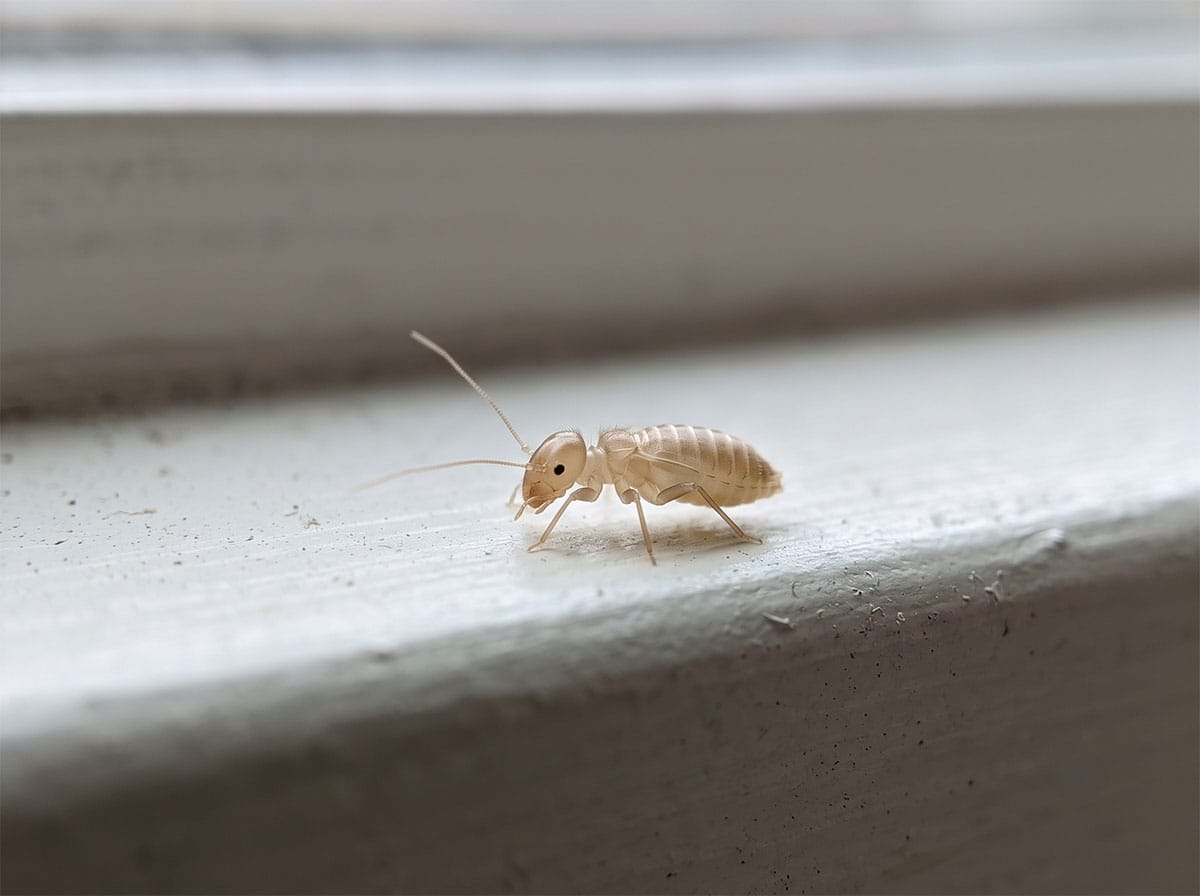
Booklice are tiny soft-bodied insects, only 1 to 2 mm long, pale cream to grey-brown, wingless, and they look like moving specks of dust. Despite the name they are not lice at all: they are not parasites, they do not bite people or pets, and they are not known to spread disease. What they actually eat is microscopic mould. That is the important part. Booklice appear when the air is damp enough for mould to grow, and they die off once relative humidity drops below about 50%. So they are less a pest problem than a moisture warning, and the fix is ventilation and drying out, not spraying.
Booklice in one table
Small enough that most people never see one clearly, so here is what you are actually dealing with.
| Feature | Booklice (psocids) |
|---|---|
| Size | 1 to 2 mm, about the size of a full stop on this page |
| Colour | Pale cream, translucent, greyish or light brown. The youngest are palest |
| Wings | None. The species found indoors are wingless, so they cannot fly |
| Body | Soft and fragile, flattened top to bottom, with a bulging front to the head and long thread-like antennae |
| What they eat | Microscopic mould and fungi, plus starchy things such as book-binding paste, wallpaper paste, flour and cereals |
| Do they bite? | No. They are not parasites and have no interest in people or pets |
| What they need | Damp air. They thrive in warm humid conditions and die below about 50% humidity |
| Also called | Psocids (say "so-kids"), paper lice, house psocids |
Booklice are not true lice, and they are not related to head lice or to bed bugs. References: the Australian Museum and Penn State Extension.
Specks that move
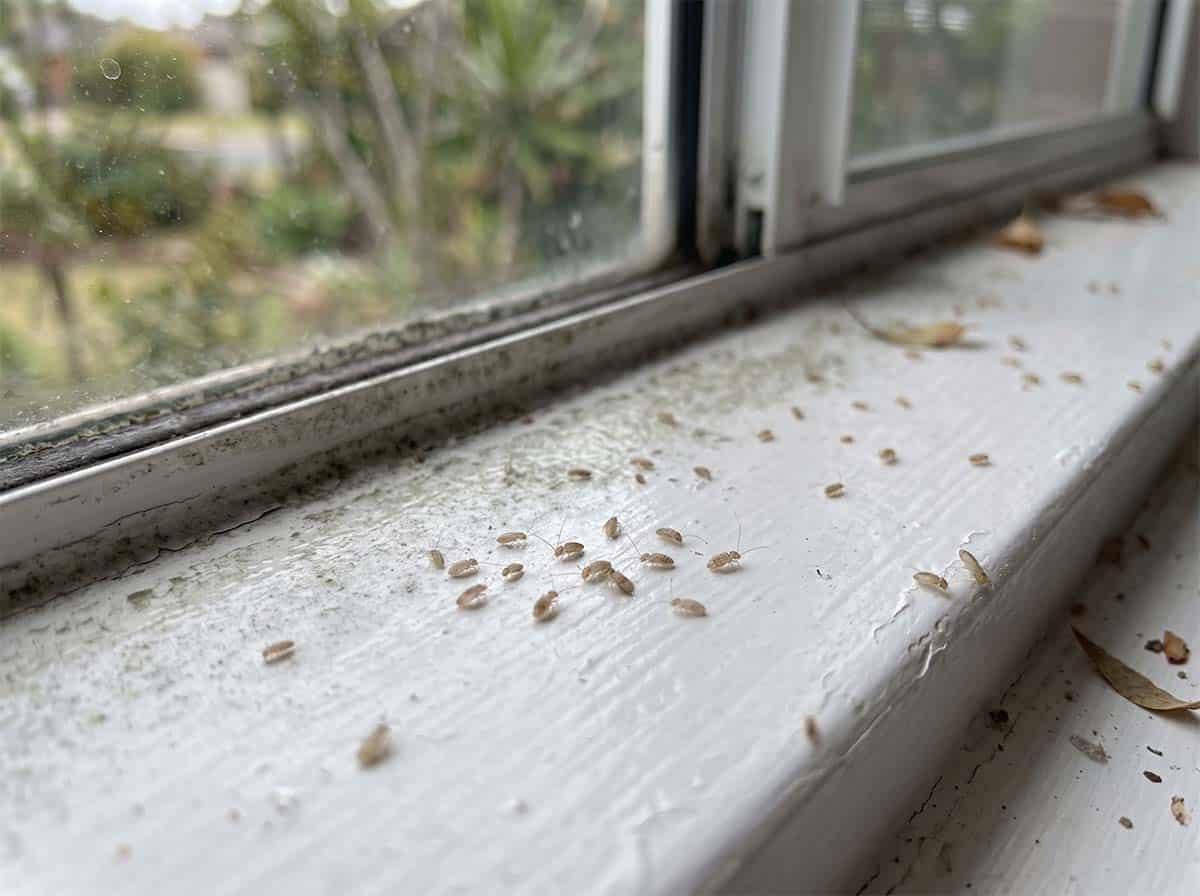
At 1 to 2 mm you rarely see the insect, you see the movement. Australia's grain industry describes a heavy infestation as looking like a moving carpet of dust, which is exactly right.
Follow the damp and you find the booklice
Booklice cannot survive in dry air, so every place they turn up has a moisture story behind it. These are the usual six.
Window sills and frames
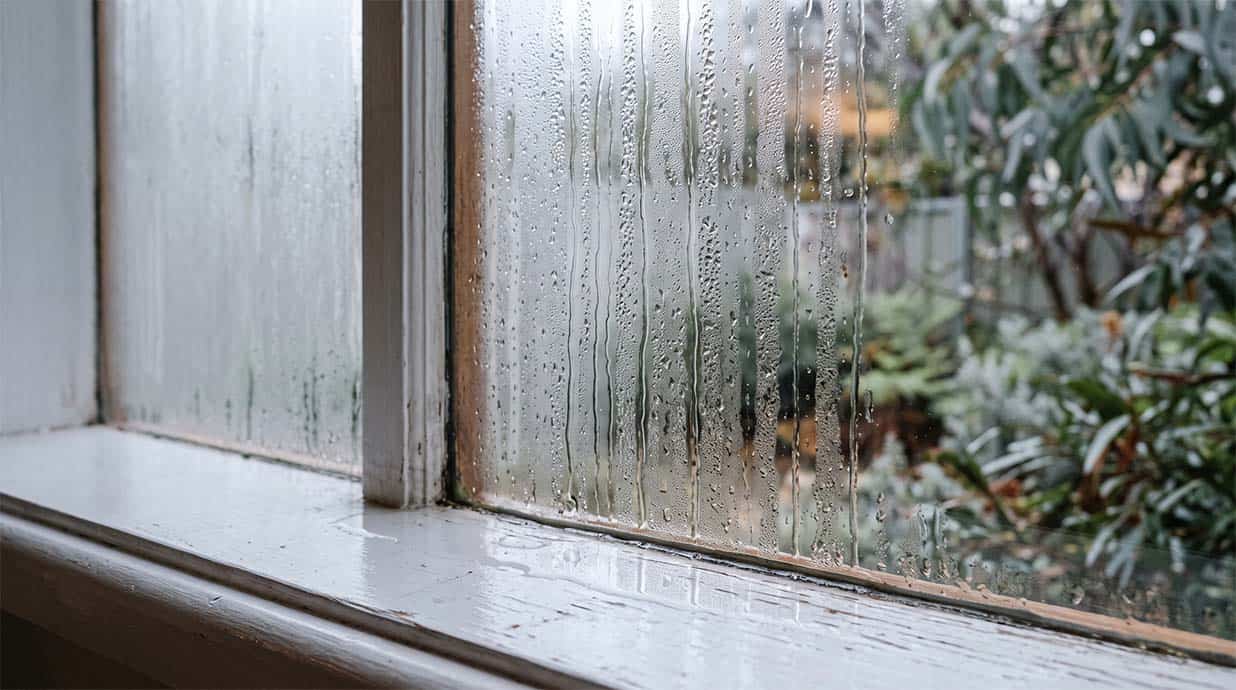
The classic spot. Condensation runs down cold glass overnight, the sill stays damp, a faint mould film grows, and the booklice arrive to graze it. Worst in winter in a closed-up room.
New builds and fresh renovations
Freshly applied plaster, render and gyprock hold a lot of water while they cure. That is enough to support mould inside a wall, and booklice can build up in big numbers in a brand new home or a just-finished reno.
Books, paper and cardboard
The name is earned. They feed on the mould that grows on damp paper, and on the starchy paste in old book bindings and behind wallpaper. Stored cardboard boxes in a damp garage are a favourite.
The pantry and stored food
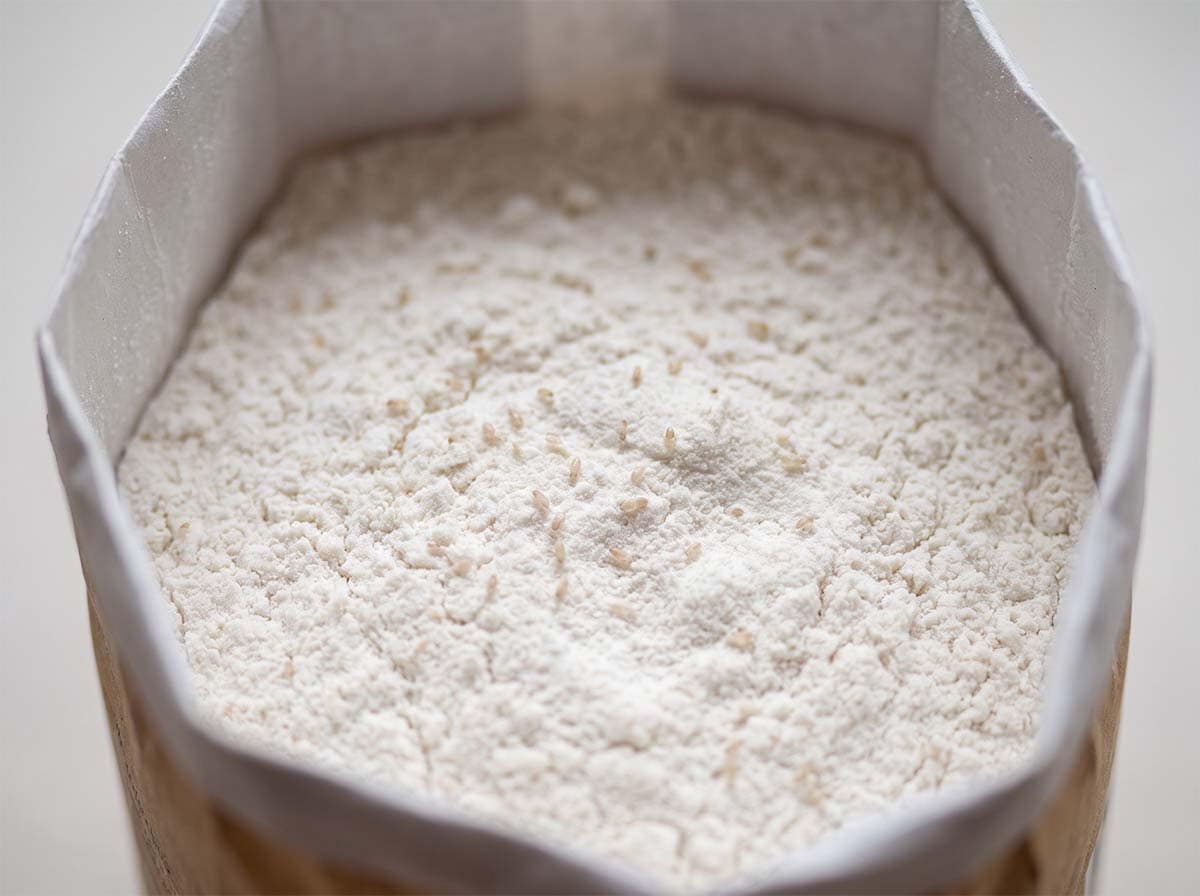
Flour, cereal, pasta, dried fruit, powdered milk and pet food, especially anything opened and left in a humid cupboard. They are after the mould and starch, and they contaminate the food as they go.
Bathrooms, laundries and under sinks
Anywhere with a slow leak, a sweating pipe, a broken exhaust fan or washing dried indoors. Damp plus no air movement is the whole recipe.
Undisturbed, poorly ventilated corners
Behind a wardrobe against an external wall, in a closed spare room, a subfloor, or a storage cupboard that never gets opened. Still, humid air is what lets the mould take hold.
The tiny-insect identity parade
Nearly every small pale speck in a house gets called a booklouse. Here is how to sort them out, starting with the two questions that settle most cases.
Booklice vs the usual suspects
| What you saw | Size | The give-away |
|---|---|---|
| Booklice | 1 to 2 mm | Pale, soft, six legs, long antennae, runs but never jumps. Found on damp surfaces and mould |
| Springtails | 1 to 2 mm | They jump. A spring-loaded appendage flicks them into the air. Booklice only run, so a jumping speck is a springtail |
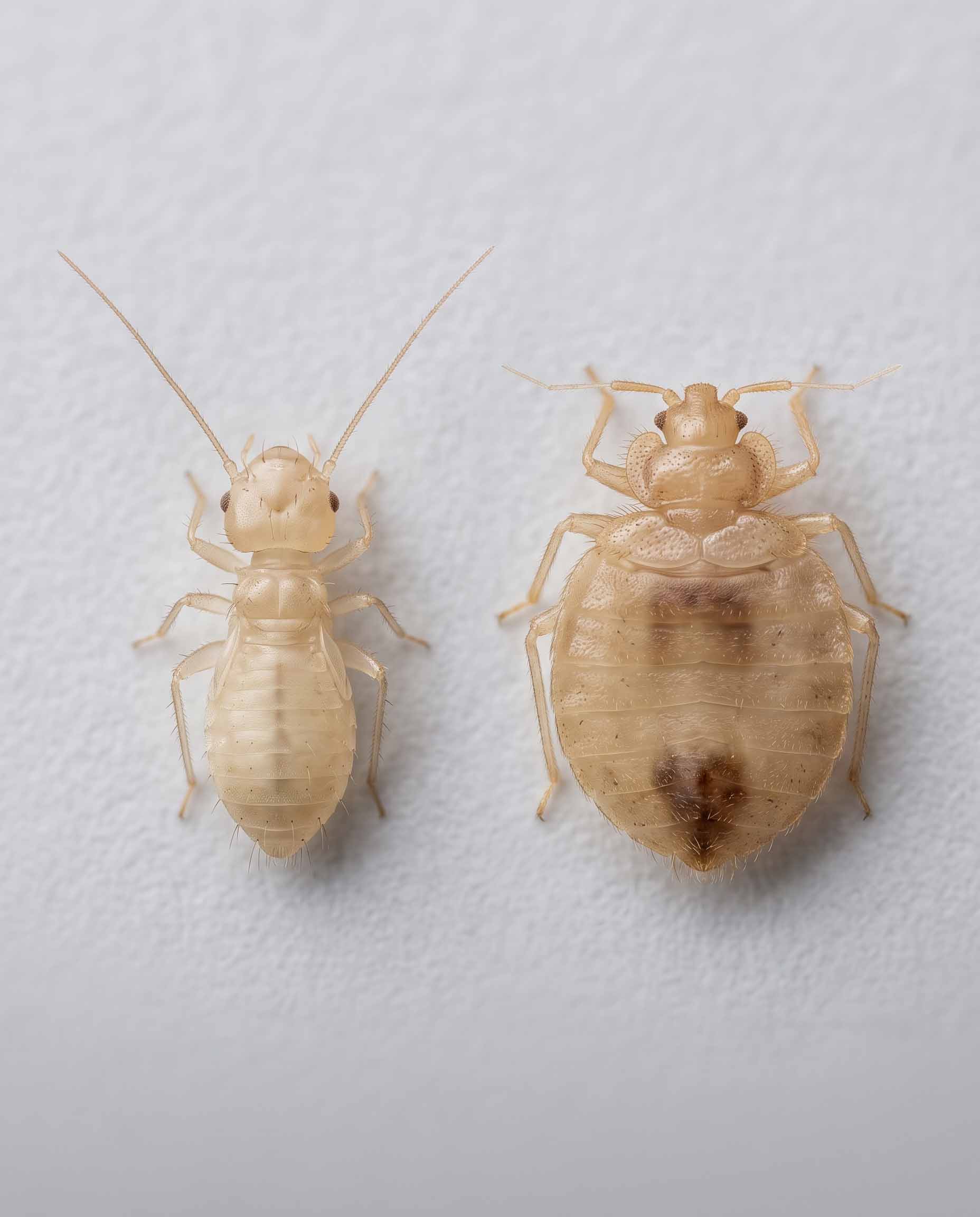
| Bed bug nymph | 1.5 to 4.5 mm | Broader and flatter, turns reddish after feeding, found on the mattress and bed frame, and it bites. Booklice never bite |
| Mould or grain mites | 0.3 to 0.4 mm | Far smaller, eight legs and no antennae. In numbers they look like a moving brown powder rather than separate specks |
| Dust mites | 0.2 to 0.3 mm | Invisible to the naked eye. If you can see it moving without a lens, it is not a dust mite |
| Silverfish | 12 to 19 mm | About ten times bigger, silvery and carrot-shaped, with three tails at the rear and a wriggling motion |
| Carpet beetle larva | 4 to 6 mm | Obviously hairy or bristly, banded, slow moving, and leaves shed skins. Eats wool, not mould |
Two questions solve most of it: does it jump? (springtail, not booklouse) and is the spot damp? (booklice, springtails and mould mites all mean moisture). See our silverfish and bed bug guides if it looks bigger than a full stop.
Are they lice? And can they be in my bed?
No on both counts, and the name is the reason people worry. Booklice are not true lice. They are not parasites, they do not feed on blood, and they have no interest in hair, skin or pets. If you have found tiny insects in the bed and something is biting, that points to bed bugs or fleas instead, and both look and behave quite differently. Booklice in a bedroom mean damp in the bedroom, usually condensation on a window or a cold external wall.
Harmless in themselves, but worth acting on
Booklice do not bite, sting or spread disease. The reason to deal with them is what they are standing on.
They are a damp warning
This is the real finding. Booklice eat microscopic mould, so a visible population is direct evidence that something is damp enough to grow fungus, whether that is a leak, a wall cavity that never dried out, or a room with no ventilation. The insects are the symptom, not the cause.
They spoil food and paper
They are slow eaters, so damage is minor at low numbers. Sustained large populations do degrade damp paper, book bindings and wallpaper, and they contaminate stored food with droppings and body parts. Anything infested is better thrown out than sieved.
A possible allergy link, and the mould behind it
There is some evidence booklice act as an indoor allergen. A study of 185 adults with allergic asthma found 22% carried booklice-specific antibodies, and Clemson University notes they are suspected of aggravating asthma. If someone in the home has asthma, the damp and mould they are feeding on is the better-established concern.
Built in winter, noticed in summer
Booklice breed fastest in warm, humid conditions. Their ideal is roughly 24 to 28 degrees with humidity between 75% and 90%, which is a Sydney summer almost exactly, and numbers can climb very quickly. Queensland's Department of Primary Industries records a 21 day life cycle and populations multiplying up to 25 times in a month under good conditions.
The conditions that let them survive, though, are usually created in winter. A closed-up house, condensation on cold glass, washing dried indoors, unflued gas heating and a bathroom fan that does not work all add moisture to still air. That grows the mould through the cool months, and the first warm humid spell turns a quiet population into a visible one. Sorting out ventilation in winter is what prevents the summer outbreak.
Booklice, answered
What are booklice and what do they look like?
Booklice, properly called psocids, are tiny soft-bodied insects about 1 to 2 mm long, roughly the size of a full stop. They are pale cream, translucent, greyish or light brown, with six legs and long thread-like antennae, and the species found indoors have no wings so they cannot fly. Most people never see one clearly and instead notice the movement: hundreds of pale specks shifting across a damp window sill or the surface of stored food. Australia's grain industry describes a heavy infestation as looking like a moving carpet of dust.
Do booklice bite?
No. Despite the name, booklice are not true lice, they are not parasites, and they have no interest in people or pets. They do not bite, they do not sting, they do not feed on blood, and they are not known to transmit any disease. If something in your home is biting you, it is worth looking at bed bugs, fleas or mosquitoes instead, because all three behave and look quite differently from a booklouse. Booklice feed on microscopic mould, which is why they turn up on damp surfaces rather than on people.
Why do I suddenly have booklice?
Because something got damp. Booklice eat microscopic mould, so they can only build up where the air is humid enough for fungus to grow. The usual triggers are condensation on cold windows in a closed-up house, a leak or a sweating pipe, a bathroom or laundry with no working exhaust fan, washing dried indoors, or a run of warm humid weather. A very common one is new building work: fresh plaster, render and gyprock hold a lot of water while they cure, so a brand new home or a just-finished renovation can produce a sudden flush of booklice.
Are booklice dangerous or a health risk?
They are not dangerous in the ordinary sense. They do not bite, sting or spread disease, and accidentally eating a few is not considered a medical concern. There is some evidence they can act as an indoor allergen: a study of 185 adults with allergic asthma found 22% carried booklice-specific antibodies, and Clemson University's extension service notes they are suspected of aggravating asthma attacks. If anyone in the home has asthma, the damp and mould the booklice are feeding on is the bigger and better-established concern, so that is what to deal with.
How do I get rid of booklice?
Dry the place out. Booklice cannot survive in dry air, and getting relative humidity below 50% kills them off, usually within one to two weeks. Open the windows and get air moving, run the exhaust fans, put a dehumidifier in the worst room, dry washing outside, fix any leak or sweating pipe, and wipe away visible mould. Throw out any infested food rather than trying to sieve it, keep the rest in airtight containers, vacuum the sills and cupboard edges, and get stored books and paper out of damp cardboard boxes. Anything you cannot dry out, such as a wall cavity or subfloor, is worth having inspected.
Will spraying get rid of booklice?
Not on its own. A spray kills the booklice sitting on a surface today, but it cannot dry out a wall cavity, fix a leak or stop the mould they eat from growing back, so the population simply returns. Insecticide resistance is also well documented in this group, and Queensland's Department of Primary Industries advises that when protectant insecticides fail against psocids it is worth getting the species identified. Every major pest-management authority treats humidity reduction, not insecticide, as the actual control. A professional is most useful for confirming the identification and finding a hidden moisture source, rather than for spraying.
Not sure what those specks are?
Send us a photo and we will tell you what you are looking at, and whether it needs treating at all. Free quotes, no call-out charge, and a Sydney family business that has done this for 15 years.
Sources & references
Psocid identification and biology: the Australian Museum. Australian stored-product data, including the 21 day life cycle, the 25 times monthly growth rate and the note on insecticide failure: the Queensland Department of Primary Industries and Fisheries, via Stored Grain Australia. Humidity thresholds, habitat and control: Penn State Extension and Clemson University HGIC, which is also the source for the note that booklice are suspected of aggravating asthma. Survival at different humidity levels: Ocran and others, "Effects of Dehumidification on the Survivorship of Four Psocid Species", Journal of Economic Entomology, 2021. Allergen evidence: Fukutomi and others, "Allergenicity and Cross-Reactivity of Booklice", International Archives of Allergy and Immunology, 2012. Measurements are typical ranges. This guide is for identification and general information and is not medical advice; for asthma or allergy symptoms, see your doctor.