
What is corporate building pest control?
Let me put our view plainly: in a commercial building, pest control is not a spray you book when someone screams at a cockroach in the kitchenette. It is a managed program. Corporate building pest control is the planned management of pests across office buildings, commercial towers and multi-tenant workplaces. It combines inspection, prevention, treatment and ongoing monitoring to keep large premises pest-free without disrupting the people who work there.
A one-off home treatment and a corporate program are different jobs. Scale changes everything. A single office building can have dozens of entry points, shared kitchens on every floor, underground car parks, loading docks, waste rooms, server rooms and roof voids. Each one is a potential harbourage. Managing them takes a structured program, not a reactive can of surface spray.
At PestOz, we run pest control programs for commercial and corporate premises across Sydney’s eastern suburbs. In our work with Bondi office buildings and strata-managed towers, the pattern is consistent: the problems start in the spaces nobody walks through, then surface in reception. This guide explains what a facilities manager, building owner or office manager needs to know to keep their building protected.
Why do corporate and office buildings need professional pest control?
Office buildings are a buffet with the lights on. They offer food, water, warmth and hundreds of hiding places. The larger and busier the building, the higher the risk.
The main reasons corporate buildings need a dedicated program include:
- Reputation protection. One cockroach crossing a boardroom table during a client pitch can undo months of goodwill in seconds.
- Staff health and safety. Cockroaches and rodents carry pathogens and can trigger asthma and allergies, which is a genuine workplace health risk.
- Compliance obligations. Australian work health and safety laws require employers to provide a safe workplace, and food handling areas must meet hygiene standards.
- Property protection. Rodents chew through cabling and insulation, which can cause electrical faults, data outages and a real fire risk in server rooms.
- Lease and tenancy requirements. Many commercial leases put pest management squarely on the building owner or managing agent.
The maths is simple. Prevention almost always costs less than a visible infestation, lost productivity and the reputational hit that follows.
What are the most common pests in office buildings?
Office and corporate buildings attract a fairly predictable cast. Knowing what to watch for helps you act early.
Cockroaches
Cockroaches are the most common commercial pest we treat. They thrive in warm, humid spots: kitchenettes, the back of dishwashers, behind fridges and inside wall cavities. German cockroaches are the worst of them. They breed fast and travel between floors through plumbing and electrical conduits, which is why a problem on level three often turns up on level five a fortnight later.
Rodents (rats and mice)
Rats and mice come in through wall gaps, roof voids, loading docks and underground car parks. They contaminate surfaces, gnaw cabling and nest in storage rooms nobody opens. In a corporate building, a rodent problem usually stays hidden until droppings, gnaw marks or scratching noises give it away.
Ants
Ants forage in kitchens, breakout areas and around bins. Most species are a nuisance rather than a health threat, but a trail marching past the lifts looks unprofessional, and you rarely beat them without finding the nest.
Flies and other flying insects
Flies gather around waste rooms, food courts and loading docks. In any building with catering or a shared lunchroom, they are a straight hygiene concern.
Stored product and paper pests
Silverfish and booklice chew through paper records, archives and cardboard. In buildings with document storage or a library, they do quiet, cumulative damage.
Birds
Pigeons nest on ledges, signage and rooftop plant. Their droppings are corrosive, carry disease and turn walkways and entrances into slip hazards.
How does corporate pest control differ from residential treatment?
Corporate pest control is built around scale, continuity and minimal disruption. A home might get treated once or twice a year. A corporate building usually needs an ongoing, scheduled program.
The key differences:
- Integrated Pest Management (IPM). Corporate programs focus on prevention and monitoring, not just chemicals. The aim is to remove the conditions that attract pests in the first place.
- Scheduled servicing. Treatments are planned around business hours, often early mornings, evenings or weekends, so staff and clients are not disturbed.
- Documentation and reporting. Commercial clients receive service records, inspection reports and recommendations that hold up in an audit.
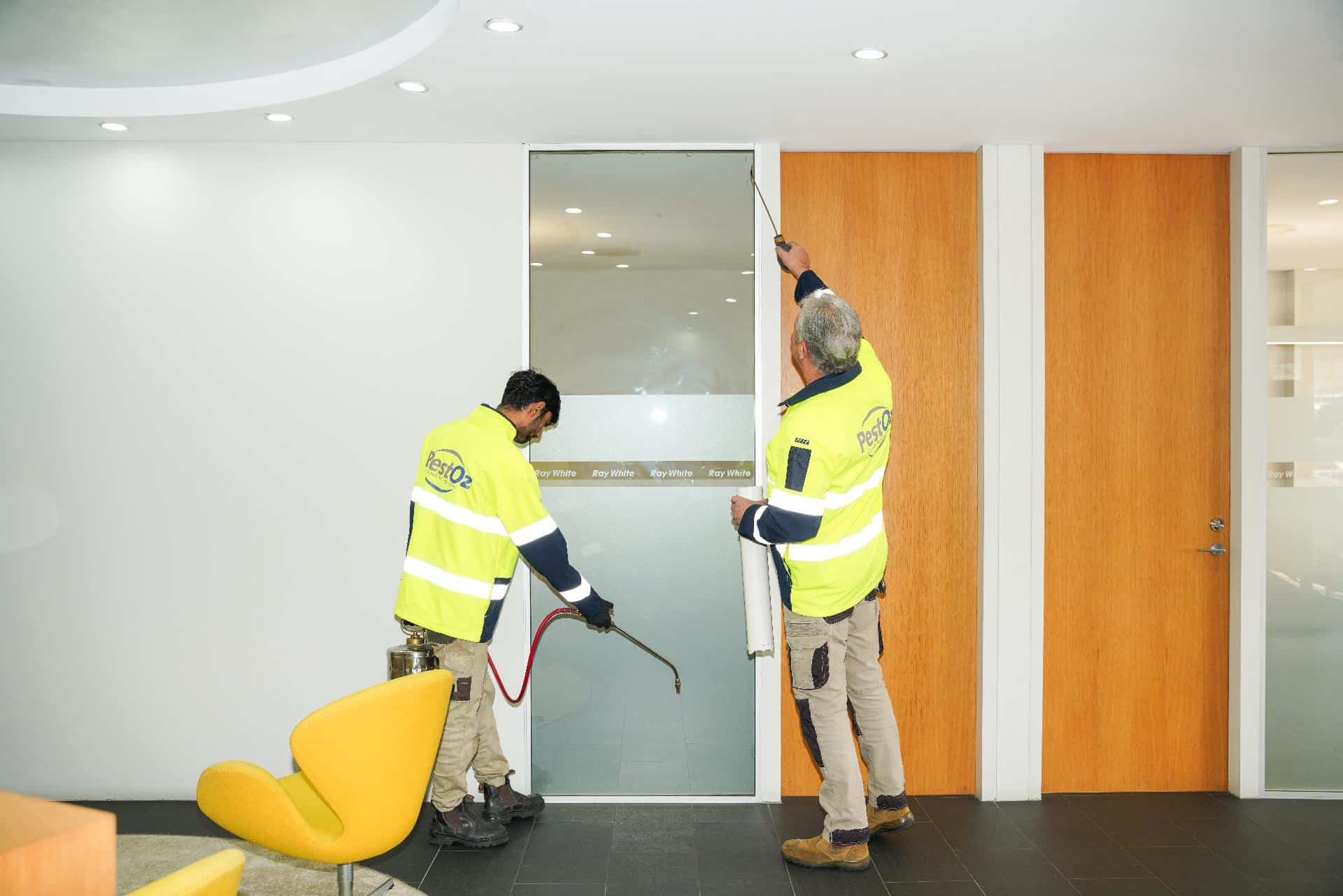
- Discreet treatment methods. In an occupied office, technicians use targeted baiting, monitoring stations and low-odour products rather than broad spraying.
- Coordination with facilities teams. Good programs work alongside cleaners, waste contractors and building management.
That structure is why corporate buildings are better served by a dedicated commercial provider than by ad hoc call-outs.
What is Integrated Pest Management and why does it matter?
Integrated Pest Management, or IPM, is the standard we hold corporate buildings to. It is a long-term strategy that heads off pest problems through inspection, exclusion, sanitation and targeted treatment.
The IPM process generally runs through these six steps:
1. Inspection. A thorough survey of the building identifies current activity, risk areas and entry points.
2. Identification. Naming the pest correctly determines the right treatment. German and Australian cockroaches, for instance, call for different baiting.
3. Prevention. Sealing gaps, improving waste handling and cutting moisture removes what pests need to stay.
4. Treatment. Where intervention is needed, the least invasive, most targeted method wins.
5. Monitoring. Tamper-resistant monitoring stations and scheduled inspections catch problems early.
6. Reporting. Findings and actions are documented for compliance and ongoing improvement.
IPM cuts chemical use, lowers long-term costs and produces steadier results than reactive spraying. It is the framework PestOz applies to every commercial program.
How often should an office building be serviced?
Most corporate buildings do better on a scheduled program than on one-off treatments. The right frequency depends on the building’s size, use and risk profile.
As a general guide:
- Standard office buildings: quarterly inspections and treatment, with monthly checks of monitoring stations in higher-risk areas.
- Buildings with food service or catering: monthly servicing to keep cockroaches, rodents and flies out of kitchens and waste areas.
- High-risk or large multi-tenant towers: fortnightly to monthly programs covering common areas, plant rooms and waste facilities.
- Document storage and archives: periodic monitoring for silverfish and rodents.
A professional assessment is the best way to set the schedule. Over-service and you waste budget. Under-service and you leave gaps pests will find.
What does a corporate pest control program include?
A complete program covers far more than spraying. At PestOz, a typical commercial program for an office building includes:
- A detailed initial inspection and risk assessment of the entire premises
- A tailored treatment and prevention plan based on the building’s layout and use
- Discreet rodent baiting and monitoring stations in car parks, plant rooms and roof voids
- Cockroach and ant management in kitchens, breakout areas and amenities
- Fly and flying insect control around waste and loading areas
- Bird-proofing recommendations for ledges, signage and rooftops
- Scheduled servicing timed to avoid disrupting staff and clients
- Detailed service reports and recommendations for facilities teams
- A direct point of contact for urgent call-outs between scheduled visits
Every program is built around the specific building. A two-storey office near Bondi Beach has different needs to a multi-tenant tower up at Bondi Junction, and the plan should say so.
How can building managers prevent pests between visits?
Professional treatment works best when it is backed by good in-house habits. Facilities and office managers can take real pressure off a building with a few practical measures.
The steps that matter most:
- Manage waste tightly. Empty bins regularly, use sealed bins in kitchens, and keep waste rooms clean and dry.
- Keep kitchens clean. Wipe surfaces, clean under and behind appliances, and never leave food out overnight.
- Seal entry points. Report gaps around doors, pipes, vents and loading docks so they can be sealed.
- Control moisture. Fix leaks fast. Most pests are chasing water.
- Declutter storage. Tidy, organised storage gives rodents and insects fewer places to hide.
- Report sightings early. Get staff to flag any pest activity straight away, before it spreads.
These measures support a professional program. They do not replace it. The two together deliver the best results.
What are the compliance and WHS considerations?
Corporate buildings carry legal obligations around health, safety and hygiene, and pest management is part of meeting them.
Under Australian work health and safety law, employers and building managers have a duty to provide a safe workplace, which includes managing pest-related health risks. Buildings with food preparation or food service areas must also meet food safety standards, and in NSW that often means pest control records ready for a NSW Food Authority inspection.
A documented program is how you show due diligence. Service reports, inspection records and treatment logs prove the building is being actively managed. We have seen that paperwork earn its keep during insurance reviews, lease negotiations, food safety audits and Safe Work NSW assessments.
Working with a licensed provider also means every treatment is carried out legally, safely and with products suited to an occupied commercial environment.
Who provides corporate building pest control in Sydney’s eastern suburbs?
PestOz provides professional corporate and commercial pest control across Bondi and the eastern suburbs of Sydney. We work with office buildings, commercial premises and multi-tenant properties to deliver discreet, reliable, fully documented pest management.
When you are choosing a provider, look for these qualities:
- Commercial experience. A provider who understands the scale and complexity of office buildings, not just homes.
- Licensed and insured technicians. Non-negotiable for safe, compliant treatment in occupied premises.
- An IPM approach. Prevention and monitoring, not just reactive spraying.
- Clear reporting. Documentation that backs your WHS and hygiene compliance.
- Flexible scheduling. Servicing timed around your business, not the other way around.
- Responsive support. A direct contact for urgent issues between visits.
PestOz meets all of these and tailors every program to the building it protects. To arrange an inspection or discuss a program for your premises, visit PestOz.
Final thoughts
Pests in a corporate building are more than a nuisance. They put your reputation, your staff’s health, your compliance and your property at risk. A planned, professional program heads off those problems before they start, and it hands building managers the documentation they need to prove due diligence.
Whether you manage a single office or a multi-tenant commercial property, a tailored program is the most cost-effective way to stay protected. To keep your building pest-free across Sydney’s eastern suburbs, get in touch with PestOz today.