

How to Prevent Cockroach Infestations in Sydney Homes
Most cockroach jobs we get called to in Sydney didn’t need to happen. That’s the honest truth after years spent in Sydney’s kitchens and subfloors: German cockroaches breeding behind a dishwasher, German cockroaches marching in from a mulch pile stacked against the back wall. Here’s the point I’d make before anything else. Cockroaches are one of the most preventable pests in an Australian home, and almost everything that lets them take hold is under your control. Cut off their food and water. Seal the gaps they sneak through. Remove their hiding spots. Act on the early signs before two roaches become a colony. This guide gives you the local, hands-on steps that actually work here, built around the species, climate, and housing you deal with in Sydney, not generic advice recycled from overseas sites.
Cockroach prevention, Sydney homes
Key takeaways
-
Four species do the damage. The most common home-invading cockroaches in Australia are the German, Australian, American, and Oriental cockroach, and each behaves a little differently.
-
Sydney housing suits them. Warm, humid conditions and older or coastal housing make many Sydney homes attractive to cockroaches year-round.
-
Kitchens and bathrooms first. These are the highest-risk rooms because they supply food and water.
-
DIY only goes so far. DIY treatments can knock back small numbers, but established or German cockroach infestations usually need a licensed pest technician.
-
An annual check catches it early. A yearly professional inspection is the simplest way to catch problems early, especially in Sydney’s humid coastal suburbs.
Which cockroach species are most common in Australian homes?
Four species cause the vast majority of home infestations in Australia: the German cockroach, the Australian cockroach, the American cockroach, and the Oriental cockroach. Working out which one you’ve got matters. Their habits change how you prevent and treat them.
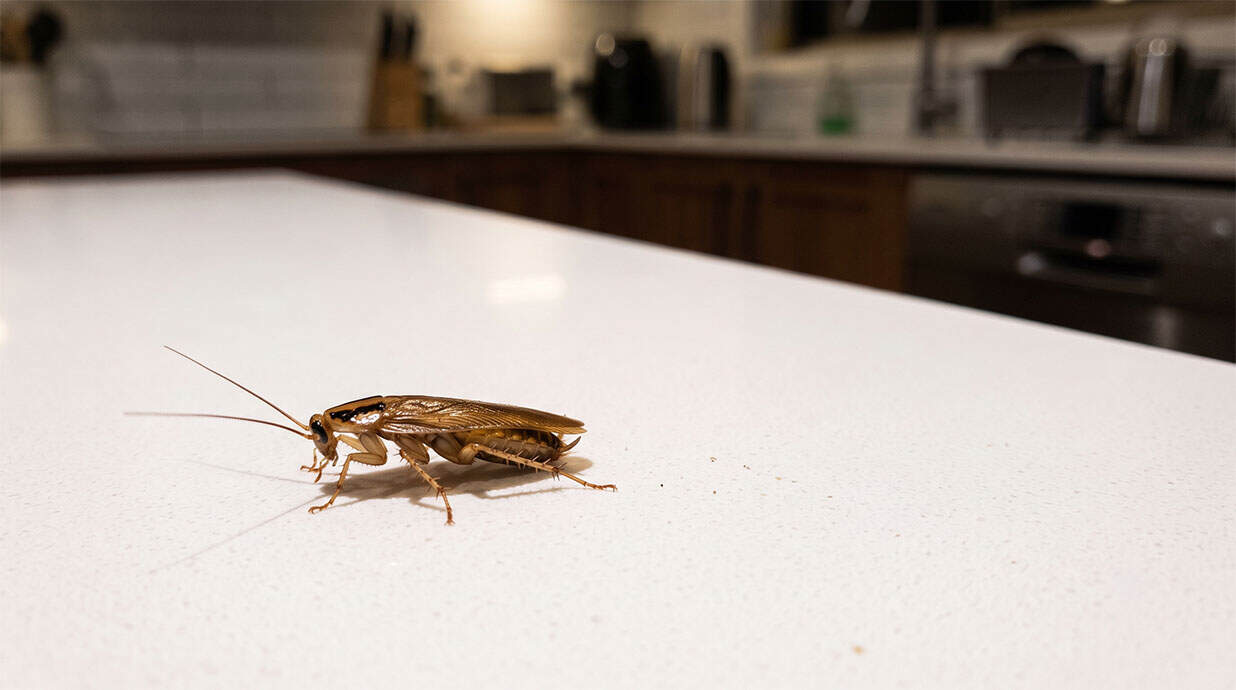
• German cockroach (small, light brown, around 12 to 15mm): The biggest headache indoors. They breed fast, prefer warm kitchens and bathrooms, and hide inside appliances, cupboards, and cracks. One roach on the bench at night can mean dozens more behind the kickboards.
• Australian cockroach (reddish-brown, around 30 to 35mm, yellow markings behind the head): Common in gardens, subfloors, and roof voids, moving indoors for food and shelter, especially in warmer months.
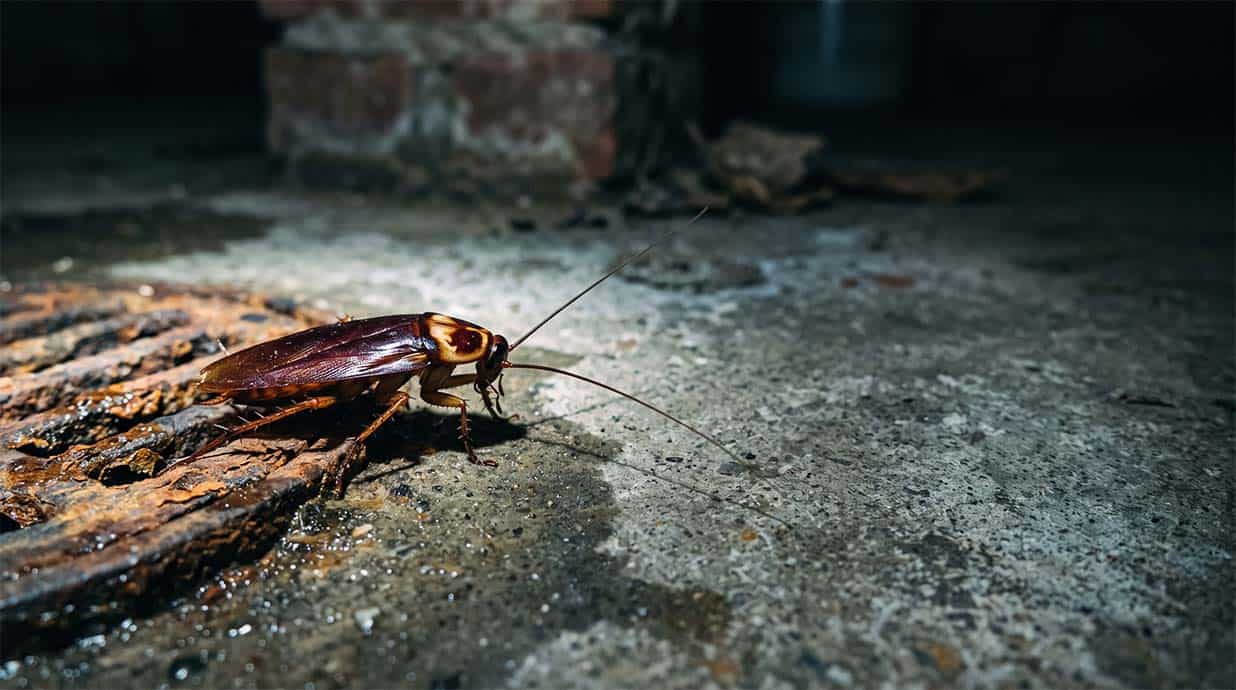
• American cockroach (large, reddish-brown, up to 40mm): Often found in drains, sewers, grease traps, and subfloors. They are strong fliers in warm weather.
• Oriental cockroach (dark, almost black, around 25mm): Prefers cool, damp spots like drains, basements, and subfloor areas.
The German cockroach is the one that most often blows out into a full indoor infestation, so give it the most attention in your prevention plan.
Why are Sydney homes particularly vulnerable to cockroach infestations?
Sydney homes are vulnerable because cockroaches thrive in warmth and humidity, and much of the country delivers exactly that for large parts of the year. In coastal and subtropical areas, mild winters mean cockroaches stay active almost the whole year rather than dying back.
Local risk factors
Why Sydney homes are more exposed than most
| Local factor | Why it favours cockroaches | What helps |
|---|---|---|
| Climate | Warm, humid conditions across Sydney and much of the east coast let cockroaches breed and feed for longer seasons. | |
| Home age and design | Older homes, terraces, and apartments often have gaps around pipes, subfloor access, shared wall cavities, and timber framing that give cockroaches easy movement and shelter. The Federation terraces around Bondi and Bronte are a good example: beautiful homes, but full of the little voids roaches love. | |
| Coastal moisture | Higher humidity near the coast keeps the damp, sheltered spots cockroaches love, such as drains and subfloors, active longer. | |
| Apartment living | In units and shared buildings, cockroaches travel between dwellings through wall cavities, plumbing, and shared rubbish areas, so your neighbour’s problem can quickly become yours. | |
| Imported goods and deliveries | German cockroaches in particular hitch rides in cardboard boxes, second-hand appliances, and shopping bags. |
None of this makes an infestation inevitable. It just means prevention has to be a little more deliberate here. Talk to our team if you want a set of eyes on your place.
What are the early warning signs of a cockroach problem?
The earliest signs are droppings, a musty smell, and the odd cockroach spotted at night. Catching these early is the difference between a quick fix and a full treatment. It pays to know what you’re looking at.
Watch for:
• Droppings. Small dark specks like ground pepper (German cockroaches) or larger cylindrical droppings with blunt ends (larger species), usually near food, in cupboards, or along skirting boards.
• A musty, oily odour. A strong cockroach population gives off a distinctive stale smell.
• Egg cases (oothecae). Small brown capsules tucked into cracks, behind appliances, or under cupboards.
• Smear marks. Dark, irregular marks in humid areas where cockroaches travel.
• Live cockroaches during the day. Cockroaches are mostly nocturnal, so seeing them in daylight often means numbers are high and the hiding spots are full.
• Shed skins. Cockroaches moult as they grow, leaving behind papery casings.
According to the Victorian Government’s Better Health Channel, cockroaches may spread bacteria associated with illnesses such as gastroenteritis and may cause allergies. So acting on the early signs isn’t just about comfort. It’s about your household’s health.
How do you cockroach-proof your kitchen and bathroom?
Cockroach-proof your kitchen and bathroom by cutting off food and water and sealing the tight, warm spaces they hide in. These two rooms are where infestations almost always start, so this is where your effort pays off most.
In the kitchen:
• Wipe down benches, stovetops, and the sink every night. Crumbs and a smear of grease are a full meal for a roach.
• Store food, including pet food, in sealed containers rather than open packets.
• Empty the bin regularly and keep it lidded.
• Clean under and behind the fridge, oven, and dishwasher, where grease and warmth collect.
• Don’t leave dirty dishes or standing water in the sink overnight.
• Check inside cupboards and the toe-kick spaces beneath them for droppings.
In the bathroom and laundry:
• Fix dripping taps and leaking pipes. Cockroaches can survive on very little food, but they need water.
• Wipe down wet surfaces and don’t leave damp towels bunched on the floor.
• Keep the exhaust fan running to reduce humidity.
• Seal gaps around pipes under the vanity and behind the toilet.
German cockroaches love warm appliance motors and tight cracks, so pay special attention to the small gaps behind and beneath your kitchen appliances. A tube of Selleys silicone run along those joins removes some of their favourite harbourage. It’s a five-dollar job that saves a lot of grief.
What outdoor and structural measures keep cockroaches out?
The best way to keep cockroaches out of your house is to stop them getting in and to remove the outdoor shelter that lets populations build up near your walls. What you do outside matters just as much as the cleaning inside.
Seal the entry points:
• Fit door seals and weather strips, especially on doors leading to the garage, laundry, or garden.
• Seal gaps around pipes, cables, air-conditioning penetrations, and vents.
• Repair cracks in walls, skirting, and around window frames.
• Fit fine mesh over weep holes, drains, and subfloor vents so air still flows but roaches cannot pass.
Remove outdoor harbourage:
• Clear leaf litter, mulch piles, and garden debris from against the house.
• Keep firewood, pavers, and stored items off the ground and away from walls.
• Trim back plants touching the building.
• Keep outdoor bins clean, lidded, and away from doors.
• Clear blocked gutters and fix drainage so water does not pool near the foundations.
Subfloors, roof voids, and drains deserve attention too, since larger species like the Australian and American cockroach often live there and come inside to feed. If you’re in an apartment, coordinate with your building or strata on shared rubbish areas and common plumbing. Prevention works best when the whole building pulls in the same direction.
Do DIY cockroach treatments actually work in Australian conditions?
DIY treatments can help with small numbers, but they rarely clear an established infestation, particularly German cockroaches. Supermarket sprays, baits, and traps knock down the roaches you can see while the breeding population stays hidden in wall cavities, appliances, and cracks.
Where DIY has a place:
• Gel baits such as the cockroach gels you’ll find on the shelf at Bunnings, placed in cracks and near harbourage, can reduce small populations when used correctly.
• Sticky traps are handy for monitoring where cockroaches travel and how bad the problem is.
• Good hygiene and sealing, as covered above, does more long-term good than any spray.
Where DIY falls short:
• Surface sprays often scatter cockroaches into wall voids and neighbouring rooms rather than killing them.
• Many products never reach the hidden nests where eggs sit protected.
• German cockroaches breed so quickly that a partial knockdown lets numbers rebound within weeks.
• Repeated misuse of the same product can contribute to insecticide resistance.
Here’s a simple three-step test we suggest to homeowners before they spend more at the shop. One, clean and seal properly for two weeks. Two, place gel baits and a couple of sticky traps to monitor. Three, check the traps. If you’re still catching roaches, or seeing them by day, the population is bigger than what’s visible, and a professional treatment is the faster, cheaper path in the long run. What I see across the eastern suburbs is consistent on this. DIY buys time; it rarely finishes the job.

When should you call a professional pest controller?
Call a professional when you see cockroaches during the day, find droppings or egg cases in more than one area, or keep seeing them after DIY attempts. Those signs point to an established population that needs a targeted, thorough treatment.
Specific triggers to book a licensed pest controller:
• You spot German cockroaches, or any cockroaches, repeatedly in the kitchen.
• You find egg cases or shed skins.
• There is a musty cockroach odour.
• You have young children, elderly family members, or anyone with asthma or allergies in the home.
• You live in an apartment where roaches may be coming from neighbouring units.
• DIY baits and sprays have not solved it within a few weeks.
A professional treatment does what shop-bought products can’t. It identifies the species and where they’re breeding, treats the harbourage points directly, and uses products applied safely and to label in occupied homes. In NSW, anyone spraying pesticides in your home for money must hold a current pest management technician licence issued by the NSW Environment Protection Authority. That’s true of our team at PestOz and it’s true of every reputable operator across Sydney. Before you hire anyone, ask to see that licence and check they carry insurance. A good technician will hand it over without blinking. If they hesitate, keep looking.
How often should Sydney homes be professionally inspected for cockroaches?
Most Sydney homes benefit from a professional pest inspection once a year, with more frequent checks in higher-risk situations. Sydney’s warm, humid coastal climate keeps cockroaches active for much of the year, so an annual visit is a sensible baseline for homes in the eastern suburbs.
Consider more frequent inspections if:
• You live in an older home, a terrace, or an apartment with shared walls and plumbing.
• Your property is close to the coast or has a damp subfloor.
• You have had a cockroach problem before.
• You run a home kitchen, cafe, or food-related business.
• You have vulnerable household members where allergens are a concern.
Regular inspections work because they catch small problems before they become expensive ones. A technician can spot the early signs, treat entry points and harbourage before they blow out, and give you a plan built around your home rather than generic advice. If it’s been more than a year since your last check, or you’ve never had one, it’s worth booking one with any licensed provider you trust, PestOz included.
Frequently asked questions
Cockroach prevention in Sydney homes, answered
Straight answers from our technicians on why cockroaches keep coming back, what draws them in, and when a DIY fix has run out of road.
Book a cockroach inspectionWhy do I keep getting cockroaches even after I’ve sprayed and cleaned?
Repeat problems usually mean there’s an ongoing source of food, water, or shelter, or that roaches are coming in from outside or a neighbouring unit. Common culprits include unsealed gaps, damp subfloors and bathrooms, food residue, and a hidden breeding population that DIY sprays never fully reached.
Sprays often scatter German cockroaches deeper into wall voids rather than killing the colony.
What actually attracts cockroaches into a Sydney home?
Warmth, moisture, and food. Crumbs, grease, pet food left out overnight, leaking taps, damp areas, and cluttered hiding spots all draw them in.
Australia’s warm, humid climate, especially near the coast, lets them stay active and breed for much of the year.
What is the best way to keep cockroaches out of your house?
The best approach combines strict cleaning, moisture control, and sealing entry points. Wipe down surfaces nightly, store food in sealed containers, fix leaks, seal gaps around pipes and doors, and clear garden debris from against the house.
For lasting results, pair this with an annual professional inspection.
Are cockroaches in the home actually a health risk, or just gross?
Both. According to NSW Health, cockroaches can spread organisms linked to illnesses such as gastroenteritis, and their droppings and shed skins can trigger asthma and allergies.
That’s why treating an infestation promptly matters, particularly if someone in the house has a respiratory condition.
How do I stop cockroaches coming from my neighbour’s apartment?
Seal the gaps around shared pipes, cables, skirting, and wall penetrations, and fit door seals.
Because roaches travel through shared cavities and plumbing, the most effective fix in units is a coordinated treatment across affected dwellings, which a licensed pest controller can help arrange with your building or strata.
—
This guide was written by the team at PestOz, a licensed pest control business serving Sydney’s eastern suburbs and all surround Sydney suburbs. We’ve kept the advice practical so you can act on most of it yourself. If you’d rather have a professional handle it, we’re one option among several licensed providers in the area; whoever you choose, make sure they hold a current NSW pest management licence.