

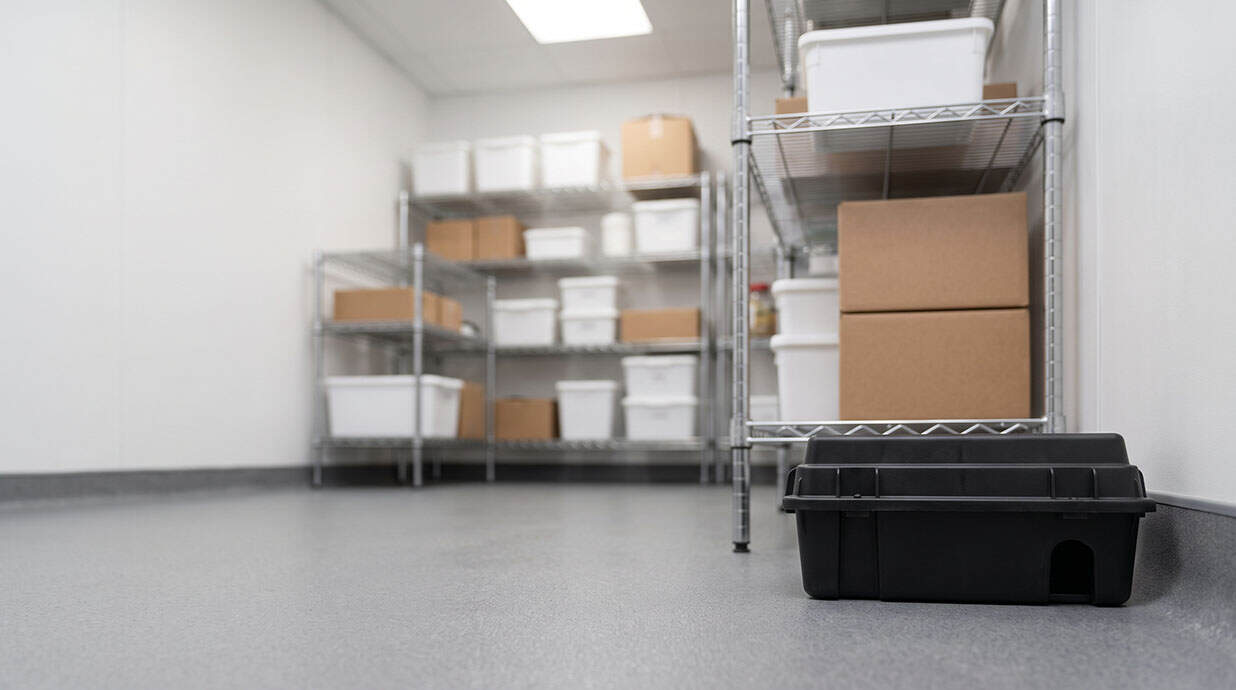
A pest monitoring system is the foundation of any successful pest management strategy. Rather than waiting until an infestation becomes obvious, a well-designed monitoring system helps you detect pest activity early, track population trends, and respond before small problems become costly ones.
Whether you manage a residential property, a food business, or a commercial facility, this step-by-step guide will show you how to create an effective pest monitoring system tailored to your environment.
What Is a Pest Monitoring System and Why Does It Matter?
The short answer
A pest monitoring system is a structured process for regularly checking, recording, and responding to signs of pest activity across a property.
Instead of reacting to visible infestations, monitoring puts you in a proactive position. It is also the backbone of integrated pest management (IPM). Effective monitoring allows you to:
Without a system in place, pest problems can go unnoticed until they reach a point that requires intensive and expensive treatment.
Step 1 Conduct a Thorough Site Assessment
Before placing a single trap or monitor, you need to understand the property you are working with. Walk the entire site, both inside and outside, and look for conditions that attract or support pests.
What to look for during your site assessment:
- Food and water sources such as leaking pipes, standing water, and open food storage
- Entry points including gaps around pipes, cracked foundations, damaged weatherstripping, and vents without screens
- Harbourage areas such as cluttered storage rooms, dense vegetation close to buildings, and wall cavities
- Evidence of existing pest activity including droppings, gnaw marks, shed skins, grease trails, and nesting material
- Waste management practices and bin placement
Document everything you find. Photographs and written notes form the baseline record against which future monitoring results are compared.
Step 2 Identify the Pest Risks Specific to Your Property
Not all properties face the same pest pressures. Your monitoring system should be designed around the pests most likely to affect your specific location, building type, and industry.
| Property type | Pests to monitor |
|---|---|
| Residential homes | Cockroaches, rodents, ants, termites, and spiders |
| Food businesses and hospitality | Cockroaches, rodents, flies, and stored product insects |
| Warehouses and storage facilities | Rodents, stored product pests, and cockroaches |
| Healthcare facilities | Cockroaches, rodents, and bed bugs |
| Outdoor and rural properties | Rodents, ants, wasps, and mosquitoes |
Understanding your specific risks helps you prioritise which pests to monitor most closely and where to concentrate your resources.
Step 3 Choose the Right Monitoring Tools
The tools you select should match the pests you are monitoring and the areas you need to cover. A well-rounded pest monitoring system typically incorporates several types of monitors used together.
Monitoring tools commonly used in Australia:
-
Glue boards and sticky traps
Effective for monitoring cockroaches, rodents, and crawling insects. Place them flat for insects or vertically in rodent monitoring stations.
-
Rodent monitoring stations
Tamper-resistant plastic stations that house either glue boards or non-toxic bait blocks. They allow you to detect rodent activity without immediately deploying rodenticide.
-
Pheromone traps
Used to monitor specific stored product insects such as Indian meal moths and flour beetles. These are especially important in food storage environments.
-
Termite monitoring stations
In-ground or above-ground stations containing timber or cellulose material that termites are attracted to. These are inspected at regular intervals for termite activity.
-
Fly light traps
Used in food handling and hospitality settings to capture and identify flying insects, providing an ongoing record of fly pressure.
-
Digital monitoring devices
Electronic sensors and smart traps are increasingly available and can send real-time alerts when activity is detected, which is particularly useful for high-risk or hard-to-access areas.
Step 4 Map and Position Your Monitoring Devices
Strategic placement is critical. Monitors placed in the wrong locations will miss activity and give you a false sense of security.
Placement principles to follow:
- Position monitors along walls and in corners, as most pest species travel along edges rather than through open spaces
- Focus on transition zones such as doorways, loading docks, drains, and areas where the interior meets the exterior
- Place monitors near known or suspected food and water sources
- Install devices in low-traffic, undisturbed areas where pests feel safe moving around
- Ensure monitors are accessible for regular inspection without disrupting daily operations
Create a scaled floor plan or site map and mark the location of every monitor with a unique identification number. This map becomes an essential part of your monitoring records and makes it easy to communicate with pest control technicians.
- 01, 02 Along walls and in corners
- 03 to 05 Transition zones: back door, front door, internal doorway
- 06 to 08 Near food and water: sink, floor drain, bins
- 09, 10 Low-traffic, undisturbed: the dry store
Step 5 Establish a Regular Inspection Schedule
A monitoring system is only effective if it is checked consistently. Irregular or infrequent inspections reduce its value considerably.
| Environment | How often to check |
|---|---|
| High-risk environments (food businesses, aged care, childcare) | Weekly inspections at a minimum |
| Commercial premises (offices, retail, warehouses) | Fortnightly to monthly inspections |
| Residential properties | Monthly to quarterly inspections depending on pest pressure and history |
| Termite monitoring stations | As recommended by your pest control professional for the system installed |
Be consistent. Monitoring data is most useful when collected at regular intervals because it allows you to identify trends over time.
Step 6 Record and Analyse Your Data
Recording your findings is what turns monitoring from a simple check into a genuine management tool. Data allows you to spot patterns, compare results across time, and make evidence-based decisions.
Use a simple logbook, a spreadsheet, or dedicated pest management software. Many professional pest control companies in Australia use digital platforms that allow clients to access their monitoring records at any time.
Step 7 Set Action Thresholds
Not every detection event requires an immediate treatment response. Defining action thresholds in advance helps you respond proportionately and avoid unnecessary chemical use.
An action threshold is a pre-determined level of pest activity that triggers a specific response. For example:
- Watch One rodent captured in a monitoring station may prompt increased vigilance and a site inspection for entry points
- Act Three or more rodents captured within a week would typically trigger an active baiting program (under the current rodent baiting rules)
- Act now Any detection of cockroaches in a food preparation area should prompt immediate investigation and treatment (see cockroach control for commercial kitchens)
- Urgent Any live termite activity in a monitoring station requires urgent notification to a licensed pest control technician
Defining these thresholds in writing ensures a consistent and measured approach, particularly if multiple people are involved in managing the system.
Step 8 Review and Improve Your System Regularly
Pest pressures change with seasons, weather patterns, property changes, and surrounding land use. Your monitoring system should evolve accordingly.
Conduct a formal review of your monitoring system:
- At least once per year for standard commercial and residential properties
- After any significant changes to the building such as renovations, new storage areas, or changes to food handling activities
- Following a pest infestation to identify gaps that allowed the problem to develop undetected
- After pest control treatments to assess their effectiveness
During your review, ask whether the current monitor placements are still appropriate, whether the inspection frequency is adequate, and whether the data you are collecting is actually informing decisions.
When Should You Involve a Professional Pest Controller?
While a basic monitoring system can be self-managed, partnering with a licensed pest control professional significantly increases its reliability and effectiveness.
A professional can assist with:
- Initial site assessment and risk identification
- Correct placement of monitors based on pest behaviour and building layout
- Identification of pest species from captures or evidence
- Interpretation of monitoring data and trend analysis
- Recommendations for corrective actions based on findings
- Compliance documentation for food safety audits or tenancy requirements
Pest monitoring programs
Let us build your monitoring program
At PestOz, our technicians can design and maintain a pest monitoring program customised to your property. Contact us to discuss how a professional monitoring system can protect your home or business.
-
Audit-ready records
Monitor maps, logs and findings documented for food safety and tenancy requirements.
-
Trusted by big names
JLL, CBRE, Knight Frank and Solotel sites already rely on PestOz.
-
Licensed and insured
Family run in Sydney for 15+ years. CM3, Trades Monitor and SMATA accredited.
Frequently asked questions
Pest monitoring, answered
Talk to a licensed technician
How often should pest monitoring devices be checked?
The frequency depends on the risk level of your property. Food businesses and high-risk environments should be checked weekly, while commercial offices or warehouses typically require fortnightly to monthly inspections. Residential properties may only need quarterly monitoring in low-risk situations.
What is the difference between pest monitoring and pest control?
Pest monitoring involves regularly checking for signs of pest activity and recording findings. Pest control refers to the treatments used to reduce or eliminate pest populations. Monitoring informs when and where pest control is needed, making it a smarter and more targeted approach.
Can I set up a pest monitoring system myself, or do I need a professional?
Basic monitoring using glue boards, rodent stations, and visual inspections can be managed by a property owner or facility manager. However, a licensed pest controller brings expert knowledge of pest behaviour, correct placement strategies, and the ability to identify species accurately, which greatly improves the system’s effectiveness.
How do I know if my monitoring system is working?
A working system produces consistent data over time that reflects real pest pressure in your property. If you are recording captures, noting trends, and using that information to guide your pest management decisions, your system is functioning as intended. A lack of captures is only meaningful if the monitors are correctly placed and regularly inspected.
How many monitoring devices do I need for my property?
The number of devices depends on the size and layout of your property, the pest risks present, and the level of sensitivity required. A small residential home may only need a handful of monitors, while a food manufacturing facility may require dozens. A site-specific assessment by a pest control professional is the most reliable way to determine the right number and placement.