

Termite treatment in the Eastern Suburbs starts with the house, not the menu
The short answer
The right termite treatment depends on what a proper inspection finds about your house: how it is put together, where moisture sits, and where termites can get in unseen.
Most termite guides read like a product list. Pick a barrier, pick a bait, pick a chemical. That is the wrong way round. The right termite treatment for an Eastern Suburbs home depends entirely on what a proper inspection finds, because a 1920s Bondi semi with a timber subfloor, a renovated Bronte terrace with garden beds piled against the render, and a new Clovelly extension on a fresh slab all need different answers.
So here is our position, after more than 20 years working across these suburbs: the treatment is a response to how your building is put together, where moisture sits, and where termites can get in unseen. It is not a catalogue choice. This article compares the real options (chemical soil barriers, baiting systems and physical barriers) and explains when each one suits. But it starts where every honest termite job starts. With the inspection.
Why termite season matters in the Eastern Suburbs
In short
Late spring into summer is when termites swarm in Sydney.
Warm, humid evenings push mature colonies to release winged reproductives, called alates, that fly off to start new nests. Find a scatter of small discarded wings on a windowsill, or around the outdoor lights, in November, December or January, and a colony nearby has just swarmed.
The Eastern Suburbs give termites plenty to work with. The housing stock runs older than much of Sydney. Federation and Victorian terraces, timber subfloors, and streets full of renovated homes where new structures meet old. Add coastal humidity, established gardens, sandstone retaining walls and garden beds built hard against the brickwork, and you have the moisture and the concealed entry points that subterranean termites look for.
Swarming season is not the only time they are active. Subterranean termites feed year round in Sydney’s climate. What the warmer months change is your chance of spotting the warning signs, and the urgency of acting before a new colony settles in. For a wider view of local pest activity through the year, our seasonal pest calendar for Sydney maps out when each problem tends to appear.
Start with an inspection, not a treatment
In short
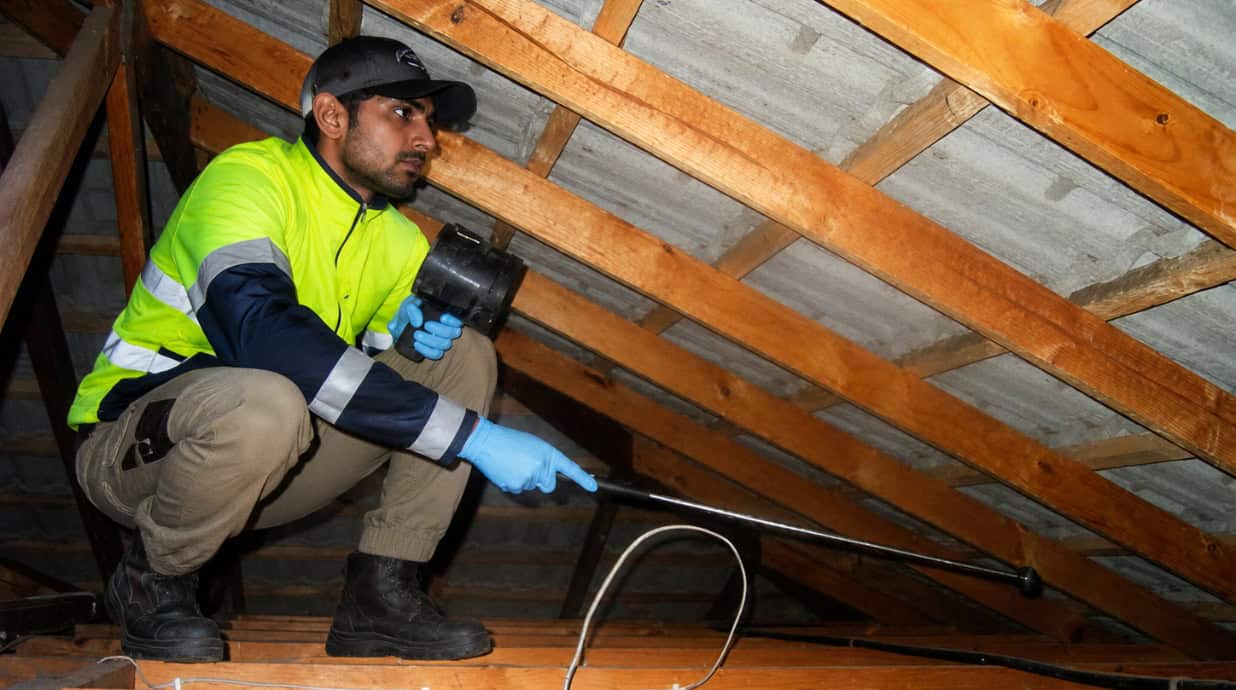
No honest pest technician can tell you which treatment you need without inspecting the property first.
We certainly will not. An inspection identifies whether termites are currently active, what species is involved, how they are getting in, and which conditions on the property are drawing them. Everything that follows hangs on those findings.
In Australia, timber pest inspections are carried out to the standard set by AS 4349.3 Inspection of buildings: Timber pest inspections. A thorough one covers the subfloor, the roof void, the interior, the exterior and the grounds, looking for live termites, mud leads, damaged timber and the moisture and access problems that invite them. If you are wondering what one costs, our termite inspection cost guide walks through what changes the price.
This matters more around here than people expect. A handful of patterns come up again and again in local homes:
Timber subfloors
In older terraces and semis, poor ventilation and damp create ideal conditions out of sight.
Garden beds and soil against walls
Built up during landscaping, they bridge the slab edge or weep holes so termites enter concealed.
Renovations and extensions
Where new slabs meet old brickwork, the joins and gaps are hard to protect after the fact.
Paths, pavers and decks
Laid over the original ground level, they can hide entry points.
These are exactly the places a proper inspection looks. If you are buying in the area, a dedicated pre-purchase termite inspection tells you what you are taking on before you sign. If you have already spotted something, our guide to the warning signs of termite damage helps you work out how worried to be. You can also read up on how the pest behaves in our entry on termites in our pest library.
Only once the inspection is done does the treatment conversation make sense. So here are the real options, and where each one sits on a house.
Where each option sits
- Chemical soil zone. A continuous treated zone in the soil along and under the building, so termites coming up from the ground pick up the termiticide.
- Bait stations. In-ground stations around the property. Foraging termites find the bait and carry it back to the colony.
- Physical barrier. Stainless steel mesh or graded particles built in under the slab and around pipes as the house goes up.
Chemical soil barriers: how they work and when they suit
In short
A chemical soil barrier is a continuous treated zone of soil around and under a building that termites cannot cross without picking up the termiticide.
Modern non-repellent products are designed so termites do not detect the treated soil. They move through it, pick up the active ingredient and can pass it on to other termites they contact.
The work means trenching around the external perimeter and, where there are paths or slabs, drilling and injecting so the treated zone stays continuous. The aim is a complete barrier with no gaps. Termites only need one untreated bridge to walk around it.
This approach is governed by AS 3660.2 Termite management: In and around existing buildings and structures, and every product used must be registered for the purpose by the Australian Pesticides and Veterinary Medicines Authority (APVMA).
Chemical soil barriers tend to suit
- Homes where the construction allows a continuous treated zone around the full perimeter.
- Properties with active termites, where fast whole-of-building protection is the priority.
- Buildings where the soil and access points can be reached and treated without tearing the place up.
The limitation in the Eastern Suburbs is access. Shared party walls, heavily paved courtyards, tight split levels and bolted-on extensions can make a fully continuous barrier more involved to achieve. That is one more reason the inspection comes first. It tells you whether a complete barrier is even practical for your particular building.
Terraces and semis. If your home shares walls, a subfloor or a roof with the house next door, we can still treat it. We just can’t offer a warranty unless the attached home has the same treatment, because termites can still get in from the shared side, which we can’t treat from your property.
Termite baiting systems: how they work and when they suit
In short
A baiting system uses in-ground stations placed around the property, each holding a material termites feed on.
Once they are feeding, the station is charged with a bait they carry back and share through the colony, with the goal of wiping out the colony rather than just blocking entry.
Baiting is slower and more monitored. Stations get checked and maintained over time, and the system relies on termites finding and feeding on them. It does not throw up an instant barrier the way a chemical treatment does. What it does is work with termite behaviour, and it can go in with far less disruption to paths, gardens and structures.
Baiting tends to suit
- Homes where trenching and drilling for a continuous chemical barrier would be hard or highly disruptive.
- Properties with extensive paving, established gardens or construction that complicates a soil barrier.
- Owners who want ongoing monitoring and colony elimination as the objective.
- Situations where active termites have been found and the colony itself is the target.
Plenty of Eastern Suburbs properties, with their courtyards, sandstone retaining walls and built-up garden beds, are better candidates for baiting than people assume. Sometimes the right answer combines methods: baiting to go after the colony, alongside targeted chemical work where it can be installed well. Again, the inspection decides.
Physical barriers for new builds and extensions
In short
A physical termite barrier is a non-chemical system built into a structure during construction to deny termites a concealed path from the soil into the building.
Think stainless steel mesh and graded particle barriers installed at penetration points, slab edges and other entry routes before the building is closed up.
Physical barriers are covered by AS 3660.1 Termite management: New building work, the standard for protecting buildings at the construction stage. For the most part they can’t be added to a finished home. They go in as the structure goes up.
They suit
- New homes being built from the ground up.
- Extensions, granny flats and major additions where new footings or slabs are being poured.
- Any situation where you want protection designed into the structure rather than applied around it.
Given how much renovation and extension work happens across these suburbs, this one matters. If you are extending an older terrace or pouring a new slab out the back, the time to deal with termites is before the concrete goes down, not after. Our work on pre-construction termite barriers covers this stage in detail. Protecting a build properly from the start is far cheaper and less disruptive than treating an infestation later.
Termite barriers vs baiting vs chemical treatment: side by side
Here is how the three approaches compare at a glance. The right choice still depends on your inspection findings and your building.
| Factor | Chemical soil barrier | Baiting system | Physical barrier |
|---|---|---|---|
| Main goal | Block entry around the building | Eliminate the colony | Deny concealed entry from the start |
| Best for | Existing homes where a continuous zone can be installed | Existing homes where trenching is difficult or disruptive | New builds, extensions and new slabs |
| Speed of protection | Fast once complete | Slower, works over time with monitoring | Built in during construction |
| Disruption | Trenching and drilling around the building | Minimal, in-ground stations | Part of the build, no retrofit |
| Ongoing attention | Periodic reassessment | Regular monitoring and maintenance | Inspected over time like any home |
Which termite treatment suits your home? A rough guide
-
Building new, extending or pouring a slab
Physical barrier
Designed into the structure under AS 3660.1, before the concrete goes down.
-
Existing home, clear access around the perimeter
Chemical soil barrier
A continuous treated zone protects the whole building quickly once it is complete.
-
Heavy paving, courtyards or built-up garden beds
Baiting system
Far less disruption, and the colony itself is the target. Stations are monitored over time.
-
A terrace or semi sharing a wall
Both homes, same treatment
We can still treat yours. A warranty needs the attached home to have the same treatment, because termites can still get in from the shared side.
Notice that no column is marked “best”. A whole-of-building chemical barrier is excellent where the construction allows it. Baiting is the stronger fit where access is awkward or the colony is the target. Physical barriers belong at the construction stage. The inspection is what tells you which row your home sits in, and sometimes the honest answer uses more than one. Our termite control service covers the inspection, the treatment and the follow-up.
Keeping your home protected after treatment
In short
No termite treatment is permanent on its own.
Chemical barriers are reassessed over time, baiting systems need ongoing monitoring, and even a physical barrier in a new build only works alongside regular inspections. The single most useful thing any Sydney homeowner can do is keep up annual timber pest inspections, so a new attack is caught early rather than after years of hidden damage.
Alongside professional treatment, a few habits cut your risk, and they are worth doing around here in particular:
Habits that cut your risk
- Keep garden beds and soil below the slab edge and weep holes, so termites cannot bridge into the wall unseen. Our landscape guide covers how.
- Fix moisture problems, including leaking taps, poor subfloor ventilation, blocked drains and air conditioning run-off.
- Move timber, mulch and firewood away from the house, rather than stacking it against walls.
- Keep subfloor vents clear so the space under an older home stays dry.
- Watch for the warning signs during and after swarming season: discarded wings, mud leads and timber that sounds hollow when you tap it.
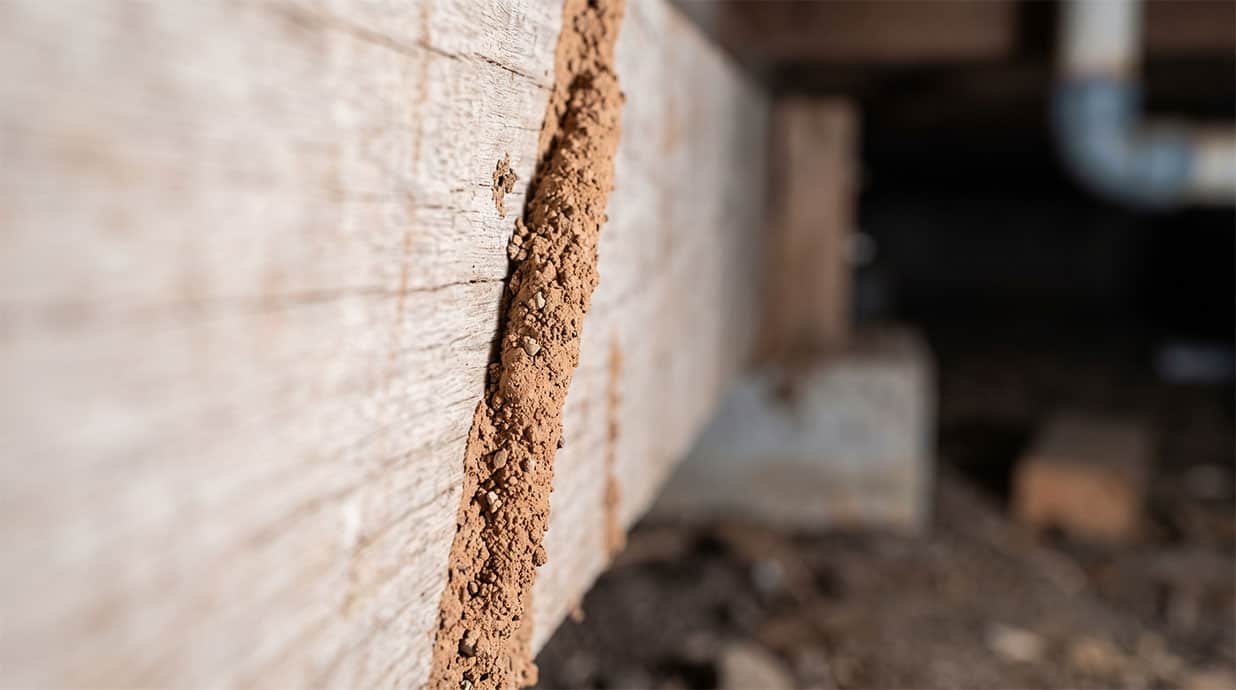
Found something? Leave it alone.
If anything looks off between inspections, do not disturb it. Breaking open a mud lead or hitting a surface with a supermarket spray can scatter the colony and make treatment harder. Leave it alone and get it looked at.
Frequently asked questions
Common questions about termite treatment in Sydney’s Eastern Suburbs
Book a termite inspection
How often should I get a termite inspection in Sydney?
For most Sydney homes, a timber pest inspection once a year is the baseline. Older Eastern Suburbs properties with timber subfloors, or homes backing onto heavy gardens, may warrant more frequent checks. Inspections follow AS 4349.3, and annual timing means a new attack is found early rather than after the damage is done.
Is termite treatment safe around children and pets?
Responsible termite treatment is planned with children and pets in mind, and all products used must be registered for the purpose by the APVMA. At PestOz we favour child and pet friendly approaches, and we will talk you through what to expect before any work starts, including any short precautions on the day.
Can I just do termite treatment myself?
Termite work is not a DIY job. A gap in a chemical barrier, a poorly placed bait station or a disturbed colony can leave your home exposed while you think it is protected. Treatments are tied to Australian Standards and APVMA registered products for good reason. A professional inspection and plan is the safe path.
Does a chemical barrier or baiting work faster?
A completed chemical soil barrier protects the building quickly once it is in. Baiting works more gradually, because it relies on termites feeding and carrying bait back to the colony with the aim of eliminating it. Faster is not always better. The right choice depends on your building and what the inspection finds.
What if termites are already in my house?
Do not disturb them and do not spray anything. Breaking into mud leads or using a surface product can scatter the colony and make elimination harder. Book an inspection so the species, entry points and extent can be assessed, then the correct treatment can be planned. Our termite guide covers what to look for in the meantime.
Termite inspections
Book your termite inspection in Sydney’s Eastern Suburbs with PestOz
The right termite treatment for your home in the Eastern Suburbs depends on what a proper inspection finds, so that is where to start. PestOz is a family owned pest control business based in Bondi, with over 20 years looking after homes across Sydney’s Eastern Suburbs.
We give you a specific appointment time, not a four hour window, same-day service is often available, and a free quote is easy to arrange.
-
Family run, Bondi based
Over 20 years inspecting terraces, semis and new builds across the Eastern Suburbs.
-
Child and pet friendly
APVMA registered products, explained before any work starts.
-
A specific appointment time
Not a four hour window, and same-day is often available.
Standards and sources
- Standards Australia: AS 4349.3 Inspection of buildings: Timber pest inspections; AS 3660.1 Termite management: New building work; AS 3660.2 Termite management: In and around existing buildings and structures.
- Australian Pesticides and Veterinary Medicines Authority, register of approved agricultural and veterinary chemical products (PubCRIS).
- Australian Museum, Termites.