

Why your garden is the first place pests decide to stay
Here is the blunt truth we give every eastern suburbs homeowner who rings us about cockroaches in the kitchen: the problem nearly always started outside. Your garden, your lawn and that narrow strip of ground pressed against the walls are the staging area. Rats, German cockroaches, ants, spiders and termites gather, breed and feed out there long before one of them finds a crack to slip through. Sort out the outdoor environment and you take the load off every other defence you have.
Landscape pest management is the practice of shaping your outdoor space so it stops attracting and sheltering pests in the first place. It sits at the outer edge of a layered system. The inner layers, such as sealing entry points, managing waste and controlling moisture, matter enormously. They simply work far better when the garden is not actively herding pests toward your door.
We are PestOz, a family owned business in Bondi, and in more than 20 years across Sydney’s eastern suburbs we have learned that the yard is where most jobs are won or lost. This guide is for homeowners and property managers who want to know what in their yard is doing the damage, and fix it. You can audit your own space using the steps below, make changes today, and work out when to bring in a licensed professional for a proper landscape treatment.
What is landscape pest management?
The short answer
Landscape pest management is the deliberate design and upkeep of your outdoor environment to deny pests food, water, shelter and easy access to your building.
Instead of reacting to an infestation indoors, it removes the conditions that let pest numbers build up outside your walls to begin with.
Think of it as the outer ring of your defence. The sealing and hygiene work you do closer to the building becomes far more effective once the garden stops working against you.
How does your garden actually draw pests toward your building?
The short answer
Your garden pulls pests in by offering the three things every pest needs, all within easy reach of a warm, dry building: food, water and shelter.
The closer those sit to your walls, the shorter the trip inside becomes.
Here is how the common pests in our patch use a typical yard:
Rats and mice nest in dense ground cover, woodpiles and compost, then follow fence lines and overhanging branches straight onto the roof and into cavities. In Bondi and Bondi Junction we watch them run the back fence like a highway.
German and Australian cockroaches shelter in mulch, leaf litter, drains and damp garden beds, then move indoors as conditions outside cool or dry out. German cockroaches are our specialty, and the outdoor harbourage is where a lot of that trouble incubates.
Ants nest in lawns, paving joints and garden beds, then forage along any surface that leads to food inside.
Spiders follow their prey. A garden full of insects becomes a garden full of spiders, which then colonise eaves, window frames and doorways.
Termites are drawn to moisture and to timber in contact with soil. They will treat garden sleepers, stored timber and mulch as both a meal and a bridge toward your structural timber.
The pattern holds. Pests build up in the landscape, then migrate the short distance inside when something shifts, usually the weather, the food supply or a bit of disturbance.
Which garden features attract the most pests?
Some very ordinary landscaping choices quietly build ideal pest habitat. If your property has several of these within a few metres of the building, you have a garden that invites pests rather than repels them.
Thick mulch laid against the house
Deep mulch holds moisture and gives cockroaches and ants harbourage exactly where you least want it.
Dense shrubs and ground cover touching the walls
These hide activity, trap humidity and offer a covered path to the building.
Overhanging tree branches
Branches touching the roof or gutters are a direct bridge for rats and possums.
Fruit trees and vegetable patches
Fallen fruit and ripe produce are a reliable food source for rodents, flies and fruit-feeding insects. A productive lemon or fig tree is lovely, but windfall left on the ground feeds rats.
Timber in contact with soil
Garden sleepers, retaining walls, fence posts and stacked firewood attract termites and give them concealed access.
Standing water and over-irrigation
Pot trays, bird baths, blocked drains and boggy beds supply the water mosquitoes and most pests depend on.
Compost bins and neglected green waste
A poorly managed compost heap is a feeding and breeding site for rodents, cockroaches and flies.
None of this means stripping your garden bare. It means keeping these features maintained, and keeping them off the building line.
How do you audit your own outdoor space for pest risk?
The short answer
You can run a basic pest audit of your property in under an hour.
Walk the perimeter slowly and work outward, asking at each point whether a pest could find food, water, shelter or a path indoors.
Use this step-by-step check:
- Walk the wall line. Note anywhere mulch, soil or plants sit directly against the building. This is the zone pests love most.
- Look up. Find branches touching the roof or gutters, and climbing plants running up walls.
- Check for water. Look for pooling, dripping taps, blocked drains, full pot trays or boggy ground.
- Inspect timber and stored items. Flag firewood, sleepers, old pavers and clutter sitting on soil.
- Find the food. Spot fallen fruit, overflowing bins, exposed pet food and bird seed.
- Follow the paths. Trace fence lines, pipes and cables running from the garden to the building. These are rodent highways.
- Open the hidden spots. Check under decks, behind sheds and in overgrown corners where activity goes unnoticed.
Write down what you find. That list is your maintenance plan, and it tells a professional exactly where to focus if you book an inspection.
What practical steps reduce pests in your garden?
The short answer
The most effective outdoor pest prevention is maintenance, not chemicals. A tidy, well-drained, well-spaced garden gives pests nowhere to settle.
Start with the changes that deliver the biggest reduction for the least effort.
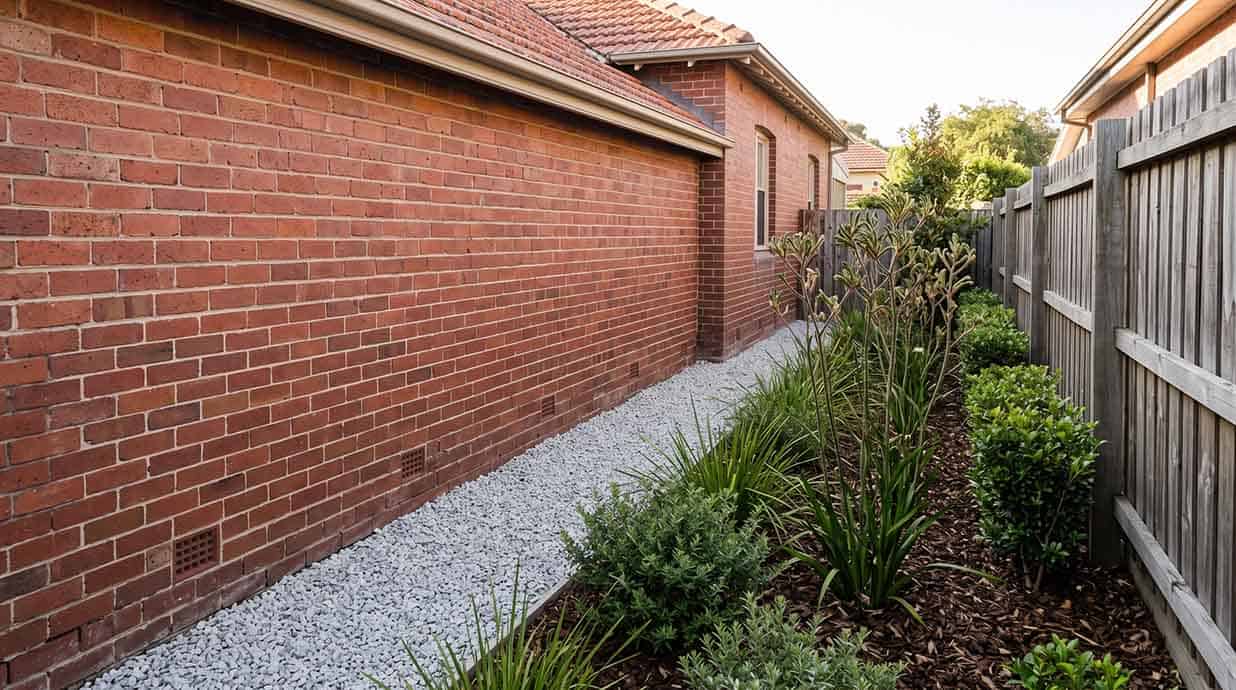
30 to 50 cm
The gap of bare, dry ground or gravel to keep between garden beds and the wall, where you can.
Create a clear zone around the building
- Keep a gap of at least 30 to 50 centimetres of bare, dry ground or gravel between garden beds and the wall where you can.
- Pull mulch back from the foundations and keep it no deeper than it needs to be.
- Trim shrubs and ground cover so nothing touches the walls.
Cut the access routes
- Prune tree branches back from the roof and gutters.
- Keep climbing plants off walls and clear of windows.
- Clear vegetation along fence lines that leads to the building.
Remove food and shelter
- Collect fallen fruit promptly and pick produce as it ripens.
- Store firewood off the ground and away from the house.
- Keep compost in a sealed, rodent-resistant bin and turn it regularly.
- Clear leaf litter, prunings and green waste rather than letting them pile up.
Manage water
- Fix leaking taps and irrigation, and water in the morning so beds dry through the day.
- Empty pot trays, bird baths and anything else that holds standing water.
- Keep drains and gutters flowing freely.
These habits feed straight into the inner rings of prevention. Reducing standing water outside supports your broader moisture control, and keeping green waste under control works hand in hand with proper waste management for pest control.
How does landscape work fit with the rest of your pest defence?
The short answer
Landscape management is one layer in a system, not a standalone fix.
It is the outer ring that lowers pest pressure before it reaches your walls. The inner rings then catch whatever gets through.
- Outer ring, the landscape. Garden layout, plant spacing, drainage and yard maintenance, covered in this guide.
- Middle ring, the building envelope. Sealing cracks, gaps, vents and pipe penetrations so pests cannot get in.
- Inner ring, the interior. Hygiene, waste handling, moisture control and monitoring inside the building.
Each ring takes load off the next. A beautifully sealed building still struggles if the garden is breeding rats against the back wall. A tidy garden alone will not stop pests exploiting an open gap. Timing matters too, because different pests peak in different seasons. Line your garden maintenance up with the local pest calendar and you stay ahead of each wave rather than chasing it.
When should you call a professional for landscape pest treatment?
The short answer
Call a licensed pest control professional when you are still seeing activity despite good maintenance, when you spot signs of termites, or when you want a treatment program built around your property’s specific layout.
Some risks, termites in particular, need a licensed assessment rather than a DIY guess.
Get in touch if you notice any of the following
- Rodent droppings, runways or gnaw marks around the yard or roof line.
- Mud leads, hollow or damaged timber, or other termite signs near sleepers, fences or the building.
- Persistent cockroach or ant trails running from the garden into the building.
- A property with heavy plantings, retaining walls or timber features where the risk is hard to judge yourself.
As a family owned business based in Bondi with more than 20 years serving the eastern suburbs, PestOz assesses your whole property, not just the room where you found the problem. We identify the landscape conditions driving the issue, treat the active pests with child and pet friendly products, and give you a specific appointment time rather than a four hour window. It is the same standard of work the big property managers rely on us for, including JLL, CBRE and Knight Frank. If termites are a worry, our licensed inspections and pre-construction and barrier treatments address the structural risk directly.
Key takeaways
Landscape pest management
Turn your garden into a barrier, not an invitation
Ready to turn your garden into a barrier rather than an invitation? Book an inspection with PestOz and get a clear read on what your outdoor space is doing to your pest risk.
-
Family run, Bondi based
More than 20 years working the eastern suburbs.
-
Child and pet friendly
Licensed, insured, CM3 certified and Trades Monitor registered.
-
A specific appointment time
No four hour window.
Frequently asked questions
Garden pests, answered
Talk to a licensed technician
How far should garden beds be from my house to reduce pests?
Aim for a clear, dry gap of at least 30 to 50 centimetres between garden beds and your walls where practical. This bare zone denies pests the moisture and shelter they need right against the building, making it harder for them to find a way inside.
Does mulch attract pests?
Deep mulch laid against walls can attract pests because it holds moisture and provides harbourage for cockroaches, ants and other insects. Keep mulch shallow, pull it back from the foundations, and maintain a dry buffer zone along the building line.
Can I manage landscape pests myself or do I need a professional?
Most landscape pest risk is reduced through maintenance you can do yourself, such as trimming vegetation, clearing debris and fixing drainage. Call a licensed professional for ongoing activity, suspected termites, or a treatment program tailored to your property.
Which garden pests are most common around Sydney homes?
Rats and mice, German and Australian cockroaches, ants, spiders and termites are the most common around Sydney properties. They shelter in dense plantings, mulch, standing water and timber before moving indoors, which is why outdoor maintenance matters so much.