

Here is the blunt version
Commercial pest control is not a bloke with a spray can turning up once. It is a scheduled, documented program built around a working building, and if your contractor cannot hand you a clean service record, you do not have one.
It covers routine inspections, treatment, monitoring stations and the paperwork a strata committee, building manager or food business needs to prove the site is being looked after.
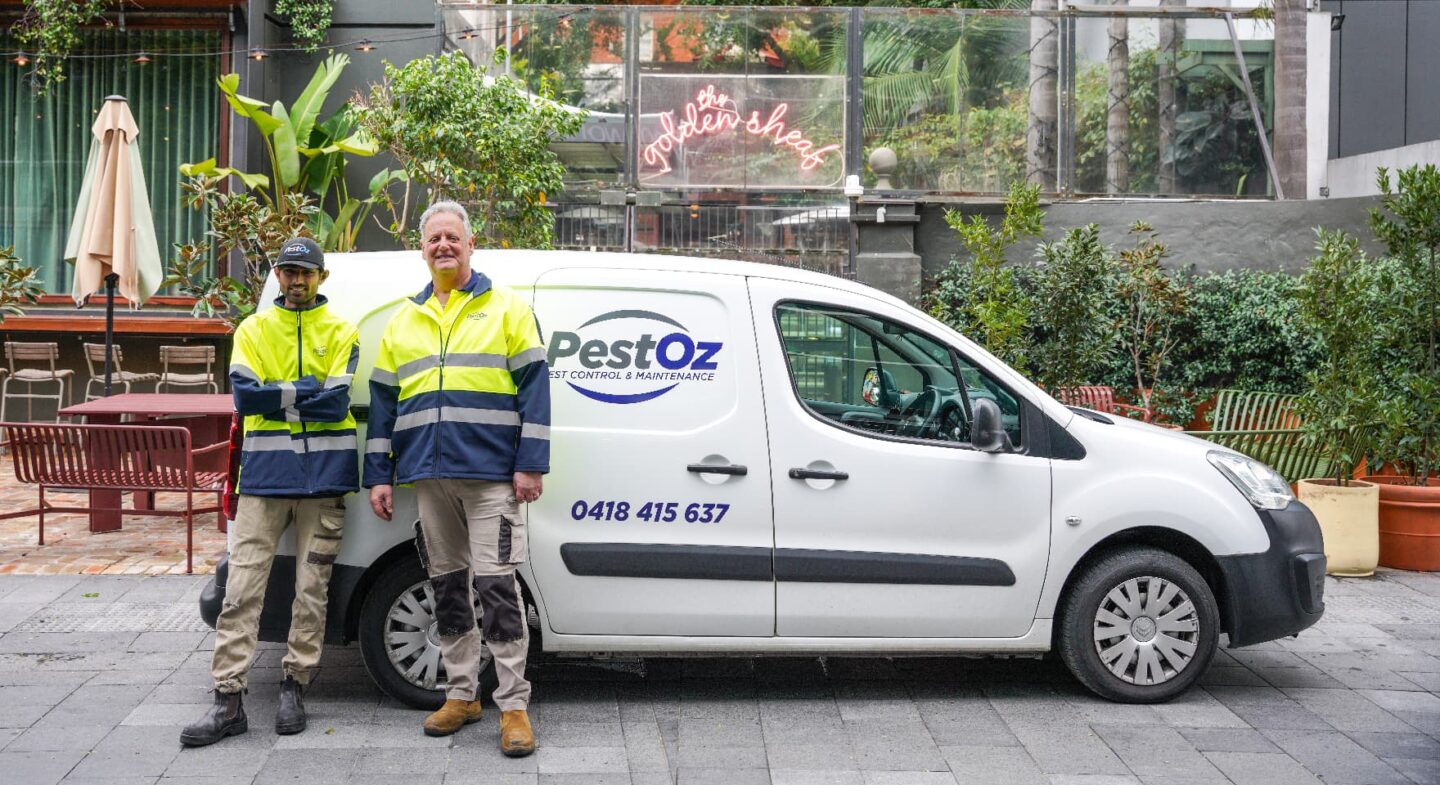
PestOz is a Bondi-based, family owned and operated pest control business, and we have spent more than 20 years working the eastern suburbs and greater Sydney. We hold commercial accounts with JLL, CBRE and Knight Frank. We mention that not to name-drop, but because national property managers only keep a contractor who turns up on time and files the right records. A local operator beats a franchise on the things that actually matter: faster response when something flares up, the same team who already know your building, and a person you can ring who answers. A call centre routing your job to whoever is free cannot match years of walking the same basements, bin rooms and loading docks.
Commercial accounts include
- JLL
- CBRE
- Knight Frank
This guide explains what commercial pest control actually covers out here, which pests get reported most, how a managed program differs from a one-off treatment, and the compliance that applies to food premises, strata and commercial leases.
Why Eastern Suburbs Businesses and Property Managers Choose a Local Commercial Pest Specialist
The short answer
Three reasons, really: response time, site knowledge and accountability.
When a cockroach sighting lands in a tenant’s inbox, or an inspector flags a problem, you need someone on site quickly who already understands the building.
We are based in Bondi and work across the eastern suburbs every day, from Bondi Junction offices and strata blocks to Double Bay retail and Rose Bay hospitality venues. Proximity does real work. A technician who already knows where your bin room drains, how your basement connects to the block next door, and which units had German cockroach activity last quarter fixes the problem faster than a stranger reading a job sheet for the first time.
The property managers who trust us run large portfolios with strict compliance expectations. Keeping that work means turning up when we said we would, documenting everything, and leaving treatments safe around staff, tenants and the public. Your site gets the same standard.
We are fully licensed, certified and insured, CM3 certified, Trades Monitor registered and Strata Council affiliated. Those are the credentials procurement teams and strata committees ask for before they let anyone on site.
- Licensed
- Fully insured
- CM3 certified
- Trades Monitor registered
- Strata Council affiliated
What Commercial Pest Control in the Eastern Suburbs Actually Covers
The short answer
It covers scheduled inspections, targeted treatment, ongoing monitoring and detailed reporting across a property’s interior, exterior and shared service areas.
A managed program, tailored to the building, not a single visit.
For a typical commercial client, the scope includes:
Site inspection and risk assessment
Identifying entry points, harbourage, food and water sources, and problem zones such as kitchens, bin rooms, loading docks, roof voids and subfloors.
Treatment
The right method for the pest and the setting, from gel baiting for German cockroaches to rodent bait stations and targeted sprays, chosen to be safe around staff and the public.
Monitoring stations
Tamper-resistant rodent and insect monitoring points placed at known risk areas and checked on a set schedule.
Reporting and documentation
Service reports, findings, products used and recommendations, which form the audit trail an inspector, strata committee or head tenant may ask to see.
Recommendations for prevention
Proofing advice, housekeeping improvements and structural fixes that reduce the chance of recurrence.
This applies across offices, warehouses, retail, strata and body corporate common property, and hospitality. Pest control for offices and warehouses leans heavily on rodent and cockroach management, and on sealing the gaps that let pests ride in through deliveries and service doors. Monitoring is the backbone of the whole thing. It catches activity early, before it becomes a tenant complaint or a failed inspection.
Which Pests Are Most Reported in Eastern Suburbs Commercial Properties?
The short answer
German cockroaches, rats and mice, ants and flies.
They thrive where food, warmth and moisture meet human activity, which describes most commercial kitchens, bin rooms and break areas.
German cockroaches
The most persistent commercial pest, and a PestOz specialty. They breed fast, hide in warm equipment and spread between tenancies through shared walls and service penetrations. In hospitality and strata settings they are the single most common reason for a callout.
Rats and mice
A constant risk near food premises, waste storage and older buildings with gaps around pipes and doors. Rodents carry contamination risk and chew wiring and stock.
Ants
Common in kitchens, break rooms and around external walls, especially through the warmer months.
Flies
A food safety flag in any venue handling food, usually tied to waste handling and drainage.
Stored product and seasonal pests
Warehouses and retail holding stock see their own range of problems, and activity shifts through the year.
Pest pressure changes month to month across Sydney. A managed program shifts its focus with the seasons instead of treating the same way all year. Knowing what is active and when lets us weight inspections toward the right risk at the right time.
How Does a Commercial Pest Program Differ from a One-Off Residential Treatment?
The short answer
A commercial program is ongoing, documented and built for compliance. A one-off treatment solves a single problem at a single point in time.
Commercial sites carry legal duties, higher foot traffic and multiple stakeholders, so they need continuity and records.
The practical differences:
| Feature | One-off residential treatment | Commercial pest program |
|---|---|---|
| Frequency | Single visit as needed | Scheduled, recurring (often monthly to quarterly) |
| Documentation | Basic receipt or report | Detailed service reports and an audit trail |
| Monitoring | Rarely included | Permanent monitoring stations checked each visit |
| Compliance | Not usually required | Supports food safety, strata and lease obligations |
| Stakeholders | One household | Tenants, managers, committees, inspectors |
| Scope | Specific pest | Whole-of-site risk management |
For a property manager or business owner, it comes down to the paper trail and the prevention. If a food inspector, strata committee or head tenant asks how pests are being managed, a one-off receipt does not answer the question. A documented program does. It also catches problems through monitoring before they spread, which is far cheaper than treating a full infestation and far less damaging to a tenant relationship or a reputation.
Compliance, Certification and Why They Matter for Food Premises, Strata and Commercial Leases
The short answer
Compliance matters because food premises, strata schemes and commercial leases all carry pest-related obligations, and the certifications your contractor holds decide whether they are allowed on site and whether their records will hold up.
Use an uncertified operator and you leave a gap in your own compliance.
For food businesses, the NSW Food Authority requires premises to be kept free of pests and to keep records of pest control activity. You can read the detail in the NSW Food Authority’s pest control fact sheet. Those records are exactly what a professional program produces.
PestOz holds these credentials. For a building manager, that means less verification work and confidence the paperwork will satisfy an audit. We also know how pest control responsibilities split under NSW strata, so we can help you sort out who is accountable for what before a dispute flares up between landlord, tenant and owners corporation.
What Should You Expect from a Commercial Pest Control Service Call? (Process, Timing and Reporting)
The short answer
A confirmed appointment time, a thorough inspection, targeted treatment where needed, monitoring checks and a written report, all done with minimal disruption to your operation.
A good service call is predictable from start to finish.
Our five-step call runs like this:
- Confirmed appointment: we book a specific time, not a four-hour window, so you are not holding staff or closing areas longer than you need to.
- Inspection: the technician checks interior, exterior and service areas, reviews monitoring stations and notes any new activity or risk.
- Treatment: targeted methods applied where required, chosen to be effective and safe around staff, customers and, where relevant, food.
- Monitoring and proofing advice: stations serviced and replenished, with any proofing or housekeeping fix flagged on the spot.
- Reporting: you get a service report covering findings, products used, areas treated and recommendations, which goes straight into your compliance records.
Timing depends on building size and pest pressure, but most commercial programs run monthly to quarterly, with extra callouts included or arranged when activity spikes. No hidden costs; scope and price are agreed up front. For a business that lives on reputation and foot traffic, a reliable arrival time and a clean report are worth as much as the treatment itself.
Strata and Body Corporate Pest Control: Managing Shared Spaces Across the Eastern Suburbs
The short answer
Strata pest control focuses on common property, the shared spaces where pests move between units, and on coordinating treatment across a building where responsibility is split between the owners corporation and individual lot owners.
Getting that split right is half the job.
In eastern suburbs apartment blocks, pests ignore lot boundaries. German cockroaches and rodents travel through wall cavities, service risers, shared plumbing and bin rooms. Treat one unit while ignoring common property and the problem walks straight back in. An effective strata program treats the building as one system: common areas on a schedule, individual units addressed when activity is traced to them.
For strata managers and committees, the real questions are who pays, who authorises access and how the work is documented. We help committees and property managers settle this, and our Strata Council affiliation and SMATA membership mean we understand how owners corporations actually run. Our guide to strata and apartment pest control for body corporates and property managers digs into the responsibility question, and it is a common source of disputes worth getting ahead of.
What a committee wants is fewer complaints, a documented program they can point to at the AGM, and a contractor who turns up on schedule. That is what a managed strata program delivers.
Hospitality and Food Premises: Meeting NSW Food Authority Standards
The short answer
For cafes, restaurants, bars and food retail across the eastern suburbs, pest control is not optional housekeeping. It is a food safety obligation.
Food premises must be kept free of pests, and you must be able to show records proving active management.
German cockroaches and flies are the headline risks in food settings, and both spread fast where food waste and warmth are present. A documented PestOz program hands you the treatment and the paperwork together, so when an inspector asks how pests are managed, the answer is already on file. Treatments are chosen to be safe in a working kitchen and applied around trading hours wherever we can.
Commercial pest control, eastern suburbs
Get a Commercial Pest Control Quote for Your Eastern Suburbs Property
If you manage an office, warehouse, strata block, retail space or food venue in the eastern suburbs, we will inspect your site, set a program that meets your compliance obligations, and give you a specific appointment time with no hidden costs. We are the local commercial specialist the major property managers already trust. Contact PestOz for a commercial pest control quote.
-
Audit-ready records
A written service report after every visit.
-
Trusted by big names
Commercial accounts with JLL, CBRE and Knight Frank.
-
Licensed and insured
CM3 certified, Trades Monitor registered, 20+ years in Sydney.
Frequently asked questions
Commercial pest control, answered
Get a commercial quote
How often should a commercial property in the eastern suburbs have pest control?
Most run on a monthly to quarterly schedule, set by building type, pest pressure and compliance needs. A Rose Bay restaurant will need more frequent visits than a quiet Bondi Junction office. We set the schedule to your site after an initial inspection.
What does commercial pest control include in Sydney?
Scheduled inspections, targeted treatment, permanent monitoring stations and written service reports covering a property’s interior, exterior and shared service areas. The program is tailored to the building and produces the documentation needed for food safety, strata and lease compliance.
Who is responsible for pest control in a strata building, the owner or the tenant?
It depends where the problem is. The owners corporation is generally responsible for common property, while individual lot owners or tenants may be responsible within their unit. Because pests move between the two, it is often shared, and a clear program heads off disputes. We can help work out responsibility for your building.
Do food businesses in NSW legally need a pest control record?
Yes. The NSW Food Authority requires food businesses to keep premises free of pests and to maintain records of pest control activity. A documented program gives you the service reports and audit trail an inspector may ask to see. A one-off treatment does not.
Are commercial pest treatments safe for staff and customers?
Yes, when a licensed technician applies them. We use child and pet friendly treatments and select methods that are safe around staff, customers and food handling areas, applying them around trading hours where possible to keep disruption down.